The Missing Safety Conversation in the Walliams Sex Scandal
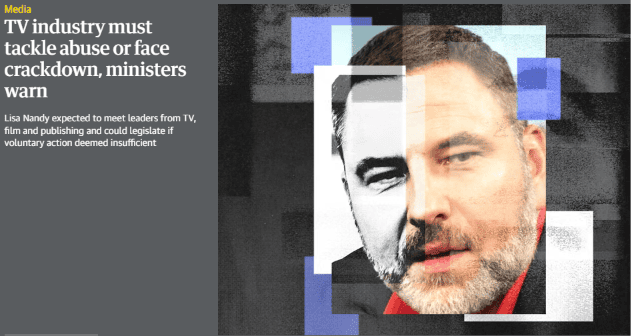
The allegations made against British entertainer and author David Walliams raise obvious questions about grooming, sexual misconduct, organisational accountability and corporate culture. Yet occupational health and safety (OHS) has received remarkably little attention, even though many of the allegations occurred at work, through work or in workplaces. Discussions of incident reporting, whistleblowing and employer responsibilities …

Subscribe to SafetyAtWorkBlog to continue reading.
Subscribe Help
Already a member? Log in here

Psychosocial Safety Is Becoming a Governance Test, Not a Wellbeing Program

Three recent legal commentaries reveal something important about the evolution of workplace health and safety. They address different issues, from board governance to sexual harassment investigations and cumulative psychosocial hazards, but they all point to the same conclusion: employers are running out of opportunities to treat psychological health as an individual problem. We may be …

Subscribe to SafetyAtWorkBlog to continue reading.
Subscribe Help
Already a member? Log in here

Why don’t US employers focus on preventing psychosocial hazards?

Many Australian employers, managers and executives take inspiration from counterparts in the United States. When it comes to occupational mental health, they are looking in the wrong direction and could benefit from looking more locally. But there is merit in evaluating the US perspectives. Below are responses provided by several Artificial Intelligence (AI) agents on … Continue reading “Why don’t US employers focus on preventing psychosocial hazards?”

When Psychosocial Harm Meets Pub Philosophy

Occupational health and safety (OHS) people talk a lot, but often they preach to the choir when they need to reach a new audience. Last night, philosophy academic Dr Peter Brace provided a lecture on psychosocial hazards and psychological safety to over 50 members of a diverse audience in an upstairs room of a Richmond …

Subscribe to SafetyAtWorkBlog to continue reading.
Subscribe Help
Already a member? Log in here

A Localised Reassessment of Common Sense

“Common Sense” is a concept all occupational health and safety (OHS) professionals must address, but that doesn’t mean it’s static. My six months on Norfolk Island provided me with a new perspective. In several blog articles on “common sense”, I found the concept a deeply unreliable foundation for OHS because it is subjective, dismissive, and …

Subscribe to SafetyAtWorkBlog to continue reading.
Subscribe Help
Already a member? Log in here

Socioeconomic Determinants of Organisational Behaviour

The Systemic and Socioeconomic Drivers of Bullying that Employers Keep Ignoring Workplace bullying and harassment are often described as interpersonal problems, such as a clash of personalities, a difficult manager, or a “bad apple” who spoils the barrel. This framing is convenient, familiar, and wrong. Bullying is not an individual defect. It is a systemic …

Subscribe to SafetyAtWorkBlog to continue reading.
Subscribe Help
Already a member? Log in here

Why the Intergenerational Report Matters More to OHS Than Treasury Realises

This week the Australian Government released its latest Intergenerational Report (IGR). It does not discuss occupational health and safety (OHS) directly, but it does cover some of the socioeconomic factors within which OHS must be managed. The report’s projections on ageing, labour supply, climate, care demand, migration and fiscal pressure shift safety from a narrow …

Subscribe to SafetyAtWorkBlog to continue reading.
Subscribe Help
Already a member? Log in here