Coroner calls for fresh approach to OHS in small business

Ever since the UK Government reduced the occupational health and safety (OHS) obligations on small business, there have been concerns that a similar strategy could occur in Australia.  Of all the States in Australia, Victoria is the most likely to mirror the UK actions, particularly as its WorkSafe organisation continues with its restructuring and (ridiculous) rebranding, and Victoria’s conservative government continues to see OHS as a red tape issue for small business.  However a recent finding by the Queensland Coroner should be considered very seriously when thinking of OHS in small business.

In 2011 Adam Douglas Forster

” … came close to the rotating ball mill, then accidently (sic) became ensnared by the protruding bolts and was dragged underneath the ball mill which continued to rotate, thereby causing his fatal injuries.”

The inquest found

“There were no guards, barriers or other apparatus restricting access by any persons to the ball mill.” and

Forster “did not know how to turn the ball mill on or off”. Continue reading “Coroner calls for fresh approach to OHS in small business”
One man’s frustration with OHS illustrates larger safety dysfunctions

Terry Reis has written a terrific article about how occupational health and safety (OHS) requirements can impede his work as a fauna ecologist.  Instead of whingeing about green or red tape, Terry has provided examples of the annoyance which allows me to build an article in response.  This article is in no way a rebuttal as I agree with most of Terry’s grievances, but there can be reasons behind some of the grievances that are likely to be unrelated to OHS or illustrate poor OHS decisions.

Some of the issues Terry raises include:

  • Inductions
  • PPE
  • Working Alone
  • OHS arguments
  • Drug and Alcohol Testing
  • Permits

Inductions

Terry mentions the irrelevance of many OHS inductions and his article seems to indicate a dysfunctional induction program.  The intention of inductions is to outline the safety rules of a workplace or task but most are boring, condescending or include information that is unrelated to the task. The reality of many inductions is that they are a mechanism to have workers sign up and indicate they have understood all of their safety obligations on a site so that there is a clearer line of responsibility in the event of an incident.   Continue reading “One man’s frustration with OHS illustrates larger safety dysfunctions”

Workplace mental health deserves more attention

Mental health needs in the workplace has been an evolving area of study and application and has been followed by the SafetyAtWorkBlog since its inception.  Several recent statements and reports in Australia have shown that the subject continues to be discussed but not by those who can make the substantial social change, the Government, partly due to a lack of the type of evidence needed by Government to justify the change.

Mental Health is the core element of almost all the contemporary workplace hazards that are categorised as psychosocial.  This includes stress, bullying, fatigue, suicide, work/life balance, and many more.  Each of these categories are important but most reporting and a lot of the health promotion initiatives in the workplace focus on the manifestation of mental health instead of the source.

On February 21 2014 the chair of the

Subscribe to SafetyAtWorkBlog to continue reading.
Subscribe Help
Already a member? Log in here

Missed opportunity for making the business case on safety culture

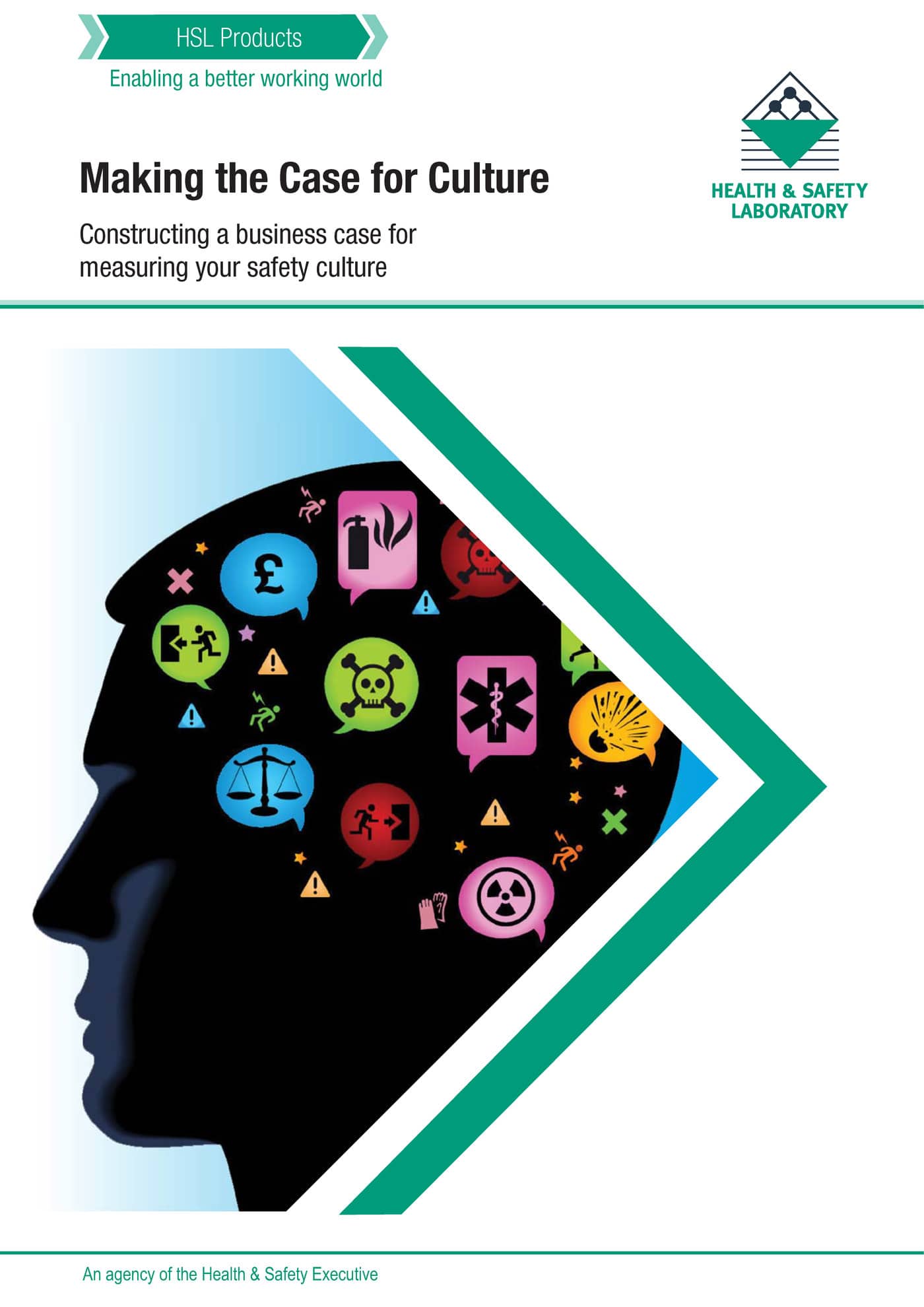
Cover of HSL culture documentRecently the UK’s Health and Safety Laboratory (HSL) released its second white paper on safety culture.  This paper is called “Making the Case for Culture” and outlines the three arguments for a workplace safety culture – legal, moral and financial – from which a safety business case can be built.  Financial seems to get the most attention but this is perhaps because it is the element that is argued the least and the one that can get the greatest attention from company executives.

The document seems a little thin but it could be put that the simplicity of the presentation in a booklet designed to provide safety culture guidance is an advantage.  It could also be argued that it is primarily a promotional pamphlet for the HSL’s very useful safety climate tool .

Continue reading “Missed opportunity for making the business case on safety culture”

Are you ready for the revised AS1657 on walkways, ladders and platforms?

A guest post by Carl Sachs

Walkwaywas0121-03141MBThe revised Australian Standard AS1657 for fixed ladders, platforms and walkways released in October 2013 plugs some serious holes. Guard rails made of rubber, for example, are now explicitly unacceptable.

While absurd, rubber guard rails technically complied with the 21-year-old AS1657 and the example shows just how sorely an update was needed.

Four big changes to AS1657

The biggest changes to AS1657 concern selection, labelling, guardrail testing and the design of fixed ladders. Continue reading “Are you ready for the revised AS1657 on walkways, ladders and platforms?”

Brothels continue to misunderstand the employee/contractor difference

For many years the brothel industry in Victoria has struggled with its occupational health and safety obligations, not because it does not understand them but that it denies OHS laws are relevant as many in the industry continue to believe that sex workers are not employees.  Some use a Tax Office ruling on employee status to support their argument against OHS.

A recent investigation by the Fair Work Ombudsman (FWO) seems to further illustrate the industry’s misunderstanding of employees.  According to an FWO media release nineteen brothels, over 70% of brothels investigated, underpaid clerical staff around $A65,000 but of more relevance to OHS is that

“Some businesses were found to have misclassified employees as independent contractors.”

This was a position put by many brothel owners and industry lobbyists when I was consulting and writing about the industry almost a decade ago.  For a long time OHS laws have extended beyond the employee/employer relationship to include those affected by the work being undertaken on the premises. The more modern Work Health and Safety laws go further by focussing on the work activity rather than the place of work.

As the OHS/WHS focus increases on psychosocial hazards – impairment, fatigue, stress etc – the adult entertainment industry has particular challenges; challenges that could be seen as threats or opportunities but certainly challenges that will not go away.  It is very positive that the industry groups have agreed to support a specific website for the sex industry but now they need to start working seriously on complying with their OHS/WHS obligations through collaboration, consultation and innovation, instead of denial.

Kevin Jones

More on this industry and this topic can be found in an earlier SafetyAtWorkBlog article.

Opaque response on construction industry safety code

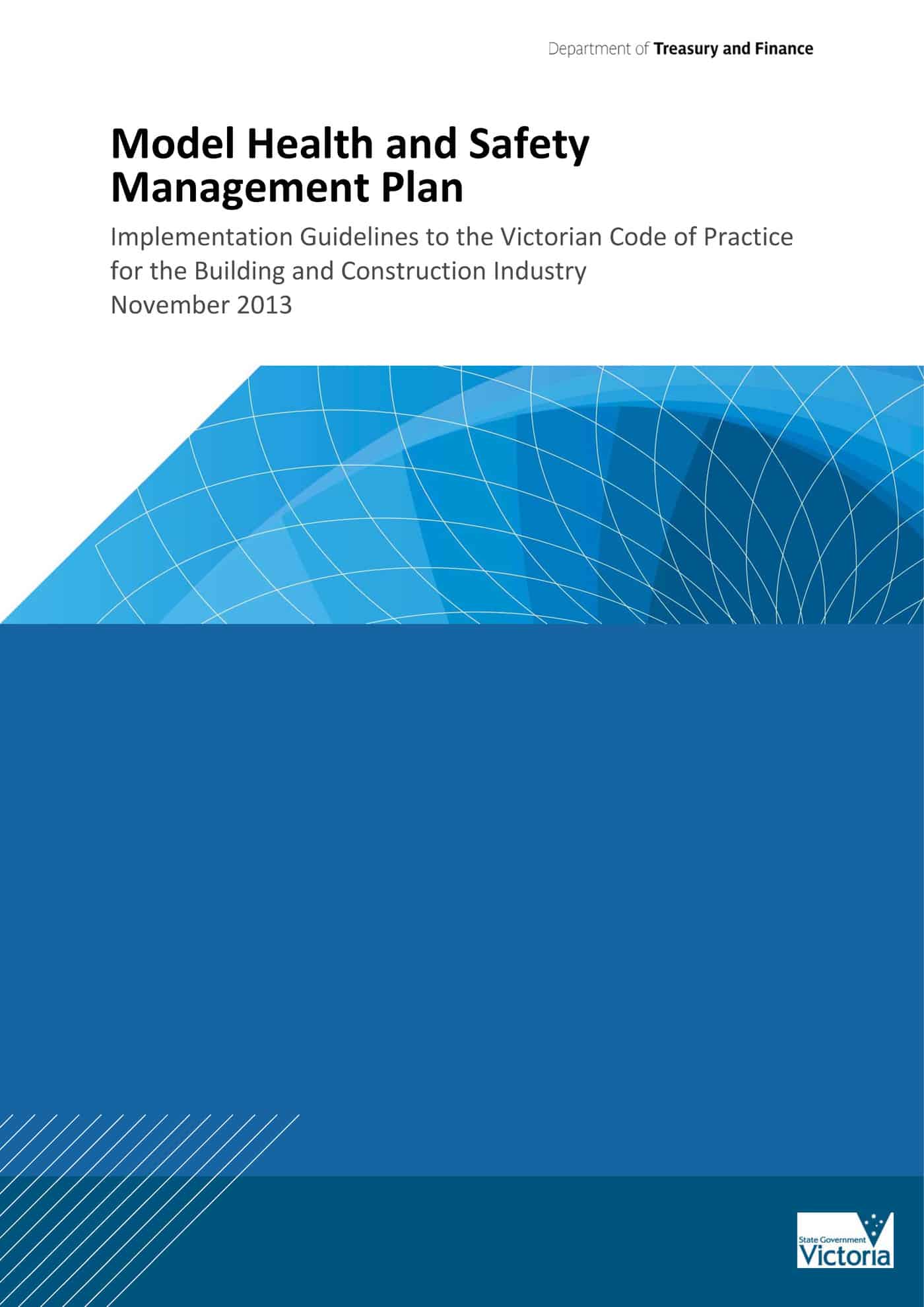
Model-Health-and-Safety-Management-Plan (2)Victoria’s Construction Compliance Code Unit in the Department of Treasury and Finance has just completed its public comments stage for its model Health and Safety Management Plan (HSMP).  The comments period was extended by a month after initially ending after only one month‘s public consultation on 6 January 2014.  New South Wales and Queensland have mirrored the Victorian construction compliance code so the significance of this OHS submission stage should not be underestimated however the submission process and unusual secrecy is not building the faith and trust in the HSMP that the process needs for it to succeed.

The regular process for submissions to government inquires is for those submissions to be made publicly available, with the permission of the writer.  The CCCU seems to have no plans to follow this protocol which is an enormous shame as the submissions would have provided a window into both the understanding of OHS in the Victorian construction sector, an understanding of the OHS role of the CCCU and an insight into how the CCCU is generally perceived by the Victorian community.

SafetyAtWorkBlog put the following (we think reasonable) questions to the CCCU last week in preparation for the end of the commentary phase:

  • Could you please estimate the number of submissions the CCU has received on the model Health and Safety Management Plan (HSMP) to date?
Subscribe to SafetyAtWorkBlog to continue reading.
Subscribe Help
Already a member? Log in here
Concatenate Web Development
© Designed and developed by Concatenate Aust Pty Ltd