Is OHS part of Labour Law?

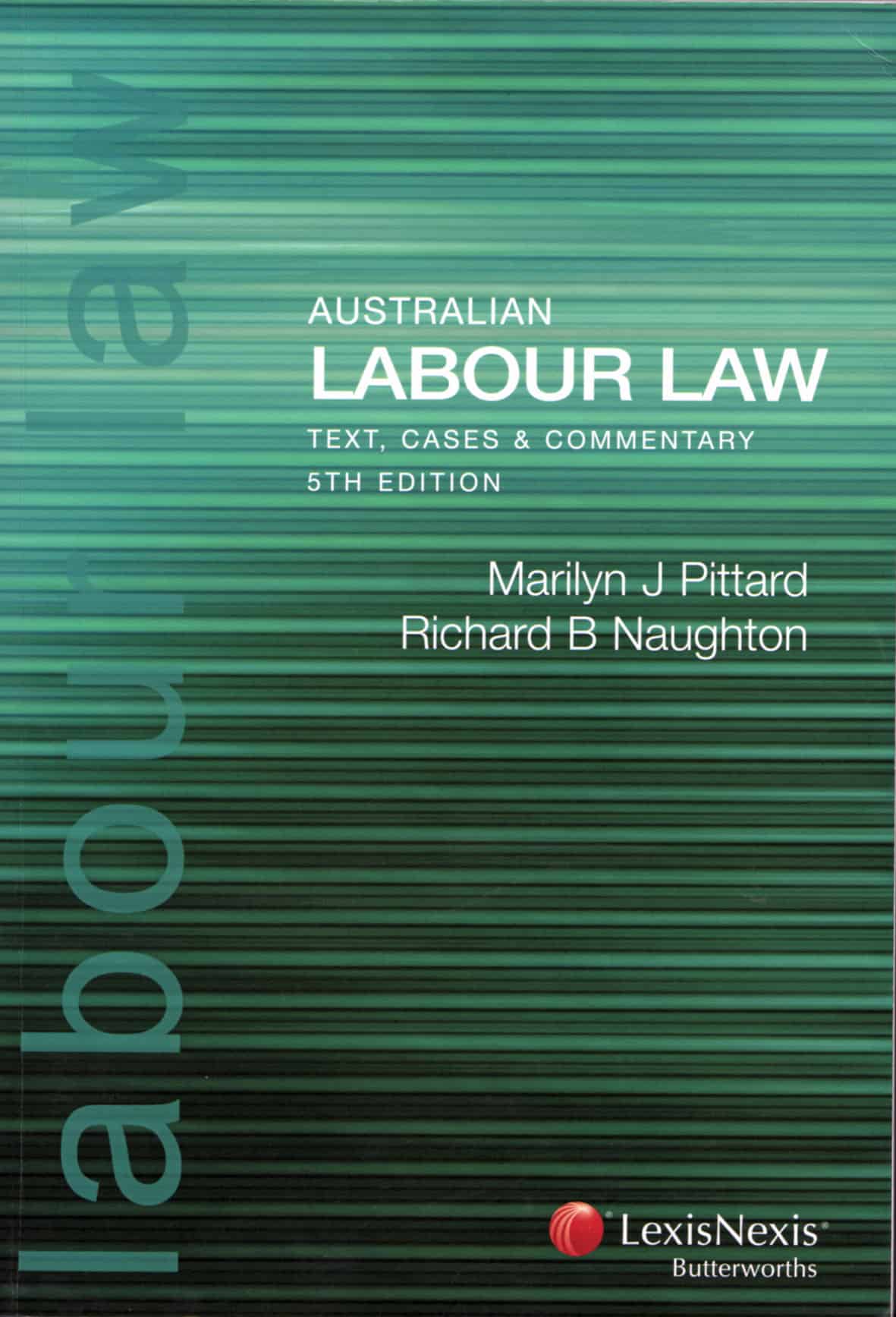
The question in the title of this article came about from the release of a fabulous new book by LexisNexis- Butterworths – Australian Labour Law – Text, Cases & Commentary, 5th edition.

Through my introductory look at the book, it seems that occupational health and safety gets around half a page in a book of over 1200 pages.  As an OHS reader I was disappointed, as I believe that OHS is an important subset of labour law.  My belief is echoed by some Australian publishers who include, usually, a chapter on OHS in their labour law titles.  LexisNexis has never been a publisher of OHS information with the market leader being CCH but with Federation Press holding the more quality and original sector.

One possible reason for the lack of OHS is that the authors, Marilyn J Pittard and Richard B Naughton are lecturers in labour law at Monash University and OHS does not feature in their program.  Another could be that the book is a monolithic volume already and, perhaps, OHS could not be given adequate attention without adding a couple of pounds to the book and generating a manual handling risk.

It is hoped that LexisNexis realises there is a market opening for authoritative and fresh writing on OHS in Australia, particularly in this period of change due to harmonisation.  The morphing of OHS in the areas of due diligence and risk management are particularly interesting to watch. Continue reading “Is OHS part of Labour Law?”

What is the best OHS conference you have attended and why?

Australia is beginning the new year’s rounds of safety conferences.  There is always a lot to criticise on OHS conferences but SafetyAtWorkBlog wants to hear about the best safety conference you have attended and what made it so good?  (Teleconference and web-based conferences will be dealt with another time.

Was it the speakers? The venue location? The comfy chairs?  The lunchtime food?  The quality of conference attendees? Or the really cool USB of conference papers included in the ID card lanyard, as happened recently in Australia?

The most interesting comment will receive two OHS-related books from the SafetyAtWorkBlog review copy library (there may be scribbles in the margins).

Kevin Jones

Dipping into workplace violence

Jeff Sparrow recently gained considerable media attention with his book that reflected on violence in society.  Yossi Berger once described occupational health and safety as a “kind of violence” in his book of that title.  There is a lot of research  into occupational violence, much of it from the United States which, to some extent, has an unrepresentative view of this hazard.

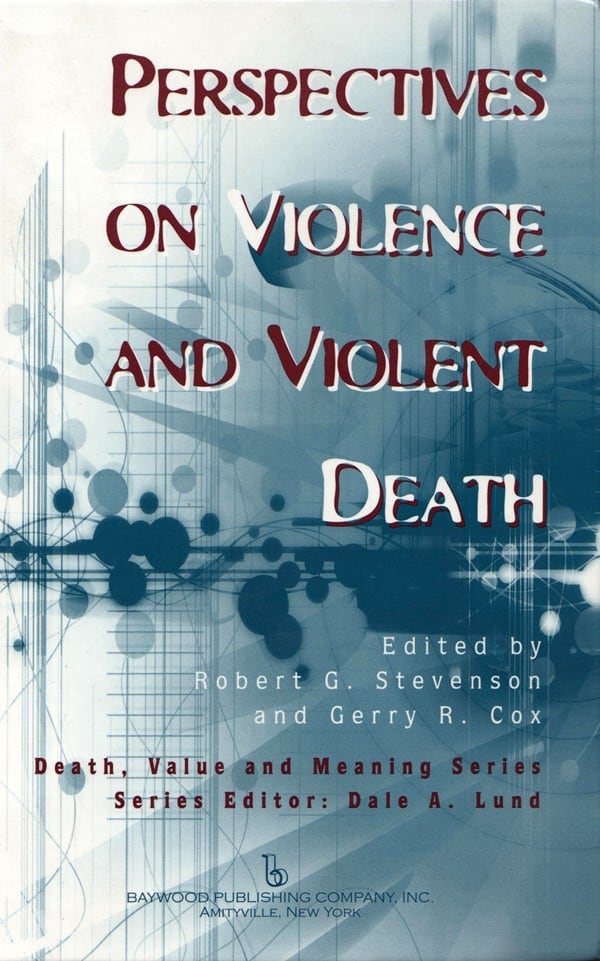
An interesting, and brief, discussion on the matter is a chapter in the book “Perspectives on Violent and Violent Death” published by Baywood Publishing.  The existential perspective of one particular chapter may make it impractical for safety management purposes but as a background article for provoking thought, it is very good.

Without this chapter I would not have found the work of C E Newhill* into client violence in social work or that of C L Charles.  Charles identified some factors that have contributed to the “anger epidemic” which may provide some clues on understanding occupational violence.   These are listed below:

Another new Australian safety journal

In November 2009, the Safety Institute of Australia published its first edition of its peer-reviewed journal.  At the time it was described as a good start.

Also in 2009, another safety-related peer-reviewed journal was released and this one has avoided some of the SIA journal’s shortcomings…. in a way.  For a small academic country this now makes three OHS journals.  The International Journal of Social Security and Workers Compensation (IJSSWC) is published by Curtin University’s School of Business Law and is only available online. Continue reading “Another new Australian safety journal”

A good book of safety solutions case studies

Australia has many safety awards programs.  SafetyAtWorkBlog has reported on some of the practical solutions from the awards and lamented how the prominence of such solutions fades quickly as the mainstream media ignores them.  The blog has also shown examples of a hard copy solutions database that existed in Victoria and Australia for a couple of decades.

The European Union’s Agency for Safety and Health at Work has recently released, online, a publication in support of its risk assessment campaign that shows how safety solutions can be presented and shared without worrying about commercial-in-confidence or intellectual property.

Jukka Takala, Director of EU-OSHA, says in his foreword

“This report supports the campaign by providing information on successful interventions in the workplace illustrating how the hazards identified after a risk assessment can be eliminated or controlled. The report is aimed at those who are responsible for carrying out risk assessments in the workplace and for preparing decisions on risk elimination or control measures.”

The report, “Assessment, elimination and substantial reduction of occupational risks“, also provides a list of some very useful elements for preventative safety

“The employer shall implement the measures (necessary for the safety and health protection of workers) on the basis of the following general principles of prevention:

(a) avoiding risks;
(b) evaluating the risks which cannot be avoided;
(c) combating the risks at source;
(d) adapting the work to the individual;
(e) adapting to technical progress;
(f) replacing the dangerous by the non-dangerous or the less dangerous;
(g) developing a coherent overall prevention policy;
(h) giving collective protective measures priority over individual protective measures;
(i) giving appropriate instructions to the workers”

The report is very useful in its clarification of the role and potential benefits of risk assessment.  Each solution is described, in detail, as a case study and the report includes guarding issues, manual handling and psychosocial hazards.  On the latter category, here is the summary for psychosocial hazards in hospitals

“Stress in hospitals – assessment of psychosocial and physical risks

Hospital work is known to be physically and psychologically demanding.  A pilot project was therefore set up in a hospital with 470 employees to assess workplace risks and organisational aspects.  The workers were exposed to physical strain, risks from chemical and biological agents and psychosocial strain.  They were also stressed by administrative tasks. After the assessment the results were analysed, action plans drawn up and measures implemented.  Risk assessment became a standard part of quality and health management systems, including training.”

One of the particularly interesting element in this program was that one of the first sources of information it used was quality management documentation.  Quality management is one of the most under-utilised sources of OHS and strategic planning data.  As long as quality managers do not perceive quality as a business element above that of safety, environment or any other, as long as they accept that each element is of equal importance in integration of management system, the quality data will be indispensable.

The quality data is followed up by interviews with middle- or line managers, questionnaires and observations.

Of all of the control measures, this organisational change was very clever:

“The administrative tasks, in particular, were perceived by the nurses to be distracting and onerous.  They felt that paperwork kept them away from important care work.  Consequently, administrative tasks were delegated to the night shifts, where there was more time to devote to them as the amount of care work fell at night.”

This looked at workload in a peak/off-peak context that fits with the natural rhythm of the clients.  The paperwork night-shift may be a suitable solution for other workplaces and the night-shift workers may have increased productivity due to the lack of distractions.

EU-OSHA keeps producing reports and publications that call out for a broader readership than Europe and this is a great example.

Kevin Jones

Asbestos Awareness Week – journalist conversation

On 25 November 2009, the Victorian Trades Hall hosted a conversation on asbestos and corporate management between two well-respected Australian journalists and writers, Matt Peacock and Gideon Haigh.  Over the last few years both have produced excellent books focusing on the role of James Hardie Industries in the asbestos industry in Australia.

The books, Killer Company and Asbestos House, respectively, provide different perspectives on the conduct of James Hardie Industries, the various board members and the support provided to the company over many decades by various Australian and State governments.

While SafetyAtWorkBlog is producing articles about the event, below is a one minute video sample of the event where Matt Peacock is talking about the PR mastery of James Hardie Industries.

Kevin Jones

Leadership – research, mental health and what true leadership is.

Scandinavia produces some of the best research into OHS issues.  However, due to the social structure of Scandinavian countries, the research has little direct and practical application outside the region.  The research is best taken conceptually as it will need to be evaluated closely to determine local applicability.

(TIP: whenever an OHS researcher says “recent Scandinavian studies show….” remind the researcher which country they are in and ask them to explain the practical application in the local context)

In early 2009, there was a bit of media attention about research that found, according to researcher Anna Nyberg

“Enhancing managers’ skills – regarding providing employees with information, support, power in relation to responsibilities, clarity in expectations, and feedback – could have important stress-reducing effects on employees and enhance the health at workplaces.”

In October 2009 Anna Nyberg’s thesis on the issue was released.  According to the abstract to her thesis

“The overall aim of this thesis was to explore the relationship between managerial leadership on the one hand and stress, health, and other health related outcomes among employees on the other.”

Nyberg’s thesis details the needs for some adjustments in the research to allow for “staff category, labour market sector, job insecurity, marital status, satisfaction with life in general, and biological risk factors for cardiovascular disease.”  These adjustments are important to remember when reading any of the media statements about Nyberg’s research.

There were five studies within the thesis and, according to the abstract, they found the following:

“Attentive managerial leadership was found to be significantly related to the employees’ perceived stress, age-adjusted self-rated health and sickness absence due to overstrain or fatigue in a multi-national company.”

“Autocratic and Malevolent leadership [in Sweden, Poland, and Italy] aggregated to the organizational level were found to be related to poorer individual ratings of vitality…. Self-centred leadership … was related to poor employee mental health, vitality, and behavioural stress after these adjustments.”

“… significant associations in the expected directions between Inspirational leadership, Autocratic leadership, Integrity, and Team-integrating leadership on the one hand and self-reported sickness absence among employees on the other in SLOSH, a nationally representative sample of the Swedish working population.”

“… significant associations were found between Dictatorial leadership and lack of Positive leadership on the one hand, and long-lasting stress, emotional exhaustion, deteriorated SRH [self-reported general health], and the risk of leaving the workplace due to poor health or for unemployment on the other hand.”

“In the fifth study…a dose-response relationship between positive aspects of managerial leadership and a lower incidence of hard end-point ischemic heart disease among employees was observed.”

But what can be done about the negative affects of poor leadership on health, safety and wellbeing?  The thesis is unclear on this, other than identifying pathways for further research in this area.

The SafetyAtWorkBlog  recommendations, based on our experience, are below

  • Carefully assess any training provider or business adviser who offers leadership training.
  • Ask for evidence of successful results in the improvement of worker health and wellbeing, not just a list of client recommendations.
  • Look beyond the MBA in selecting senior executives.  If you expect executives to establish and foster a positive workplace culture, they need to have to be able to understand people as well as balance sheets.
  • Remember that the issue of leadership as a management skill is still being investigated, researched and refined.  It is not a mature science and may never be, so do not rely solely on these skills.
  • Some say that leadership cannot be taught and cannot be learned.  Some say that leadership, as spruiked currently, is not leadership, only good management.  Leadership only appears in times of crisis and manifests in response to critical need, not in response to day-to-day matters.

This last point needs a reference – page xiii of “Seventh Journey” by Earl de Blonville

“… leadership cannot be taught.  If it is being taught, it may just be management, rebadged at a higher price.  The second discovery was that leadership is not about the leader, which will confound those with a needy ego.  There were two more things that revealed themselves to me: leadership is all about paradox, which is why it resists attempts to tame it into a curriculum, and at its core leadership is lonely, requiring the strength that could only come from a grasp of its intrinsic paradox.”

Kevin Jones

Concatenate Web Development
© Designed and developed by Concatenate Aust Pty Ltd