Biomarkers for musculoskeletal disorders

Slips, trips and falls are often the neglected “bastard son” of occupational health and safety but the can cripple and can, literally cost an arm or a leg.

The traditional approach to control these hazards have been to make  the working environment safer by mopping up spilled liquids, for instance, or be using a piece of equipment such as a stepladder, or in the long-term or in the beginning of a project, to design out hazards.

We also know that musculoskeletal disorders (MSD) make occur suddenly, and dramatically and painfully, but one’s body has accumulated weaknesses over time.  The UK’s Health & Safety Executive (HSE) has released a research report that indicates a new approach to MSDs or at least a start. Continue reading “Biomarkers for musculoskeletal disorders”

Dignity At Work, different UK and Australian approaches

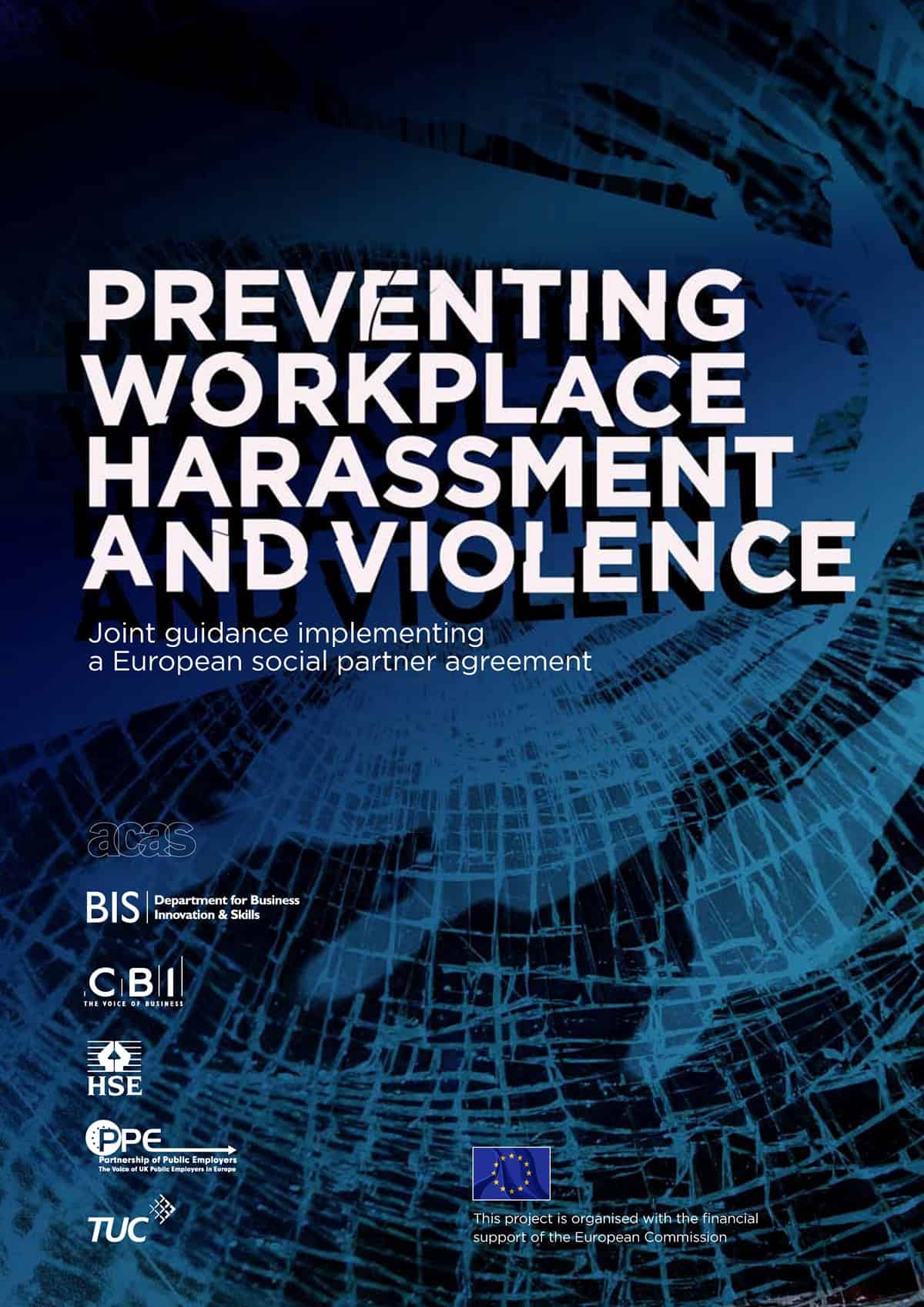
On 26 January 2010, a fascinating document was released from England concerning  workplace harassment and violence.  This builds on earlier work in Europe and has led to the joint guidance on “Preventing Workplace Harassment and Violence“.

The guidance has the demonstrated support of employer, employee and government representatives who have committed to

“…ensuring that the risks of encountering harassment and violence whilst at work are assessed, prevented or controlled.”

Significantly they also state

“We will implement our agreement and review its operation.”

Continue reading “Dignity At Work, different UK and Australian approaches”

Survey shows continuing increase in mobile phone use while driving

The use of a mobile phone while driving can be very dangerous for other vehicles, pedestrians and drivers themselves.  New communications technology has been devised to accommodate the less-new technology of mobile phones but in itself hands-free technologies are masking the risk.

Although this hazard is across the driving community, there is particular relevance for workplace drivers as their status complicates the arguments against talking or texting while driving and provides additional control measures. Continue reading “Survey shows continuing increase in mobile phone use while driving”

Compliance campaigns not toothless

Regularly Australian OHS authorities announce campaigns in certain regions or for certain industries.   To some extent these campaigns are about raising awareness of OHS issues but the fieldwork by inspectors does have some real benefit for some employers and workers.

Often these campaigns result in scores of improvement notices being issued.  Safety improvements are a major part of this inspectorate activity so, to some extent, the more notices, the better.  But notices aren’t advisories, they are directions that require action. Continue reading “Compliance campaigns not toothless”

Getting safety promotion right

The Health & Safety Executive (HSE) has come in for a lot of “stick” over the last few years by seemingly over-reacting to OHS hazards.  In many cases, these reports have come from a misinterpretation of OHS rules and guidelines or a misunderstanding of the basic principles of safety.  In some cases it is simply a beat-up my England’s tabloid media.

However, this attitude to safety and the creation of a misperception of OHS has annoyed the HSE.  Below is a video that the HSE produced, going by the tone of the video, in response to the bad press.

The “Right People” campaign seems familiar to many other campaigns attempted around the world and the introduction depicting silly headlines shows that the HSE is think-skinned.

Much more successful is the HSE’s recent campaign about safety in farming.   Continue reading “Getting safety promotion right”

Shipbreaking Explosion

In September 2009 several workers were killed and burnt when cutting up an old tanker that still had chemical residue.  The National Labor Committee (NLC)  has released a a ten minute video interview with the NLC Executive Director, Charles Kernaghan.

According to an 11 January 2010 NLC notice:

“Eight more workers in Bangladesh were burned to death on December 26, 2009, when the ship they were dismantling exploded.   The workers had been told that the gas tanks on the Agate oil tanker had been cleaned.   It was a lie.   Continue reading “Shipbreaking Explosion”

Cabinet-making compliance

In March 2008, in Western Australia, a 22-year-old worker was crushed to death when a stack of veneered chipboard sheets toppled onto him.  This sparked an audit campaign of the cabinet-making industry in 2009 by WorkSafe WA about which some results were released on 12 January 2010.

Such results are not often covered in this blog but the number of improvement notices provide a useful summary of the persistent hazards present in this industry and on machinery that is used in a variety of workplaces. Continue reading “Cabinet-making compliance”

Concatenate Web Development
© Designed and developed by Concatenate Aust Pty Ltd