
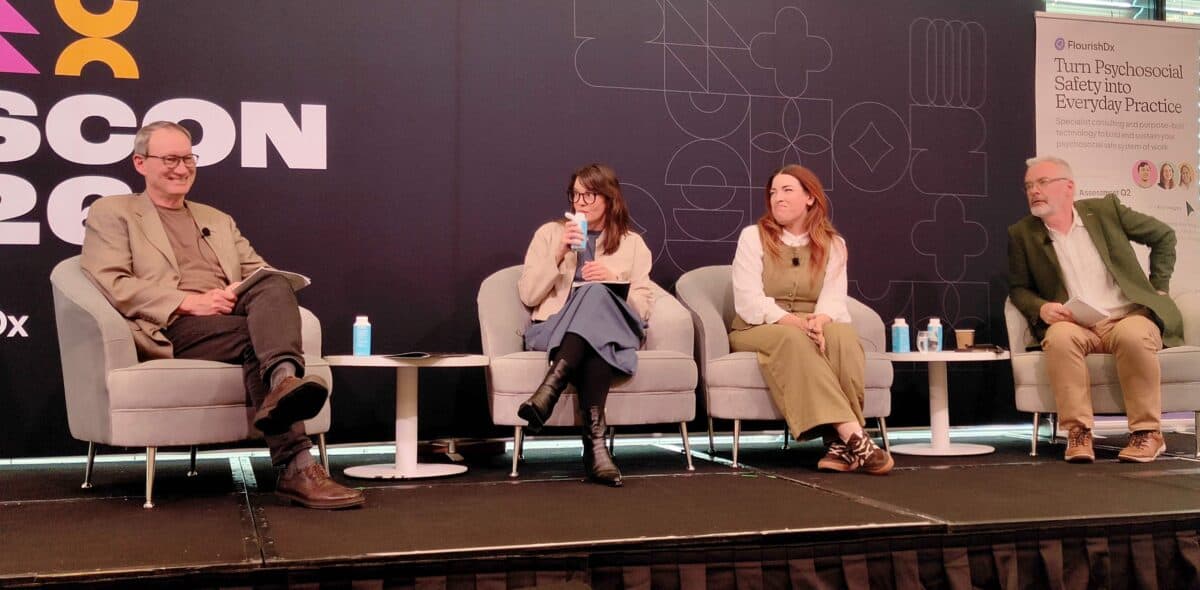
Across her 2024 and 2026 appearances at the Psych Health and Safety Conference, WorkSafe Victoria’s Amy Salmon’s message about psychosocial regulation in Victoria has shifted from explaining that psychosocial and psychological obligations exist to showing how compliance works in real life. The shift is subtle but important. In 2024, she was still fighting the battle of psychosocial legitimacy, pushing back against employers waiting for “the regs,” while by 2026 she was focused on operational detail, inspector capability and what reasonable compliance looks like in real workplaces.
Category: compliance

The EU’s New Psychosocial Proposal Puts Australia on Notice
Australia often positions itself as a leader on psychosocial hazards and occupational health and safety (OHS). A new proposal from the European Parliament (EP) provides a contrast.

What was Missing from the Bullying and Harassment Conference?
The IAWBH2026 sessions offered a revealing snapshot of how international practitioners are grappling with bullying, harassment and gendered violence at work—and how closely these discussions align with Australia’s psychosocial‑hazard framework. Several presentations landed squarely within the Australian work health and safety (WHS) model, particularly those that treated these issues as structural hazards requiring organisational controls. Sapphire Parsons’ argument that gendered violence demands primary prevention, equitable decision‑making, and action on power imbalances mirrors the prevention‑first duties under Australian safety law.
However, there were also indications of how far the change has to go.
Continue reading “What was Missing from the Bullying and Harassment Conference?”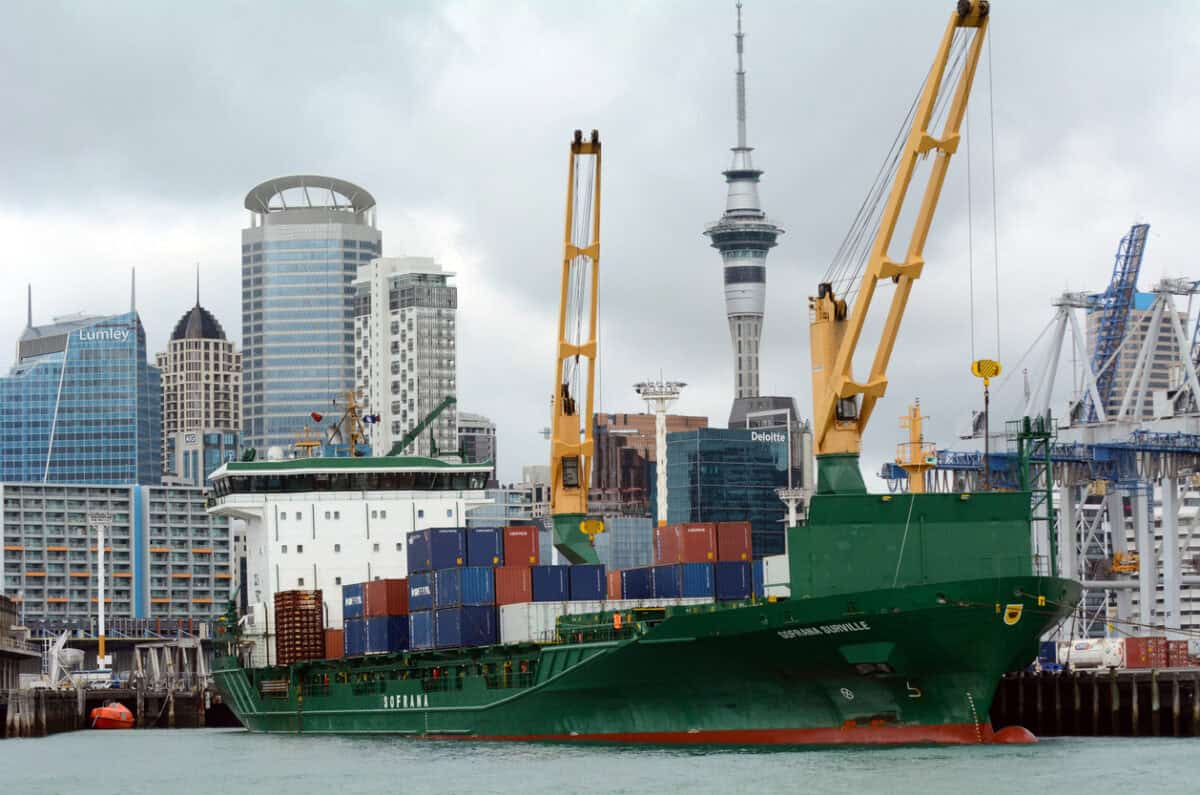
A Workplace Death. An Upheld Conviction. And a Standard Every C-Suite Officer Should Understand.
A post written by Wade Needham (April 15, 2026), and reproduced with permission.
Two judgments totaling 75,000 words were handed down across 2024 and 2026. Not everyone will read them. Everyone should understand what they establish.
Years ago, during commissioning work at Port Hedland for the Roy Hill project, someone asked me how I knew the night shift crew were following the isolation procedure for livening the sub stations. I could name the critical risk. I could point to the training records, the procedure, the sign-off sheet, the safety advisor on shift. And when they asked how I knew it was being followed at 2am when nobody was watching, I paused. Long pause. Then I said something like “Well, the reports don’t show any issues.”
I have never forgotten that pause. Because I knew, in that moment, that I was describing paperwork. Not reality.
That is the most dangerous sentence in safety governance. The reports don’t show any issues. It is the sentence that sat underneath everything that went wrong at the Port of Auckland. I wanted to distil down elements of the judgement I found insightful.
But first, a too-long, don’t-want-to-read summary for those short on time.
Continue reading “A Workplace Death. An Upheld Conviction. And a Standard Every C-Suite Officer Should Understand.”
Celebrity Does Not Cancel the Duty of Care
A hugely popular radio show in Australia, hosted by Kyle Sandilands and Jackie O (Henderson), has been offensive for a long time, but offence can also be entertaining and economically lucrative. Last month, the host clashed on air, resulting in Jackie O leaving. Now there is legal action on several fronts, and psychological health and safety at work is being considered to some extent, and could/should be considered more.
Reframing Workplace Safety as an Economic Strategy for the 2026 Budget
In just over a month, Treasurer Jim Chalmers will hand down the 2026 Federal Budget. While political attention will focus on cost‑of‑living pressures and international instability, the Budget also presents an opportunity to rethink how Australia could treat occupational health and safety (OHS) as an economic lever instead of just a business cost.
Ask not what your country can do for you; ask what you can do for your country
Safe Work Australia has just published a summary report of its review into best practice. It is a curious document, essentially a summary of the perspectives of many organisations interested in occupational health and safety (OHS), particularly regarding OHS laws. It is an important distinction that this review was not about OHS but the laws that we use to provide safe and healthy work.