Fair Work Act and OHS

On 1 July 2009, the Australian industrial relations (IR) climate changed with the introduction of the Fair Work Act. Regardless of the politics of the new Act’s origin, this legislation changes the way that working conditions for Australians are negotiated and set.

The  Fair Work Act has no relevance to occupational health and safety, so why mention this on SafetyAtWorkBlog?

The new IR legislation should reduce the conflict that has been existent in workplace negotiations.  The new industrial climate is consultative and  forward-looking.  In fact, the government is hoping that, to some extent, this legislation reboots industrial relations (to borrow a phrase from current international diplomacy).

Fair Work Australia Commissioner Lewin

It is in this IR climate, and consultative structure, that OHS issues will need to be discussed and negotiated in the future.

In a webinar conducted by SmartCompany and Gadens Lawyers on 9 July 2009, the openness of the information/consultative processes was stressed by panellist, Kathryn Dent.

This positive management climate reflected that presented in an earlier seminar conducted by Douglas Workplace Lawyers.  Fair Work Australia Commissioner Lewin  and lawyer, Andrew Douglas, spoke about how the new IR system is more inclusive than the previous WorkChoices systems.  However, they also admitted that the Fair Work Act has nebulous support documentation and information.

Andrew Douglas
Andrew Douglas

The level of prescription is much less than previous.  This allows for less restrictive negotiation but it also means that clarity may rely on determinations made by the tribunal.  Commissioner Lewin concurred with Andrew Douglas’ point that the operations of the Fair Work system will require several years of “settling in” and some adjustments depending on determinations.

When raising OHS issues for the next year or so in Australia, employees and professionals need to be reminded that many of the managers and employers with whom they are dealing may well be feeling swamped by new industrial relations processes.  This distraction may be understandable but OHS obligations remain the same regardless of other management issues.

OHS may seem to be more messy during this period as the IR overlaps with the “safe systems of work”.  Unless IR is already part of the responsibilities of an OHS professional, the advice is to keep away from the details of the Fair Work Act.  However it is recommended that at least one seminar on the Fair Work Act be attended so that the “tone” of the new legislation is understood.  More important is how the Act is to be applied within the workplaces of one’s clients or employer.

Safety management systems will need to be tweaked to fit with the new consultative aims and processes.  Of course, they will need to be tweaked again once the harmonised national OHS legislation comes begins in 2010.  Don’t expect stability in Australian workplaces for the next couple of years.

Kevin Jones

Safety culture improvements in Spain

The improved safety status in workplaces that have an active union presence has been verified through research, but what of the efforts on safety management from outside the union research efforts.

Below is the abstract of an article that was published online late-2008 (and is available for purchase).  The research was conducted in a country with a negative safety culture so the improvements may be more marked than from outside Spain.  However, the full study (not accessed by SafetyAtWorkBlog) may provide an interesting before-and-after story.

“Occupational accidents severely deteriorate human capital, and hence negatively affect the productivity and competitiveness of countries. But despite this, we still observe a scarcity of preventive practices, an unsatisfactory management commitment and an absence of safety culture among Spanish firms. The result is evident in firms’ high accident rates.  This situation is a consequence of the general belief among firms that investing in safety is a cost, and hence has negative repercussions for their competitiveness.  The current work aims to identify good practices in safety management, and analyse the effect of these practices on a set of indicators of organisational performance.  For this, we first carry out an exhaustive literature review, and then formulate a series of hypotheses.  We then test the proposed model on a sample of 455 Spanish firms.  Our findings show that safety management has a positive influence on safety performance, competitiveness performance, and economic-financial performance.  Hence they provide evidence of the compatibility between worker protection and corporate competitiveness.”

The full article is available in Safety Science (Volume 47, Issue 7, August 2009, Pages 980-991).

Kevin Jones

B Fernández-Muñiz, J Montes-Peón and C Vázquez-Ordás, ‘Relation between occupational safety management and firm performance’ (2009) Safety Science 47: 980-991.

Evidence, subjectivity and myth

There is a big push for occupational safety and health decisions to be made on evidence.  OHS academics in Australia are particularly big on this and there is considerable validity in the lobbying but as academics can have a vested interest in research, the calls are often dismissed.

There is also, around the world, a questioning of the value and validity of the risk assessment process related to workplace safety.  In Europe, in particular, the business groups see risk assessment as a major unnecessary business cost (but then again, how many businesses even perform OHS risk assessments?).  Risk assessment has often been criticised because of its subjectivity.  In some circumstances, risk assessment may perpetuate workplace and safety myths.

In the absence of evidence, myths fill the gap.  Sometimes assessments, investigations, estimates and FOAFs (friend of a friend) add to the tenuous credibility of those myths.

Peter Sandman has talked about dispelling myths through risk communication.  One myth he discusses, the risks of flu vaccinations, is also touched on in an interview with Dr Aaron E. Carroll of the Indiana University School of Medicine on the ABC’s Life Matters program.

OHS professionals must seek evidence on workplace hazards so that their advice is sound but equally, myths must be countered.  The links in the paragraph above, along with the excellent website, www.snopes.com, can provide some assistance in how we can reduce the transmission of myths.

I am a big advocate of the “contrary”.  Only by asking questions about established beliefs and tenets can the flaws in our decision-making be illustrated.  Sometimes this is dismissed as being a “Devil’s Advocate” but the process does not advocate bad behaviours, it questions the basis for established behaviours – a process that many people, organisations AND business find enormously threatening.

As we get older or become socialised, we tend to forget the tale most of us heard as a child, The Emperor’s New Clothes.  This tale should be read regularly to remind us of how the contrary position, the quizzical, can be constructive and sometimes, revolutionary (even though in the tale the Emperor ignores the child’s spoken truth) but still provide evidence.

Kevin Jones

Sitting (not so) pretty

New Australian research shows hours of sedentary activity, like typing emails or sitting at a quality control station, are associated with higher cardio-metabolic health risks that are independent of time spent in moderate-to-vigorous intensity physical activity.

DrGenevieveHealyAccording to a media statement from University of Queensland and Baker IDI research fellow, Genevieve Healy, (pictured right) 

“Although many Australians have adopted the recommendation of getting at least 30 minutes of moderate to vigorous activity on at least five days of the week, we’ve been getting more overweight.

“The most plausible explanation is that 30 minutes constitutes a very small proportion of waking hours.  It’s equally important to look at what the person is doing for the remaining 15 and-a-half hours of the day.  A person who follows the guidelines of 30 minutes of brisk walking and spends the other 97 per cent of waking hours sitting is ‘physically active’ according to public health guidelines.  However, the term ‘active couch potato’ is probably more appropriate,” Dr Healy says.

Dr Healy will be speaking more on her reseach at the Queensland Safety Conference in Brisbane, Australia on  18 June 2009.

Offshore industry regulator performance

Australia’s National Offshore Petroleum Safety Authority (NOPSA) has released a report of its own OHS performance based on data from 2005 to 2007.  NOPSA has been in the public eye far more than normal due to the Varanus Island explosion and the various investigatory reports.

The report seems to indicate that, as a regulator, NOPSA is performing to expectations.  NOPSA’s CEO John Clegg has acknowledged that the  industry is below the level of its overseas counterparts.  This is peculiar given that other Australian resources industries, like mining, are ahead of other countries and that safety in the offshore industry has had a high profile ever since Piper Alpha.

The report identifies challenges that are difficult but not very surprising:

  • improving leadership – strong leadership is required for the Australian industry to move to the next level
  • dealing with a shortage of skilled personnel
  • managing ageing facilities and minimising gas releases

It will be very interesting to watch the benchmarking of NOPSA and its future role through the OHS harmonisation process that Australia is undergoing.

Below is the full report and the performance summary.

Kevin Jones

NOPSA 2007-08 cover

   NOPSA summary 2007-08

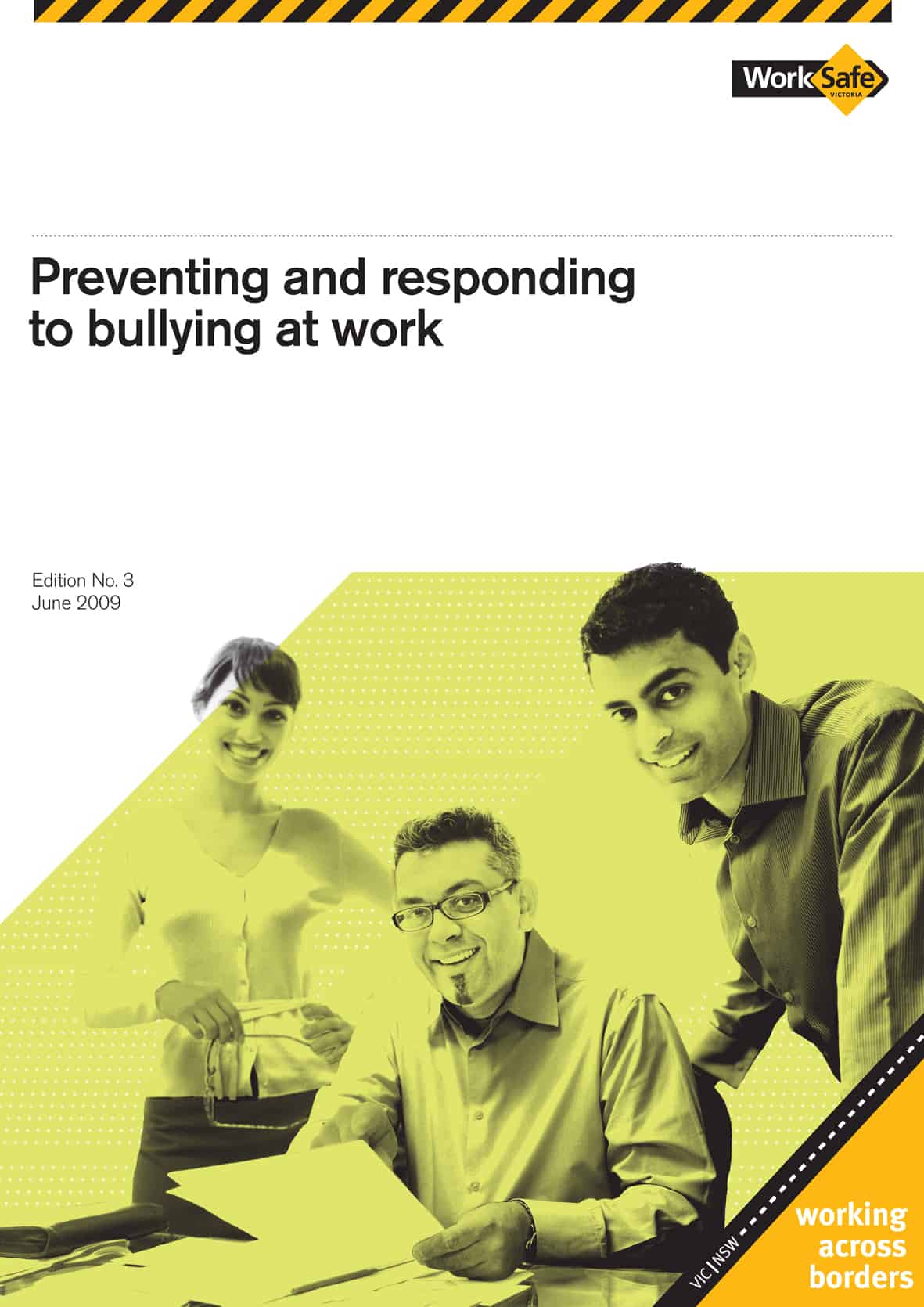
Workplace bullying possibly increasing

A United States report draws a parallel between increasingly difficult economic situations and an increase in workplace bullying.   This video report is lightweight but is a recent airing of the issue with a different approach.

The angle taken in the story is that of a “pink elephant” that women are just as likely to bully their workmates as men are.  Some of the speakers in the video try to relate female bullying to issues of female empowerment but bullying is more often a reflection of personal nastiness than a social movement.

Bullying received increased focus when workplace culture emerged but rather than a gender issue, our increasing intolerance for bullying is coming from a broader cultural movement than just through the workplace.

The video report originated through research undertaken by the Workplace Bullying Institute, an organisation that has existed for sometime and has very recently upgraded its website.

Kevin Jones

Groundwork for employee engagement

Safety professionals should be suspicious of many management trends.  Over the last decade behavioural-based safety has been popular and more recently workplaces have been subjected to the application of amorphous concepts such as leadership and engagement.  Many of these are dressing up old approaches to management in new jargon,  some have little evidence to back up their claims.

At the end of April 2009 the Society for Industrial and Organizational Psychology (SIOP) identified limits to the application of employee engagement.  A SIOP statement said 

 Study after study has shown that an engaged workforce is considered desirable in any organization and leads to greater productivity and profitability. In short, There seems to be no downside to employee engagement. However, Thomas Britt, an industrial-organizational psychology professor at Clemson University, cautions there are some limits to employee engagement that managers should consider.

Britt acknowledges that employees who are actively involved in the management and decision-making of their company provide greater productivity and profitability. In modern parlance, engagement is good.  But he identifies several issues that should be considered.

“If [engaged workers] are not getting the resources they feel they need to perform at their best, their engagement may be diminished.”

So worker enthusiasm and initiative needs to be adequately supported.

Britt said performance could be restricted by

  • lack of budget and equipment support,
  • access to important information,
  • work overload,
  • unclear objectives and goals, and
  • assigning employees’ tasks that don’t fit their training.

SIOP said 

Britt’s research shows engaged employees are likely to become frustrated and dissatisfied and may blame their supervisors if they do not have the systems and support necessary to be effective. Given the higher pro-activity and energy levels of engaged employees, this frustration could lead to turnover as they begin to look for more supportive work environments. “The ones who stay behind may well be the ones who just don’t care,” said Britt.

 Work overload can lead directly to burnout.  According to SIOP, Britt said

 “highly motivated employees are willing to go beyond the call of duty to help the organization, but when temporary overload continues and they repeatedly fail to meet their own high expectations, their motivation becomes directed at locating other job possibilities, leaving the organization at risk of losing key talent.”

The impediments to an engaged workforce can often be missed in the enthusiasm of the engagement evangelists It is important not to dismiss the enthusiasm but to temper it so that any benefits are long term.  For any new management approaches to work, there must be adequate groundwork so that the participants know the reasons for change, this will help the new approach succeed.

In short, business needs to acknowledge that consultation is a basis for improvement not a communication method of telling people about change.  As SafetyAtWorkBlog has said consultation occurs in preparation for change as well as during and after.  Thomas Britt and SIOP have provided excellent ideas of the areas of threat for an employee engagement program.

More information may be available at  www.siop.org.

Kevin Jones

Concatenate Web Development
© Designed and developed by Concatenate Aust Pty Ltd