New research lays down the challenge on quad bike safety

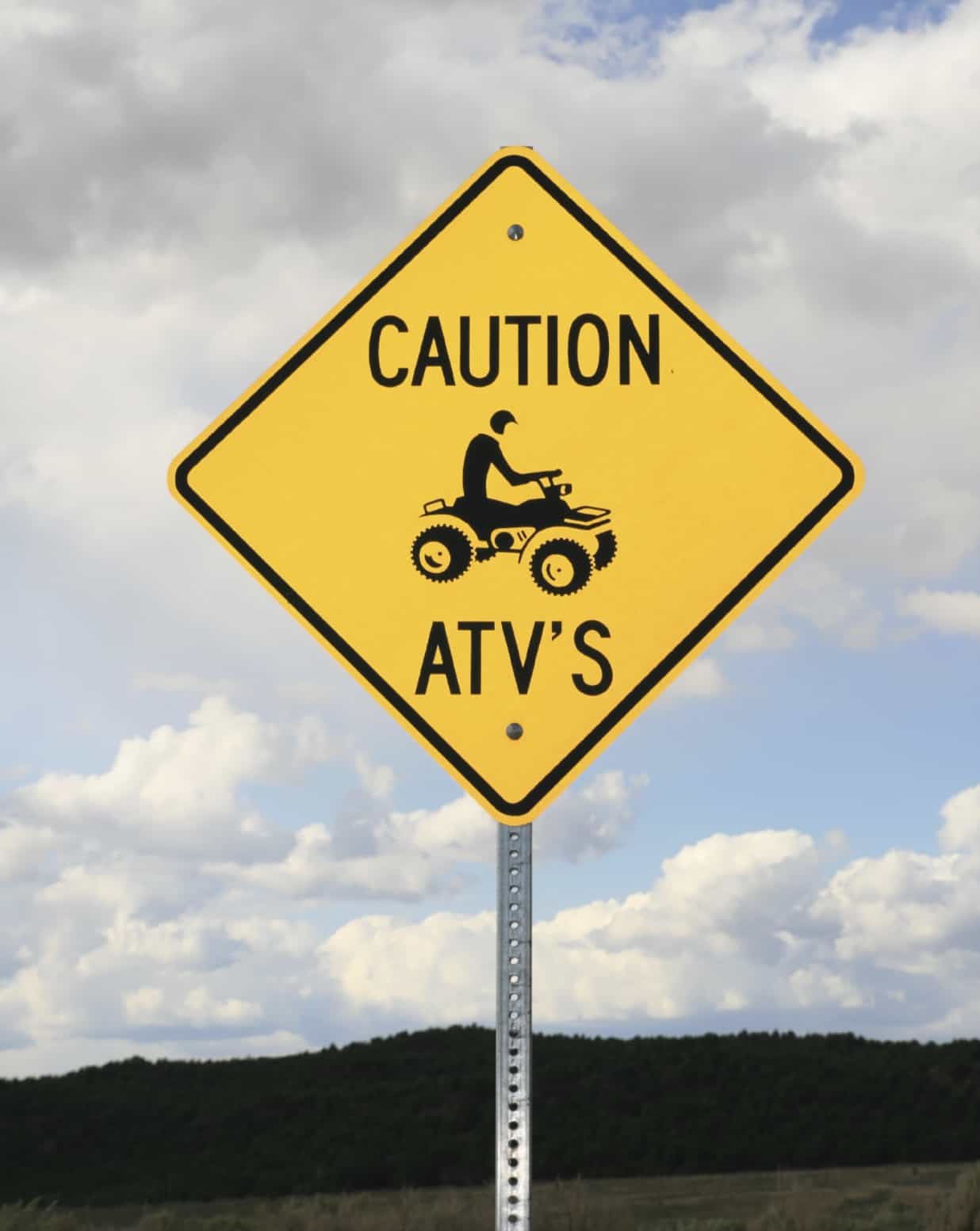
Cover of 24ESV-000144In June 2015 a research report was  presented to a traffic safety conference in Gothenburg, Sweden that is set to reignite the debate on quad bike or all terrain vehicle (ATV) safety in Australia.

The paper entitled “The Australian Terrain Vehicle Assessment Program (ATVAP)” (Paper No.15-0144-W in the Technical Papers section of the

Subscribe to SafetyAtWorkBlog to continue reading.
Subscribe Help
Already a member? Log in here

Factual reporting and the OHS Body of Knowledge

Pam Pryor,  Registrar, Australian OHS Education Accreditation Board, responds to some issues raised in a recent blog article.

The Safety Institute of Australia and the Australian OHS Education Accreditation Board welcomes informed, constructive comment on their activities and on OHS in general.

The paper Reflection on the SIA Ltd professional project and the Body of Knowledge (Pearse, McCosker & Paul, 2015) makes a number of assertions which must be addressed to ensure readers have an accurate understanding of the issues and the discussion. This article addresses just one of these assertions: The OHS Body of Knowledge promotes a narrow technical view of OHS.

While commenting that the reason for the existence of the OHS Body of Knowledge is unclear Pearse et al., also note that there is no industry-wide agreement on the educational requirements to practice as an OHS professional; that there is no unified body of knowledge for OHS; and the evidence base in relatively low and underdeveloped. All comments with which we would agree and also clear reasons for the development of an OHS Body of Knowledge and the discussions which have arisen, and will continue to occur, on what should comprise the OHS Body of Knowledge for Generalist OHS Professionals. Continue reading “Factual reporting and the OHS Body of Knowledge”

Inconsistency on OHS roles in dairy careers guide

Cover of WSV966__Dairy_Safety_webSeveral years ago, WorkSafe Victoria published “Dairy Safety: A Practical Guide“* A decade on Dairy Australia has published its career guidance “Stepping Stones” which seems to imply that not all employers and workers have a legislative responsibility to work safely and without harming others.

It is a legislative truism that “safety is everyone’s responsibility” and Dairy Australia advises that

“All farm businesses have an obligation under law to provide a safe and healthy workplace for their employees, contractors, family, visitors and members of the public. Farm businesses who don’t act to fulfil health and safety responsibilities face significant fines and penalties.”

Cover of Stepping Stones - DairyHowever according to Stepping Stones only some dairy roles have an overt occupational health and safety obligation.  Continue reading “Inconsistency on OHS roles in dairy careers guide”

Beyond auditing for due diligence

One of the most significant motivators for changes in safety leadership in the executive circles in Australia has been the obligation to apply due diligence to occupational health and safety (OHS) matters. The obligation has existed for several years now but is still dominated by legal interpretations rather than managerial ones. To support the legal obligations, OHS professionals should look at how they can add value to due diligence.  One way of achieving, and exceeding, compliance of due diligence would be to subject OHS systems and strategies to a peer-review rather than a narrow audit process. Continue reading “Beyond auditing for due diligence”

Standing desks distract from systemic analysis

The media’s focus on standing desks continues in Australia with the PM radio program on 7 May 15 stating:

“If you thought those standing desks, and even the newer treadmill desks, were a fad, think again.”

This compounds the continuing distraction from organisational causes to individual adaptability and encourages short-term thinking on occupational health and safety (OHS) issues.

The radio program built a report around some very useful research data released by the Heart Foundation which, amongst other findings, stated:

“More than one in two Australian workers reported that they do not do enough physical activity to be healthy. In fact, one in four Australian workers does very little or no physical activity at all. The most common reasons Australian workers are not physical active is due to lack of time, a lack of enjoyment when doing physical activity or simply would prefer to do other things than undertaking physical activity.”

Sedentary behaviour is an acknowledged risk factor in various chronic diseases and the Heart Foundation should be commended for providing further evidence.  But there is no mention of standing desks in the Foundation’s media release or

Subscribe to SafetyAtWorkBlog to continue reading.
Subscribe Help
Already a member? Log in here

Standing workstations – useful, fad or salesmanship?

Over the last week Australian media has been reporting on office workers using standing workstations. Given sedentary working has been shown to have negative health effects, standing seems sensible as it increases mobility but is it enough to stand?  Or is this recent media attention just another example of shallow writing on occupational health and safety matters, or even media manipulation?

An article in the Canberra Times (which appeared in other Fairfax publications around 17 April 2015) states that:

“…health and ergonomics experts say the benefits to overall health for standing-up workers is irrefutable..”

and

“Some also believe it makes workers more productive…”

The article then quotes the head of office supplies and furniture from an office furniture retailer, Jim Berndells of Officeworks.  Its next expert is another retailer of furniture, Office Workstations and its managing director Jovan Vucetic.  The attention granted to these retailers along with a mention of the price of a standing workstation and the companies that Vucetic has supplied, seems to imply that the article is less about OHS than about product information.

(It may be relevant that

Subscribe to SafetyAtWorkBlog to continue reading.
Subscribe Help
Already a member? Log in here

EU-OSHA releases a business case for safety and health at work

cover of The business case for safety and health at work-2One of the most ignored, but important, elements of occupational health and safety (OHS) management is the business case.  Work on this issue is being completed in Australia by Safe Work Australia but the European Agency for Safety and Health at Work (EU-OSHA) has beaten it to the punch by releasing “The business case for safety and health at work: Cost-benefit analyses of interventions in small and medium-sized enterprises“.  This document includes new case studies that provide detailed analysis of cost and return on investment from interventions as varied as a vacuum lifter for pavers to warm-up exercises and task assessments of domestic builders by qualified physiotherapists.

The report found that:

  • “Wide-ranging interventions appear to be more profitable than interventions targeting a particular
    issue related to the sector of the enterprise.
  • Interventions that mainly concern training and organisational change appear to be more profitable than interventions based on technical changes (such as introducing new equipment).
  • Interventions that include direct worker (participatory) involvement appear to be more profitable, regardless of whether or not increased productivity benefits are taken into account in the
    economic evaluation.
  • In most cases, the enterprises managed to estimate benefits related to increased productivity. It
    should be emphasised that increased productivity does not always come as a result of improved
    safety and health, but it is taken into account in the context of a business case.” (page 10)
Subscribe to SafetyAtWorkBlog to continue reading.
Subscribe Help
Already a member? Log in here
Concatenate Web Development
© Designed and developed by Concatenate Aust Pty Ltd