

Managing psychologically healthy and safe workplaces makes me extremely nervous. I don’t think that anyone in Australia is suitably qualified to meet the new occupational health and safety (OHS) regulations and expectations imposed by OHS regulators in response to community demands and needs. Perhaps we need a new category of professional.
Continue reading “The new approach to mental health at work may need a new profession”Category: Duty of Care
Prohibition on Administrative Controls for psychological health at work
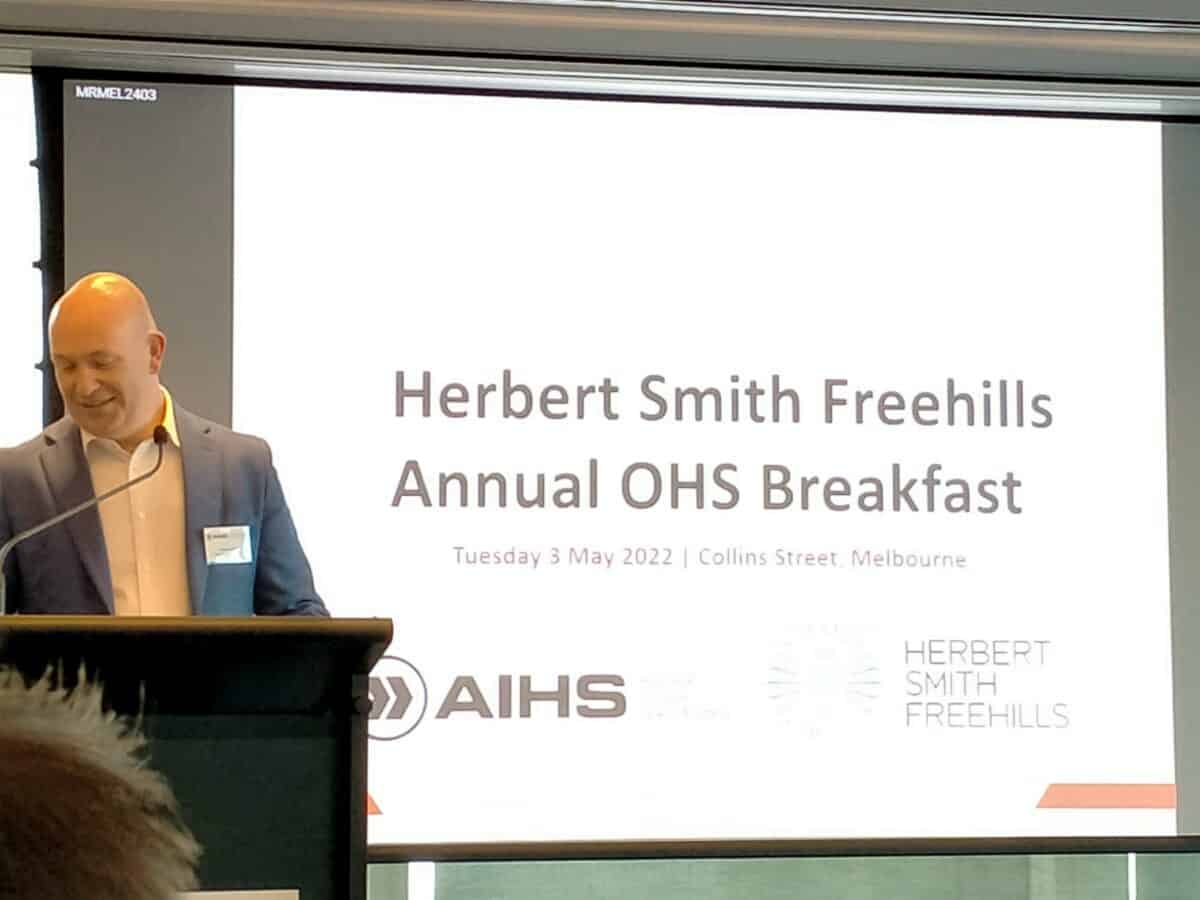
The Australian Institute of Health and Safety (AIHS) and Herbert Smith Freehills (HSF) annual breakfast physically returned this month after a few years of enforced absence. It kept its traditional structure – speeches from the local OHS regulator WorkSafe Victoria, representatives from HSF and AIHS and a summary of a salary survey report focused on occupational health and safety (OHS) professionals. The presentation that made the expense worthwhile came from one of HSF’s Regional Heads of Practice, Steve Bell, concerning new regulations for psychologically healthy workplaces.
Burnout causes are organisational. Who knew?
This blog has written frequently about “burnout” in workplaces, especially since the condition was defined by the World Health Organisation in 2019. I have seen it used many times as a shortcut, or synonym, for workplace mental health but usually only at the corporate, executive level. Workers have breakdowns, but executives seem to suffer burnout.
Recently a book was published in the United States called “The Burnout Epidemic, or The Risk of Chronic Stress and How We Can Fix It”, by journalist Jennifer Moss. What is most outstanding about this book is that the recommended fix is organisational. Usually, burnout books from the States focus on the individual worker or executive. This fresh US perspective makes the book essential reading for if the US recognises how to fix burnout and chronic stress, any country can.

HR inching its way to an OHS epiphany
A new Human Resources (HR) article shows some promise in addressing the institutional factors that lead to poor mental health in workers.
The website for Human Resources Director asks, “Should HR be concerned about employee economic insecurity?” I would ask, “how can it not be?” given that Australian research over the last twenty years and international research since early last century has identified that job insecurity is one of several major factors in poor mental health for workers and other occupational health and safety (OHS) outcomes. HR should also be anticipating a renewed duty of care from the upcoming national OHS regulations on psychologically healthy workplaces.

Nobody hates ‘”reasonably practicable” – we tolerate it
Do unions want employers to hold an absolute duty of care for work health and safety? Do unions hate the concept “as far as is reasonably practicable”?
The last Australian jurisdiction to hold employers to an absolute duty of care was New South Wales. That position was eroded by the harmonisation process and NSW OHS laws moving to the Work Health and Safety regime. An absolute duty of care, in the SafetyAtWorkBlog dictionary, is that the employer is responsible for any injuries occurring at work.

We need a revolution in how we think about working hours
If there was only one way available to improve the health and safety of workers in Australia, it would be to limit and enforce working hours to those in the official Awards and job descriptions.
This situation which would really be simply a case of working-to-rule, would need to be supported by other not unreasonable changes, in no particular order:

“Insecure work is absolutely toxic”
The Victorian Government is trialling the provision of five days of sick, and carers’ leave for casual workers. This was announced jointly by the Premier Daniel Andrews and the Minister for Workplace Safety, Ingrid Stitt on the Labour Day public holiday, indicating that this is a big reform and one directly related to occupational health and safety (OHS). But the OHS arguments are not at the fore, regardless of the quote from the Premier that is the headline above.
The OHS context of precarious work has been articulated clearly and over many years by many Australian researchers. The lack of serious action by employers to address the structural causes of physical and psychological risks related to precarity offers a good indication of the values and priorities of business owners and employers.
Into this void, the Victorian Government has stepped. Sadly, it is a mini-step that offers more political benefits than tangible change, especially in an election year.