COVID19 and the management of change

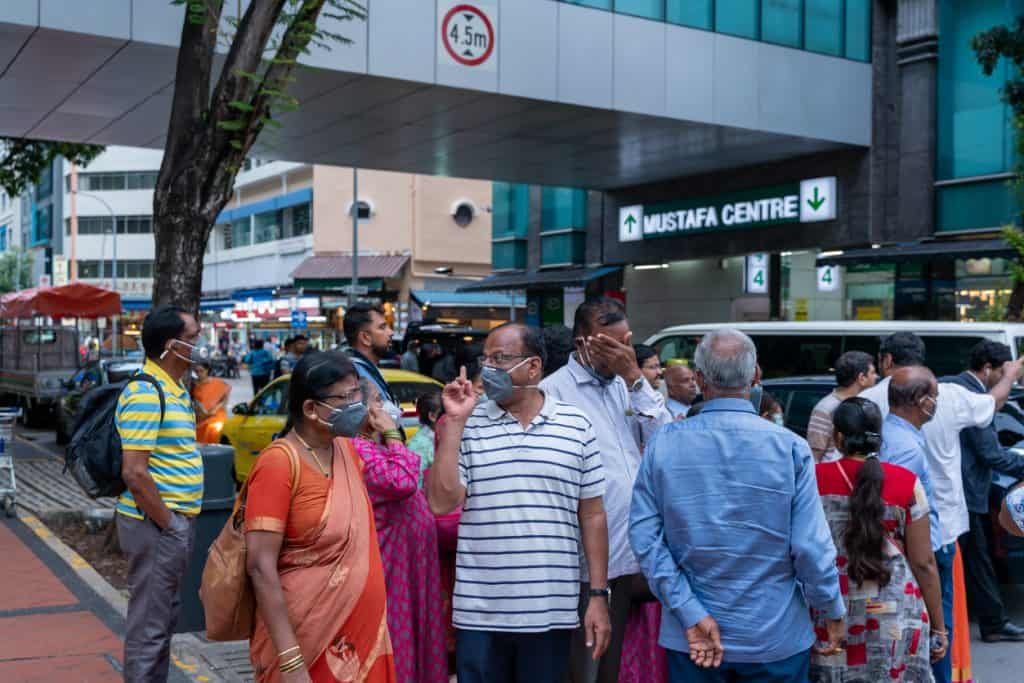
People wearing masks in Little India Mustafa Center Singapore Covid-19 Coronavirus

It is very hard to write about any occupational health and safety (OHS) issue in this time of a global pandemic. Many of the workplace hazards continue to exist but in a different context and, of course, the duty of care on both employers and workers continues wherever work is being done. Australians, understandably, have an insular focus at the moment, but there is some benefit from looking at how national disruption has been handled elsewhere in the recent past. COVID19 is not SARS, but Singapore’s action in 2003 is useful in showing how change can be managed. This change management is likely to be a more integral part of effective OHS management for all Australian businesses once the pandemic declines.

Subscribe to SafetyAtWorkBlog to continue reading.
Subscribe Help
Already a member? Log in here

Young workers don’t know their OHS rights or their employer’s duty of care – Duh!

On March 10 2020, the Andrews Labor Government and the Minister for Workplace Safety, Jill Hennessy, released a media statement about a “social experiment” involving the safety of young workers, in response to the fact that “about 50 young workers are injured every week”.

The statement said that the campaign is

“… warning employers to protect young workers and making sure young Victorians are aware of their rights through a powerful new campaign …..
[and]
“…is part of a social experiment which saw young workers aged 18-25 asked to participate in a mock job information session for a research company.”

The significant finding was that

Subscribe to SafetyAtWorkBlog to continue reading.
Subscribe Help
Already a member? Log in here

New gendered-violence guide is good on the What but thin on the How

Australia’s trade union movement has been at the forefront of many of the occupational health and safety (OHS) changes, especially workplace stress and bullying. Other than Industrial Manslaughter laws, its most recent campaign targeted to a workplace hazard has revolved around work-related gendered violence. Last week WorkSafe Victoria released a guide to employers on “work-related gendered violence including sexual harassment”. The advice in this guide is good but does not go far enough and is less helpful than it could have been.

Subscribe to SafetyAtWorkBlog to continue reading.
Subscribe Help
Already a member? Log in here

Sexual harassment changes are percolating slowly

Discussion on the report into sexual harassment in Australian workplaces went missing last weekend which included International Women’s Day. March 8 generalised much of the discussion on the need for new approaches to feminism, wages and gender equity. This is not to say that organisations had forgotten about the National Inquiry’s Final Report or the occupational health and safety (OHS) context, but few were as blunt about the issue as broadcaster Virginia Trioli and workplace lawyer Liberty Sanger on ABC radio this week.

Subscribe to SafetyAtWorkBlog to continue reading.
Subscribe Help
Already a member? Log in here

Final Sexual Harassment Inquiry report

“The Sex Discrimination Commissioner has come out with something that is clear, which is that sexual harassment is a workplace right, is a health and safety right, is a human right.” [??!!]

What would be more accurate and reflective of Michele O’Neil’s position is that workers have a human, health and safety, and workplace right to a workplace that is without the risk of sexual harassment.  The ACTU President gets the message right in the official media release.

O’Neill urges the Morrison Government to take the final report into sexual harassment in Australian workplaces and its recommendations seriously and it should, but the signs are not good.  The mainstream media coverage of the Workplace Sexual Harassment Inquiry’s report has been thin. 

Continue reading “Final Sexual Harassment Inquiry report”

The Triumph of Doubt is essential reading

When a former head of a national occupational health and safety (OHS) regulator writes a book, it may be a curiosity (and it is rare). But when the writer is the former Assistant Secretary of Labor for the US Occupational Safety and Health Administration, the book becomes interesting. When the book is called “The Triumph of Doubt – Dark Money and the Science of Deception“, it becomes a must-read. SafetyAtWorkBlog dips into David Michaels‘ new book (as I only received it yesterday) and finds treasure.

This is not the first time that Michaels has written about Doubt and how whole industries have developed to create, market and exploit Doubt for the benefit of the Establishment. However, the new book is super-topical in this time of “Fake News” and blatant disregard of science and scientists.

Subscribe to SafetyAtWorkBlog to continue reading.
Subscribe Help
Already a member? Log in here

Mental Health conference assessment

As you could guess from some recent blog posts, the Criterion Conference called “Improving Integrated Approaches to Workplace Mental Health” conducted with the support of the Australian Institute of Health and Safety, was well worth attending as many of the speakers were excellent. What was missing was a strong voice of advocacy on behalf of the Human Resources (HR) profession to counter or balance the strong occupational health and safety (OHS) focus.

Below is a summary of some of the important points made by the conference speakers (or at least those who did not impose restrictions).

Subscribe to SafetyAtWorkBlog to continue reading.
Subscribe Help
Already a member? Log in here
Concatenate Web Development
© Designed and developed by Concatenate Aust Pty Ltd