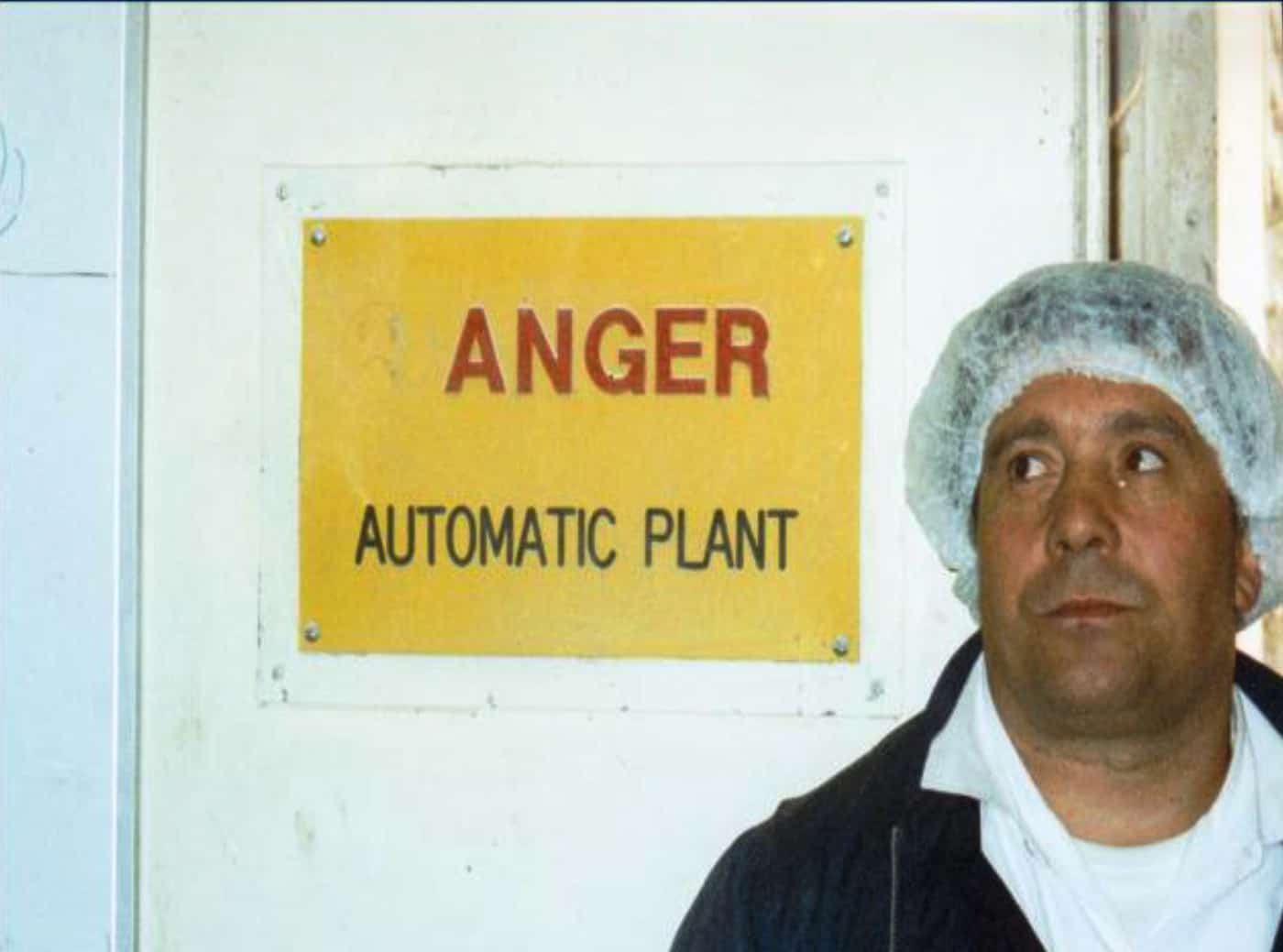
Woodchipper decision could set a worrying safety precedent

The development of Australia’s new Work Health and Safety laws relies on potential prosecutions and Court rulings to clarify various elements and definitions.  Some labour lawyers have forecast this clarification to take several years however last week The Warrnambool Standard reported on a decision by the Victorian Civil and Administrative Tribunal (VCAT) that provides a worrying clarification on the contentious definition of “as far as is reasonably practicable” from outside the anticipated Court structure.

WorkSafe Victoria placed an improvement notice on a woodchipper owned by the Warrnambool City Council following an incident in September 2011 where a worker, David Johnstone, had both hands removed by the blades of the woodchipper.  The improvement notice stated that additional guarding in the form of a “bump bar” be installed on woodchippers.  The Council requested a review of the notices through WorkSafe’s review processes.  The directions stood and the Council appealed to VCAT, as per the normal process.  VCAT found that the engineering controls demanded by WorkSafe were not required as the administrative controls advocated by the Council were found to have “reduced risk “so far as is reasonably practicable”.

The VCAT decision is concerning because it seems to conflict with the application of the Hierarchy of Controls for risk in which machine guarding, an engineering control, is considered a more effective control measure that administrative controls such as those favoured by the Council Continue reading “Woodchipper decision could set a worrying safety precedent”

Performance Management may be key to building a safe workplace culture

Occupational safety advice and incident investigations are peppered with the need to have an improved workplace culture.  In some ways, workplace culture is another, and broader, way of saying of “system of work”, a concept that has existed in Australian OHS laws for a long time but never received the prominence of clarity it deserved.  But how does one develop an improved workplace culture and system of work?  Performance Management seems to be one option.

Performance management is well established in the human resources (HR) discipline but the OHS implications are just being acknowledged in the safety discipline.  The concept has been mentioned several times in the public hearings of Australia’s inquiry into workplace bullying as a positive and potential negative.

According to Associate Professor Robin Kramar (now Professor of Human Resource Management at the Australian Catholic University) of  in the 2004/2005 edition of CCH’s Australian Master Human Resources Guide, performance management is

“..a way of encouraging behaviour that supports organisational objectives.” (page 19)

This is particularly relevant to the management and removal of psychosocial hazards that safety professionals are increasingly being called on to address or to assist with. Continue reading “Performance Management may be key to building a safe workplace culture”

John Darley’s delay on Work Health and Safety laws is unproductive

South Australia still has not passed the Work Health and Safety legislation that would bring it into line with most of the other States of Australia.  A major obstacle to the Bill’s progress in the South Australian Parliament is the “dithering” of Independent MP John Darley.

On 28 June 2012, Darley spoke to the WHS Bill in the Legislative Council (page 1641).  Darley reviews the status of WHS laws in Australian States, mentions Victoria’s flawed PricewaterhouseCoopers costings report but without expressing an opinion on it and acknowledges the support from major industrial and employer associations for the laws, but he seems very sympathetic to minority views on workplace safety.

Darley refers to the views of the Housing Industry (HIA) and Master Builders’ Associations (MBA) on “control”, two groups he acknowledges are “the most vocal opponents” of the Bill, and states

“Any person who does not have direct control of a risk should not have responsibility for eliminating or minimising the risk”.

Consider this position in relation to workplace psychosocial hazards.  A bully would be breaching OHS laws by bullying another worker but those executives who establish the culture of a workplace that condones the bully’s actions would not be facing any penalty.  This scenario seems to contradict a dominant safety principle that compliance and respect stems from the active example shown by an organisation’s leader.  How will the legislative obligation for a “positive duty of care” in workplaces apply with in-direct control? Continue reading “John Darley’s delay on Work Health and Safety laws is unproductive”

Why all the arguing over a workplace bullying definition?

There have been many calls in Australia for a national definition of workplace bullying.  Apparently the definition below that has applied in OHS legislation for over ten years in Victoria is insufficient:

“Repeated unreasonable behaviour directed toward a worker or group of workers that creates a risk to health and safety.”

The definition above was the one used in the first draft Code of Practice on Preventing and Responding to Workplace Bullying produced by Safe Work Australia in September 2011.

The definition was questioned by Moira Rayner, as a representative of the Law Institute of Victoria, at recent public hearings into workplace bullying.  Researchers said that a lack of a national definition is a major reason that research in workplace bullying has been so thin.

A quick survey of workplace bullying definitions in Australia is listed below:

“Unreasonable and inappropriate workplace behaviour includes bullying, which comprises behaviour which Continue reading “Why all the arguing over a workplace bullying definition?”

Workplace bullying in the police force illustrates the challenges of change management

There are two newspaper reports in Australia on 21 June 2012 about the Victorian Police Force that illustrate a fractious safety culture and a major organisational and ideological impediment to reducing workplace bullying.

The Australian article ” OPI concedes failure against force’s culture” (only available to subscribers) states that:

‘The Office of Police Integrity has conceded it and other corruption fighting measures have failed to root out the entrenched culture of reprisals and mateship in pockets of the Victoria Police that seriously harms the force….”

“The OPI says current law fails to deal with why whistleblowers are targeted. ‘‘The legislated protections against retaliation do not address the root cause of reprisal — a workplace culture of misguided loyalty,’’ it argues.  “The protections are individualistic and short-term, tending to ‘look after’ victims and potential victims of reprisal rather than address why reprisal occurs.’’

“Despite the subsequent formation of the OPI and the beefing up of the Ombudsman’s powers, police still struggled to break free of the shackles of loyalty and the so-called brotherhood.’

The Age article, “A fifth of police bullied at work“, reports on a government survey circulated to 14,000 people.

‘The figures, provided to The Age, mean about 1250 of the 4200 police staff who completed the survey have seen bullying behaviour, while nearly 900 say they have been bullied.’ Continue reading “Workplace bullying in the police force illustrates the challenges of change management”

Who would buy asbestos?

A busy mum, two little kids playing on the carpet in the corridor.  She is busy pulling out an old gas heater from the cavity in the wall.  Dust everywhere.  She wants to recreate the old fashioned open fireplace that was there.  The job will take a few days, she’s not in a hurry.    Then the neighbour asks her gently, “Have you checked, we had asbestos behind our fireplace?”  Mum’s blood goes cold.  She looks at the kids.

‘Who in their right mind would buy asbestos?’  you may ask.  After all the publicity, the growing numbers of tragic mesothelioma sufferers in Australia, the lung cancers, the famous court cases, the Hardies’ debacle.

There are three main ways you can still buy asbestos in Australia.  First, a small number of components used in industry and the defence forces still contain asbestos in sealed conditions.  For example, a shock absorber in the front wheel assembly of an aeroplane may contain an asbestos gasket.  Certain specialised gaskets used in segments of the chemical industry may contain asbestos.  The risk to workers and the general public is very small.

Then you can buy asbestos when you purchase gravel made from crushed masonry from demolished buildings that contained asbestos.  Some 10 million tonnes of such bricks and concrete are recycled every year in Australia.  Continue reading “Who would buy asbestos?”

Favourable progress could be achieved on OHS if the current reality is accepted

The issue of “control” in Australian OHS law continues to be discussed as industry associations bristle against the introduction of Work Health and Safety laws, frequently on flawed or dubious costings.

Australian safety laws have been moving from the prescriptive tradition for decades. This has been due to various reasons including new workplace hazards that cannot be controlled in defined ways, diminished enforcement resources and confused roles in OHS regulators, the change in labour force dominance from blue- to white-collar occupations but, most of all, repeated demands from business associations for increased flexibility and autonomy on managing workplace safety.

Certainly the degree of control has varied from State to State with New South Wales being considered as having the most business-unfriendly OHS laws but most States are now running under a different set of OHS rules and criticizing the current laws by referring to now-repealed OHS laws in the most extreme State of New South Wales, as Ken Phillips does in today’s The Australian newspaper, is almost sophistry. Continue reading “Favourable progress could be achieved on OHS if the current reality is accepted”

Concatenate Web Development
© Designed and developed by Concatenate Aust Pty Ltd