

A typical excuse, or a sentence, people use after they’ve caused harm, injury or created an offence, is that “I didn’t mean to do any harm or think anybody would be harmed”. Potential harm may not have been considered, and the consequence of the act or a word was not anticipated. But it’s also possible that it’s a lie, and that they did intend harm, and they’re just looking for a way to excuse themselves from the responsibility and the consequence of that harm. And that’s a problem with including intent in a definition of work-related harm.
Category: ethics

Poor footballer mental health may be a symptom of CTE, but it is the risk of CTE that should be prevented
The concussion risks of sportspeople continue to appear in the media and popular discussions after every suicide, death, or retirement of sportspeople who play contact sports. Recently, Alan Pearce, Professor, Adjunct Research Fellow, School of Health Science, Swinburne University of Technology, wrote an opinion piece for The Australian newspaper (paywalled) that touched on some occupational health and safety (OHS) themes that deserve expanding.
[This article discusses suicide]

Australia needs an “OHS for HR” book
SafeWorkSA has published fascinating information about preventing “harmful workplace behaviours.” The webpage’s eye-catching part is the Hierarchy of Controls for Managing the Risk of Harmful Workplace Behaviours, but the article is curious.
The audience for information from occupational health and safety (OHS) regulators is supposedly everyone, but it is rarely read by anyone other than OHS advocates. However, any information about psychosocial risks and hazards needs to be written in a tone that attracts the attention of those in businesses who have established ownership of these hazards, primarily the Human Resources (HR) person. SafeWorkSA’s page fails to reach this target.
We can build better safety from the decline of the free market
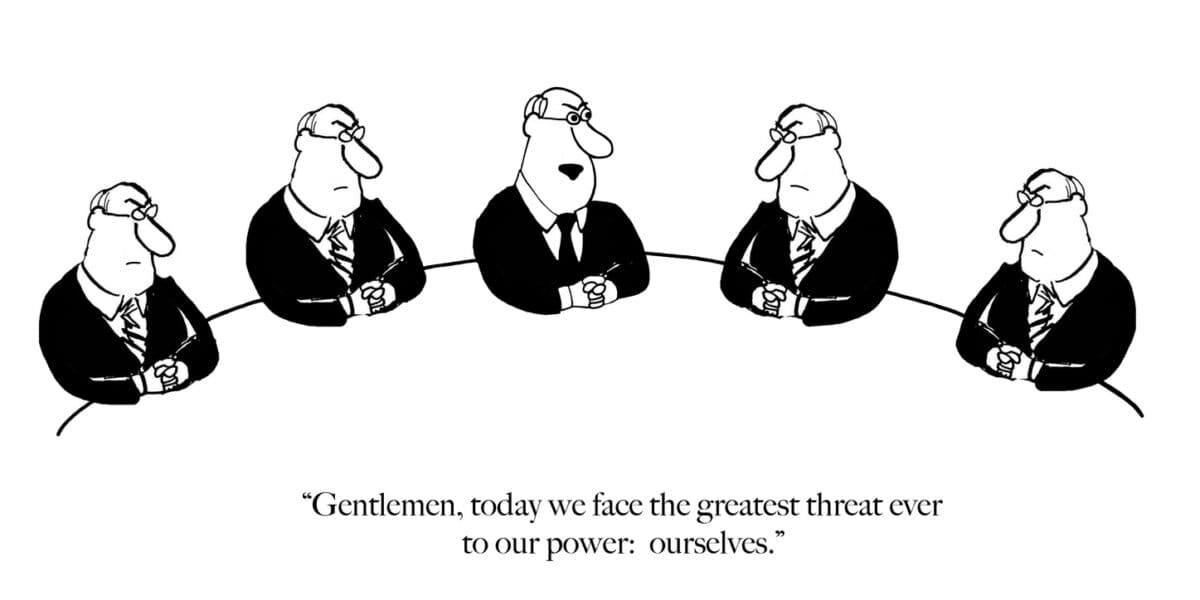
Business ethics has never been a significant focus of occupational health and safety (OHS) organisations or regulators beyond what the law says. OHS advisers in companies and through consultation constantly address ethical or unethical behaviour, even though this is rarely discussed at the academic level or outside of the possibility of prosecution. Over the last four decades, neoliberal ideology and policies have given OHS only grudging attention, if any at all. Neoliberalism is gaining more attention in the OHS literature as the socioeconomic and political sources of hazards are finally receiving serious attention. However, most OHS people cannot remember a world before neoliberalism. It is important to remember that trust in the “free market’ on which neoliberalism was built, the promises of wealth for all, and reflect on how worker health and safety suffered.

6 Essential OHS Questions for Employers
Occupational health and safety (OHS) laws establish duties on employers (and employees) to provide safe and healthy workplaces. These duties reflect the social morals of the time, but the morality of employers is rarely challenged.
Below is a selection of OHS-related questions that all employers should be asked and able to answer. How would you or your employer respond?
The recent recommendations into OHS penalties are likely to go nowhere
The Victorian Sentencing Advisory Council‘s report on OHS sentencing received minimal media coverage. Perhaps more will come when the government responds to the recommendations. However, the coverage focused on the recommendation for a substantial increase in financial penalties for those who breach occupational health and safety (OHS) laws. The report contained much more than financial penalties, but the political climate will likely stifle any significant reforms.
Cost estimation, safety and economists
American legal scholar Cass R. Sunstein does not write about occupational health and safety (OHS) directly, but he writes about the society in which OHS operates. In November 2022, he reviewed an economics book in an article called “Accounting for the Human Cost.” OHS may have a strong moral core, but one can argue that it is more of an economic discipline due to the necessity for analyzing costs and benefits to gauge compliance with laws and regulations.