We can control workplace mental health if we want to

Some years ago, Time Management was all the rage. It was the precursor to the resurgence of the Work Smarter – Not Harder movement, but it seems to have faded from conversation recently. Part of the reason is that everyone is expected to be contactable, every day, every week, every month. And then we wonder why there seems to be a workplace mental health crisis?!

The answer is simple – turn off your phone, turn off your work computer. This will cause some readers to shake and say that they cannot do that as their bosses expect them to be available. The unfairness of this was discussed a little in the article on “work-to-rule“, but the employers’ expectations are more than unfair. They indicate a poor manager who cannot manage their time and of a workplace culture that endorses this sloppiness/laziness. A recent New Zealand article looked at some of the recent trends.

Subscribe to SafetyAtWorkBlog to continue reading.
Subscribe Help
Already a member? Log in here

Some OHS approaches need the Industrial Relations touch

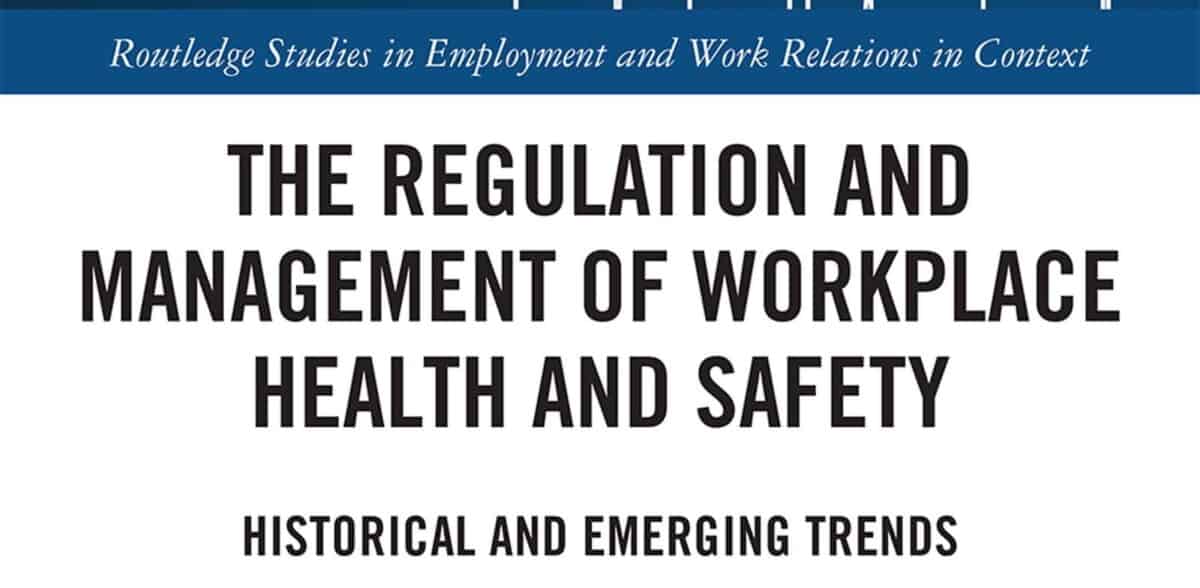
Several years ago, there was a proposal to produce a book of research linked to the work and themes of Professor Michael Quinlan. That book became “The Regulation and Management of Workplace Health and Safety“, and I recently obtained an affordable copy for my Summer break. (An excellent book review has been written by Eric Tucker on which this article is based)

There are many labour and industrial relations concepts in the book, many that I had to look up – pluralism, unitarism, politicalism. Read enough industrial relations (IR) research papers, and these terms might become second nature, but occupational health and safety (OHS) texts (what few there are of them) seem simpler and blander, generally avoiding the politics of work and therefore the politics of safety. Most of the recent OHS books seem to be dominated by Leadership and neuroscience *.

Subscribe to SafetyAtWorkBlog to continue reading.
Subscribe Help
Already a member? Log in here

The OHS benefits of “work to rule”

In May 2020, “work to rule” was touched on in a long article about the future of work. “Work To Rule” is a phrase that is rarely heard now, as the industrial relations (IR) conversation has changed, but it is more relevant than ever.

The industrial relations context for working to the rules is illustrated in this short article. Still, work to rule can have occupational health and safety (OHS) benefits, especially psychosocial health and the current mot du jour, The Great Resignation/Rebalance.

Subscribe to SafetyAtWorkBlog to continue reading.
Subscribe Help
Already a member? Log in here

OHS remains the bastard child of HR and IR

There continues to be a competitive tension in Australia between the professions (if they are professions) of Human Resources (HR) and Occupational Health and Safety (OHS). This has been most obviously on display in relation to sexual harassment and the psychological harm that results.

Recently Marie Boland, about to be the 2021 Residential Thinker at the University of South Australia, spoke about this tension and much more in an online lecture about “HR: A Human Resources or a Human Rights approach to work health and safety“. At that lecture, Boland said that she pins her hopes for improvement on the new Work Health and Safety Regulations because

Subscribe to SafetyAtWorkBlog to continue reading.
Subscribe Help
Already a member? Log in here

Off-centre perspectives can offer great potential

The Australian government has failed to follow through on its early promises to provide a framework for employers to prevent and reduce sexual harassment in their workplaces. This failure is being interpreted as revealing something about employers’ attitudes to occupational health and safety (OHS) and their own legislative duties.

Employers (and other groups on non-OHS issues) who look to the government for guidance on issues that already have legislative requirements are looking to avoid the social and legal obligations that have usually existed for years. Sexual harassment is an excellent example of a workplace matter getting some serious attention regardless of the government’s inaction. A recent podcast by Maddocks lawyers Catherine Dunlop and Tamsin Webster is part of that attention.

Subscribe to SafetyAtWorkBlog to continue reading.
Subscribe Help
Already a member? Log in here

Attendee list of IR Minister’s business roundtable

Last week, Australian business and union representatives failed to gain the additional support on COVID-19 issues they wanted from the Federal Government during their meeting with the Industrial Relations Minister, Michaelia Cash. The Minister’s media release of the event seems to indicate business as usual.

One piece of information that has not been released before is a list of the organisations that attended. That list, published below and in no particular order, shows the attendees but, perhaps more interesting is those who were not invited.

Subscribe to SafetyAtWorkBlog to continue reading.
Subscribe Help
Already a member? Log in here

Steve Bell outlines the challenges for the OHS profession and Regulators

Almost every year, for a couple of decades, Herbert Smith Freehills (HSF) and the Australian Institute of Health and Safety (AIHS) have conducted a breakfast seminar to “launch” the year. That schedule has been cocked up by COVID-19, but the events continue.

The August 2021 breakfast featured several of the usual speakers but with the omission of the Minister for Workplace Safety or a senior representative of Worksafe Victoria. As a result, the event dragged a little. Most of the information was useful, but the event lacked the spark it often has. Perhaps this was the online format, perhaps the mix of speakers, perhaps the 90-minute length.

Subscribe to SafetyAtWorkBlog to continue reading.
Subscribe Help
Already a member? Log in here
Concatenate Web Development
© Designed and developed by Concatenate Aust Pty Ltd