
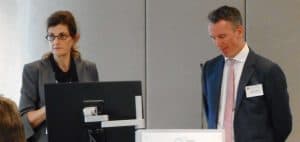
 The annual Safety Institute of Australia (SIA) breakfast was held in conjunction with Herbert Smith Freehills (HSF) law firm on 21 February 2018. This year the audience heard from two representatives of WorkSafe Victoria – Marnie Williams, the Executive Director and Paul Fowler, the Director of the Enforcement Group.
The WorkSafe presentations were interesting but included what was largely expected – an introduction to the recent Independent Review report and a reiteration of the WorkSafe Strategy 2030. (More on WorkSafe’s presentation in the next article)
Some of the more thought-provoking content came from HSF’s Steve Bell. He presented several issues and perspectives for consideration.

 At Australia’s
  Industrial manslaughter laws passed through the Queensland Parliament on October 12 2017. The debate about the laws on that day is an interesting read as it illustrates some of the thoughts about workplace safety in the minds of policy decision makers, business owners, industry associations, trade unions and safety advocates.