Safety should not be the red tape bastard of productivity

There is a logic being applied to workplace safety and public policy that does not ring true. The argument seems to be that productivity levels in Australia are low, that part of the reason for this low productivity is excessive business paperwork and that workplace safety regulators are a major contributor.   (SafetyAtWorkBlog has written around this topic previously.)

Businessman with devil or angelThe authority on productivity in Australia is, unsurprisingly, the Productivity Commission (PC).  In mid-June 2013, the commission released its Productivity Update, the first of promised annual reports.  Search in the document for “workplace safety” and there is no mention, even “safety” only pulls up a couple of public safety references.  Nothing for “workplace” either.

In fact, the report states that

“Strong growth in labour productivity in the December quarter of 2012-13 could be a sign that a broader improvement in MFP growth is now underway” (page 2)

and

“modelling shows that a comparatively small increase in the rate of labour productivity growth (primarily due to higher MFP growth) could lead to a comparatively large increase in the level of real GDP per person by 2050.” (page 2)

2050 is a long way off but the forecast is for an increase in productivity and the growth in the December quarter could indicate a trend. So for all the productivity gloom and doom being written about in the business newspapers, the reality may be different.   Continue reading “Safety should not be the red tape bastard of productivity”

Draft bullying code and cultural measurement

cover of 2013 DRAFT-COP-Preventing-Responding-Workplace-BullyingSafe Work Australia has released its latest draft code of practice for preventing and responding to workplace bullying for public comment.  There are many useful and practical strategies in the draft code but workplace bullying is only a small element of the more sustainable strategy of developing a safe and respectful organisational culture.

The definition in the May 2013 draft code is a tidied up version of the September 2011 definition:

“…repeated and unreasonable behaviour directed towards a worker or a group of  workers that creates a risk to health and safety.”

The lack of difference in these definitions is a real positive given the complaints, primarily, from the business community since 2011.  The significance in both definitions is that there must be a direct relationship between the behaviours and health and safety risks.  This could be substantially difficult to prove, particularly if , as in  most cases, it is the recipient of the bullying who needs to prove this.

Harm Prevention

Consider, for a moment, that this code of practice is used for establishing preventative measures and not just used for disproving a court case, these definitions can help establish a benchmark for creating a safe organisational culture. Continue reading “Draft bullying code and cultural measurement”

The practical manifestation of safety leadership

Professor Andrew Hopkins‘ frequent appearances at safety conferences are always fascinating as he does not simply trot out the same presentation each time. He is certainly not a priest with the same 52 sermons each year.

At the Building Safety conference Hopkins spoke briefly about mindfulness but grounded this in how executives and others should inspect a worksite and what questions to ask. He discussed audits also but there will be more on that in another article.

Hopkins insisted that executives should show leadership and begin to satisfy their positive OHS duty and their due diligence obligations by walking their worksites, talking with their workers and, most importantly, listening to the answers. There are no hard and fast rules or guidelines on the frequency of these visits but he said that the executives should NOT be accompanied. Having a phalanx of execs in pristine PPE approaching a work group puts the workers on guard and makes them self-conscious. Continue reading “The practical manifestation of safety leadership”

Rita Donahy speaks at Australia’s Building Safety conference

Donahy 2013 01The first international speaker at this weekend’s Building Safety conference in Canberra, Australia was Rita Donahy, author of the One Death Is Too Many report into the UK’s construction industry safety performance, and a member of the House of Lords.

Donahy stressed that workplace safety is, and should be, a social issue and not treated as a special case.
Continue reading “Rita Donahy speaks at Australia’s Building Safety conference”

Supreme Court decision limits public knowledge of OHS offences

Woman CelebratingIn May 2013 Fiona Austin (@upfrontfi) a lawyer with the Australian law firm, Herbert Smith Freehills (HSF), tweeted:

“Great win in the Supreme Court! No more naming and shaming for health and safety offenders in Queensland”

The Supreme Court decision is an appalling situation over which OHS professionals and regulators should be outraged.

Austin and other HSF lawyers authored a longer article on the case and totally miss the point of why OHS offenders should be named.  Shaming of offenders is a different matter.

The article explains how a decision under the Penalties and Sentences Act 1992 (Qld) may stop the OHS regulator in Queensland, Work Health and Safety Queensland, from listing the names of offenders on its website. Continue reading “Supreme Court decision limits public knowledge of OHS offences”

Is safety leadership the panacea for unsafe workplaces?

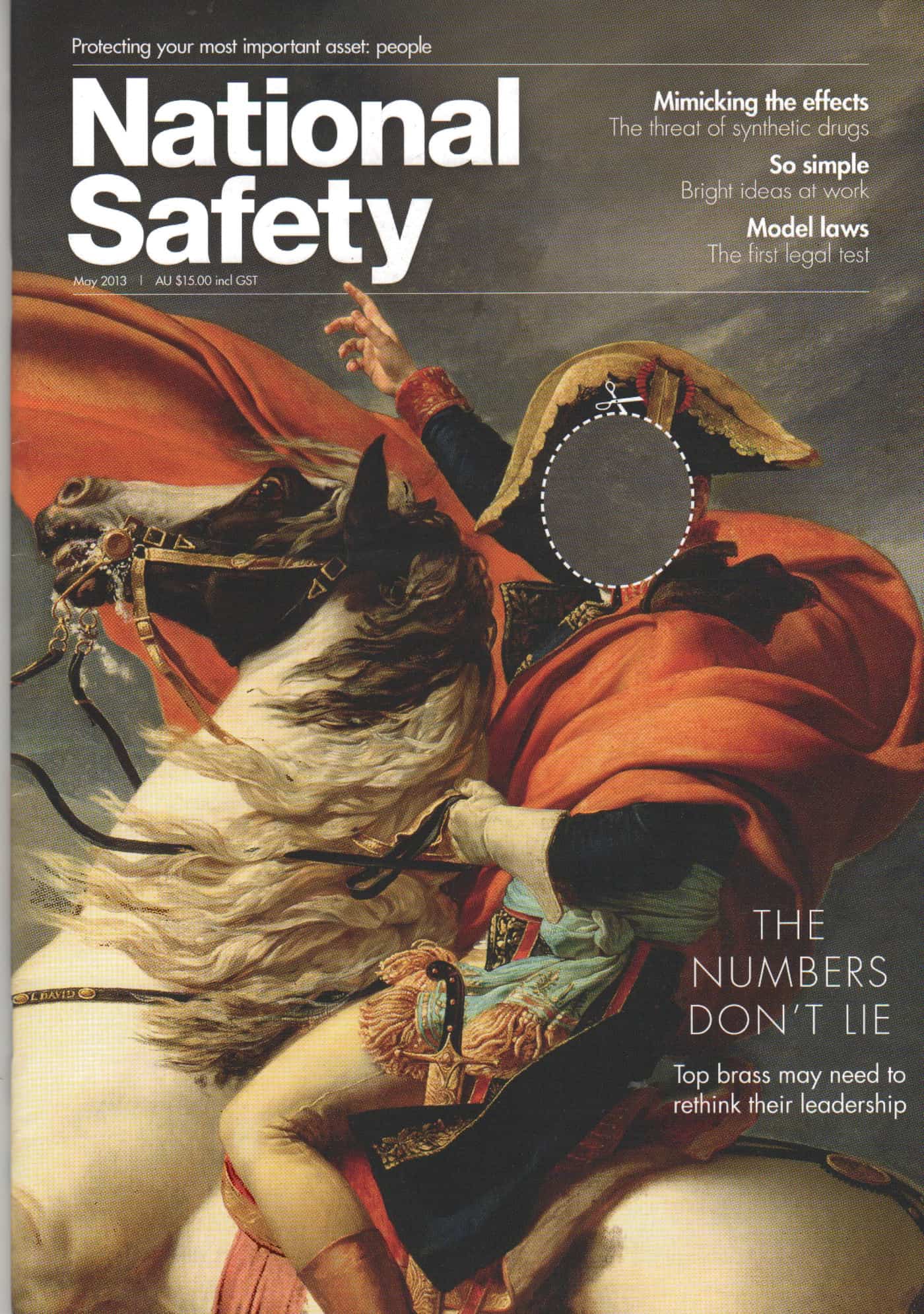
National Safety Cover May 2013The May 2013 National Safety magazine has an article on safety leadership by Australia lawyer, Michael Tooma.  It is a terrific article but it also highlights the lack of case studies of the practical reality of safety leadership in Australia and the great distance still required to improve safety. Tooma starts the article with

“It is widely recognised that strong safety leadership is integral to work, health and safety performance in any organisation.” [emphasis added]

Later he writes

“There is little doubt that safety leadership is a prerequisite to a positive safety culture in any organisation.”

These equivocations may indicate authorial caution on the part of Michael Tooma but  they could illustrate that the role of safety leadership still remains open to question. Continue reading “Is safety leadership the panacea for unsafe workplaces?”

An OHS look at the Liberal Party’s policy document

Following on from a look at the workplace safety-related elements of the current policy document of the Australian Labor Party, it is the Liberal Party of Australia‘s turn.

PressPhoto tony abbott
Liberal Opposition Leader Tony Abbott

The Liberals, currently lead by Tony Abbott, are the Australian equivalent of the Conservative Party in the United Kingdom and the Republicans in the United States and follow many of the free market principles that support capitalism. In terms of workplace safety, commitments are less obvious than those from the Left side of politics.  Often workplace safety is wrapped in other concepts and there is an expectation that benefits to workers will somehow flow on from those benefits granted to employers and business, benefits frequently termed as part of productivity.

The Liberal’s policy document entitled: Our Plan, Real Solutions for All Australians lists the following productivity improvements: Continue reading “An OHS look at the Liberal Party’s policy document”

Concatenate Web Development
© Designed and developed by Concatenate Aust Pty Ltd