OHS thoughts trapped in the bubble

For the first time in many years, the Safety Institute of Australia’s National Conference heard from two prominent industry association leaders, Mark Goodsell from the Australian Industry Group (AiGroup) and James Pearson, CEO of the Australian Chamber of Commerce and Industry (ACCI). The absence of a representative of the trade union movement to “balance” some of the comments was a weakness of the conference but perhaps unavoidable a few days after a very busy Federal Election campaign. Both conference speakers addressed OHS issues and the topic-de-jour, Industrial Manslaughter laws.

Subscribe to SafetyAtWorkBlog to continue reading.
Subscribe Help
Already a member? Log in here

Victims of industrial crime

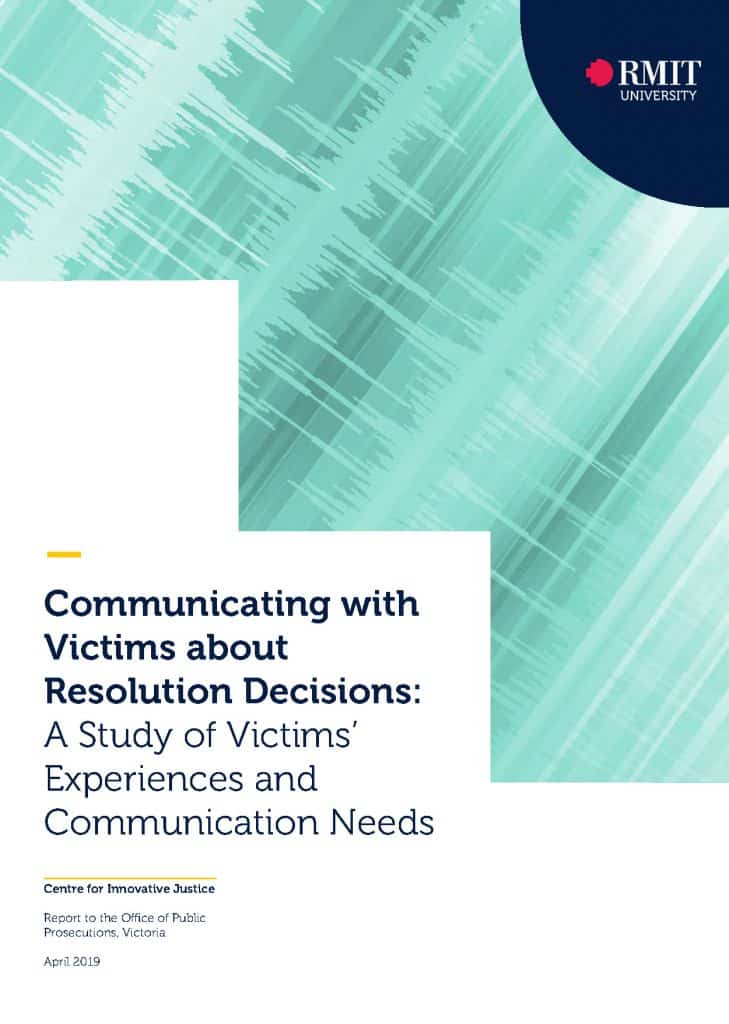
On May 13 2019 the Australian media published articles based on research (released after embargo) conducted by the RMIT’s Centre for Innovative Justice and about victims of crime which those advocating for Industrial Manslaughter laws should seriously consider.

The Age newspaper reports

“Victims of crime felt let down by the system when offenders pleaded guilty to a less serious charge and did not proceed to trial ‘‘ because they wanted the opportunity to tell their story’’ , …..”

and that

“One victim interviewed during the research said they felt left out of discussions with the OPP when charges in their case were downgraded from murder to manslaughter for a plea of guilt …”

Occupational health and safety (OHS) seems a little ahead of the game here as relatives of deceased workers have been integrated into OHS consultation in both Queensland and Victoria. Relatives had a very strong voice through the Senate Inquiry into Industrial Deaths. Victim Impact Statements have been possible in the Courts for many years but Industrial Manslaughter laws add an additional depth to the participation of victims of industrial crime, and an additional risk of false promises.

Subscribe to SafetyAtWorkBlog to continue reading.
Subscribe Help
Already a member? Log in here

Industrial manslaughter laws are (still) unlikely to save lives in the workplace

In June 2018, Rick Sarre, now the Dean of Law at the University of South Australia’s School of Law, wrote an article in The Conversation titled
Why industrial manslaughter laws are unlikely to save lives in the workplace“. On the eve of the #safetyscape conference and an upcoming conference on enforcement in which presentations on Industrial Manslaughter laws will feature, SafetyAtWorkBlog asked the very busy Professor for an update on some of the themes and thoughts in his article. Below are his responses.

Subscribe to SafetyAtWorkBlog to continue reading.
Subscribe Help
Already a member? Log in here

Beware any politician talking about the coloured tapes of bureaucracy

Some of the Australian media on May 8 2019 began quoting the current Prime Minister, Scott Morrison, over his concerns about the “green tape” of environmental laws and something called “the expansion of union “red tape””. (Nine Australia’s papers, paywalled) Crikey’s Bernard Keane asks “Does Australia really have a ‘green tape’ crisis?” (paywalled) and proceeds to answer, No we don’t. But where there is Green Tape, the Red Tape of occupational health and safety (OHS) follows.

What Morrison means by “union red tape” is unclear. The newspapers included this quote from him:

Subscribe to SafetyAtWorkBlog to continue reading.
Subscribe Help
Already a member? Log in here

The party politics of safety

The Safety Institute of Australia, commendably, approached the major political parties running in Australia’s current federal election campaign. Only the Australian Labor Party (ALP) responded to the SIA, but the policy documents of the Australian Greens and Liberal and National Parties are available online and their relevance to occupational health and safety (OHS) deserves attention.

The ALP information should be familiar to SafetyAtWorkBlog readers:

• “Show national leadership and meet with work, health and safety ministers from across Australia in the second half of this year to decide on the best course of action of the recommendations to come out of the Boland review.
• Work with state and territory governments to implement a harmonised industrial manslaughter offence.
• Establish a national advisory committee made up of representatives from each state and territory who have been personally impacted by a serious workplace injury or death to develop recommendations for federal, state and territory governments to act upon.”

Subscribe to SafetyAtWorkBlog to continue reading.
Subscribe Help
Already a member? Log in here

OHS is largely overlooked even on its special day

The mainstream media did cover the Australian Labor Party’s statement about workplace safety and industrial manslaughter laws. These issues also featured, unsurprisingly, in some of the commemorations on International Workers Memorial Day. But the issue was largely left floating, irretrievable in the political swimming pool.

David Martin-Guzman, writing for the Australian Financial Review (AFR), painted the ALP announcement as advocating on behalf Australia’s most militant trade union, the Construction Forestry Mining Maritime and Energy Union (CFMEU). This approach sadly places any OHS activity purely in the context of industrial relations. That is likely placing OHS as only part of Human Resources. OHS is its own profession, has its own principles and is supported by its own legislation and government regulator.

Subscribe to SafetyAtWorkBlog to continue reading.
Subscribe Help
Already a member? Log in here

Industrial Manslaughter – still thin on details and justification

Shortly after a SafetyAtWorkBlog article on occupational health and safety in the Australian federal election campaign, the Australian Labor Party (ALP) and the Australian Council of Trade Unions (ACTU) release media statements. It is a coincidence but one I should have anticipated as yesterday was International Workers’ Memorial Day.

The Shadow Minister for Employment and Workplace Relations, Brendan O’Connor, and Shadow Assistance Minister, Lisa Chesters, said that Australia’s work health and safety laws:

“are no longer harmonised or adequate,…..

This is the closest we will get to an admission that the harmonisation of occupational health and safety (OHS) laws in Australia has been a failure. Both the ALP and the Liberal/National coalition have responsibility for this failure. the harmonisation process was announced by the Liberal’s John Howard, but the Labor Party had the running of the process for most of its length. Many States introduced the laws but both political parties in Victoria have refused to participate, based on flawed economic assessments. The continued disinterest from Victoria’s Labor Party in harmonisation remains puzzling.

Subscribe to SafetyAtWorkBlog to continue reading.
Subscribe Help
Already a member? Log in here
Concatenate Web Development
© Designed and developed by Concatenate Aust Pty Ltd