What employers need to know: the legal risk of asking staff to work in smokey air

The following article is reproduced from the excellent academic communication website The Conversation, and is written by Elizabeth Shi, a Senior Lecturer, in RMIT University‘s Graduate School of Business and Law. The article is a very useful contribution to managing the risks of working in smokey environments but is only one contribution to a discussion on occupational health and safety in smokey workplaces that has many, many months to go.

Amid thick bushfire smoke in cities including Canberra and Melbourne, employers need to consider their legal obligations.

Some have directed their workers not to turn up in order to avoid to occupational health and safety risks. Among them is the Commonwealth department of home affairs which last week asked most of its staff to stay away from its Canberra headquarters for 48 hours. Other employers want to know where they stand.

Continue reading “What employers need to know: the legal risk of asking staff to work in smokey air”
Auditing the auditors

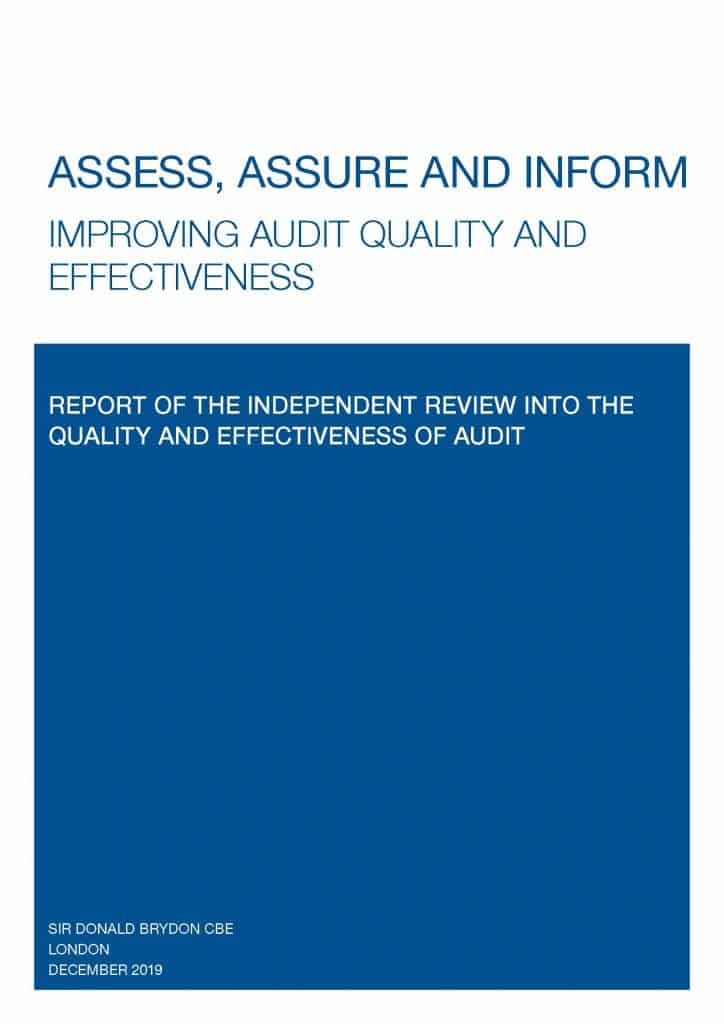
In the wake of several corporate collapses, the UK Government commissioned a review of the business auditing sector. In 2019, the final report of the Brydon Inquiry was released recommending substantial changes to auditing. Occupational health and safety (OHS) is increasingly considered as part of corporate governance so these recommendations have a direct effect on OHS management and reporting.

This report is relevant to Australia for many reasons, principally, because the audit firms that were scrutinised by Donald Brydon operate here.

Subscribe to SafetyAtWorkBlog to continue reading.
Subscribe Help
Already a member? Log in here

Stories of engineered stone companies moving interstate to avoid safety obligations

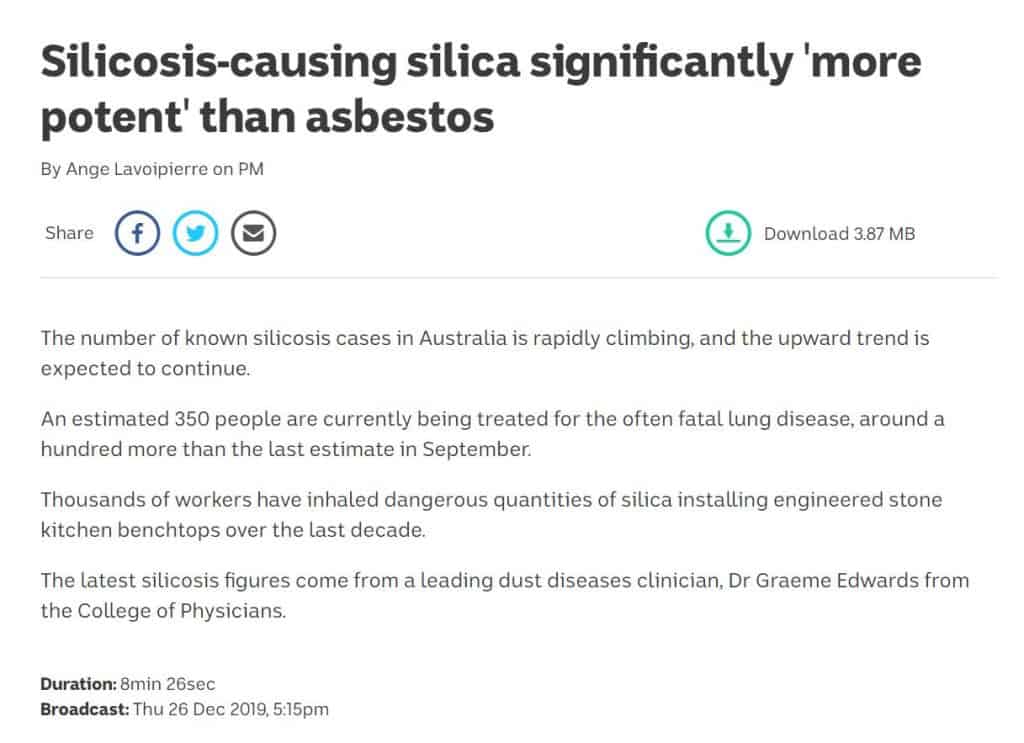
In late December 2019, Dr Graeme Edwards provided an update on Australia’s silicosis situation to the Australian Broadcasting Corporation’s PM program in which he mentions the movement of businesses to avoid occupational health (OHS) and safety obligations and duties.

Subscribe to SafetyAtWorkBlog to continue reading.
Subscribe Help
Already a member? Log in here

Recognition for hard work and inspiration

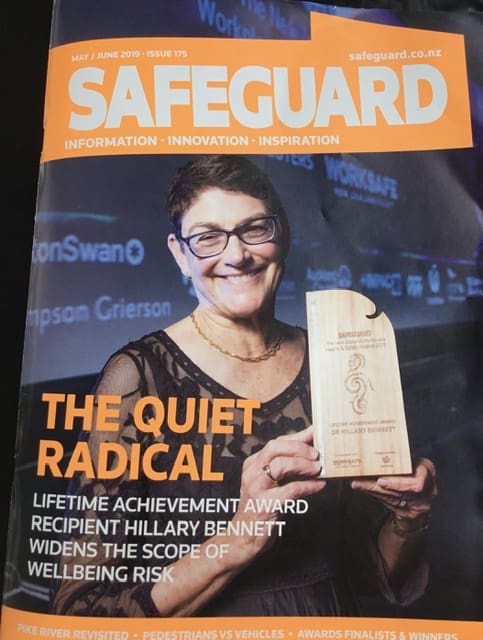
There seems to be a spate of intelligent and knowledgeable people talking about the structural changes required by businesses to reduce and prevent psychological harm. Two Australian voices are Lucinda Brogden and Dr Rebecca Michalak. New Zealand has Dr Hillary Bennett who recently received a Lifetime Achievement Award at the New Zealand Workplace Health and Safety Awards. Bennett’s interview with SafeGuard magazine should be obligatory reading.

Bennett is asked about the Human Resource (HR) profession and nails a critical difference in the HR approach to the occupational health and safety (OHS) one:

Subscribe to SafetyAtWorkBlog to continue reading.
Subscribe Help
Already a member? Log in here

Where does OHS fit?

Any assessment of ethics in relation to occupational health and safety (OHS) is worthwhile and so the release of a chapter on ethics by the Australian Institute of Health and Safety (AIHS) generated some excitement. That excitement diminished somewhat as this Chapter of the Body of Knowledge (BoK) dealt with ethics in a very narrow context – “Ethics and Professional Practice“.

Subscribe to SafetyAtWorkBlog to continue reading.
Subscribe Help
Already a member? Log in here

Brexit, Boris and OHS

One reader has asked about the occupational health and safety (OHS) impacts of Brexit. This article looks specifically at The Conservative and Unionist Party Manifesto to identify potential OHS-related actions and intentions. The relevance for Australian readers is that UK and Australian politics frequently feed off each other.

The United Kingdom’s OHS laws have been greatly affected during the country’s membership of the European Union (EU). This has been seen as a nuisance by some but some EU safety Directives, such as Seveso 1, 2 & 3, have assisted many countries in establishing or strengthening their own regulations on specific hazards. EU safety rules seem amazingly complex for someone who has no involvement with them but then any economic community of over two dozen countries can seem baffling to an OHS writer who operates from an island with a small population in the Southern Hemisphere.

What can be said is that the UK will need to accommodate the “best” of the EU OHS laws in their own legislative structure, if it has not already. It is unlikely the UK will remove OHS rules that serve a positive, i.e. harm prevention, purpose unless there is a very good reason. But sometimes it seems that good reasons are not required, only political reasons.

Subscribe to SafetyAtWorkBlog to continue reading.
Subscribe Help
Already a member? Log in here
Concatenate Web Development
© Designed and developed by Concatenate Aust Pty Ltd