Review of West Gate Bridge findings has important lessons for modern infrastructure projects

2020 will be the fiftieth anniversary of the collapse of the West Gate Bridge which resulted in, amongst others, the deaths of 35 workers, changed Victoria’s approach to occupational health and safety (OHS), instigated a Royal Commission into the disaster, strengthened trade union influence and established an industrial antagonism to the John Holland group of businesses that continues today.
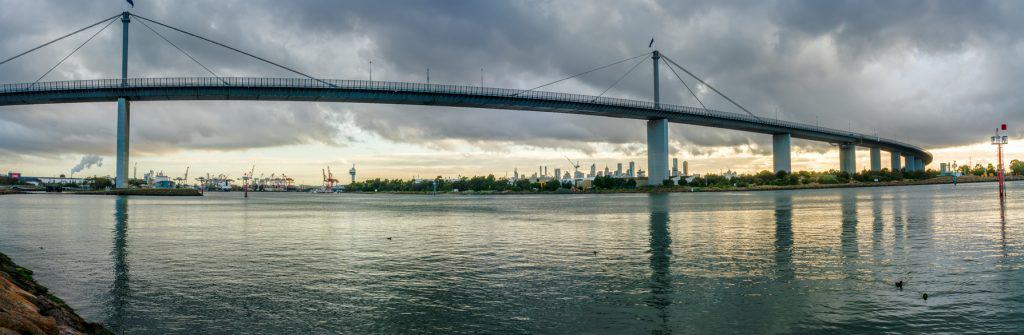
Panorama of West Gate Bridge in Melbourne at sunset in summer.

Last week,

Subscribe to SafetyAtWorkBlog to continue reading.
Subscribe Help
Already a member? Log in here

Inquiry into industrial deaths moves to Adelaide

Conversations about occupational health and safety (ohs) occur very rarely unless you are an educator who talks about this stuff every day.  We manage health and safety and advise on it but rarely get a chance just to talk about safety with peers.  This is where documents like the recent transcripts of Australia’s Senate inquiry into industrial deaths can be helpful.  For instance Andrea Madeley said this on August 29 2018 in Adelaide:
“I do not think that the Robens model of work health and safety was ever based on anything beyond encouragement. It was a model designed to lift and encourage employers, not to enforce laws, and we see that today, still. The guiding principles, even today, on enforcing work health and safety laws really are more about encouraging and educating. I don’t have a problem with that as long as we’re not treating the people that are suffering in the process like outcasts. Their loss is virtually ignored unless you happen to be a financial dependant.”

Given that it occurred almost fifty years ago, it is easy to forget the times in which Lord Robens issued his report into the management of workplace health and safety.  It was controversial in its day and the Australian iterations of his OHS principles were similarly opposed when they were introduced in the 1980s. 

Subscribe to SafetyAtWorkBlog to continue reading.
Subscribe Help
Already a member? Log in here

Industrial Manslaughter laws explained to Senate inquiry

The trade union push for Industrial Manslaughter laws in Australia continues as the various State and Federal elections loom.  Last week the Senate Inquiry into Industrial Deaths heard the clearest explanation of the need for these laws for some time as Dr Paul Sutton of the Victorian Trades Hall Council went beyond the usual chants of “what do we want? when do we want it?”

Sutton’s proposal for the Victorian laws differs from Queensland’s by taking inspiration from England  to pierce the corporate veil to the senior manager level rather than leaving it at the top executive level. 

Subscribe to SafetyAtWorkBlog to continue reading.
Subscribe Help
Already a member? Log in here

Deaths inquiry asks the hard questions

This week in Australia, the Senate Education and Employment References Committee inquiry into industrial deaths conducts public hearings in three States in three days.  Transcripts will be available shortly but it is worth looking at the record of the last public hearing from August 7 2018 to see the type of questions the panel are asking and how some of Australia’s business and occupational health and safety organisations are responding.

Mark Goodsell of the Australian Industry Group (AiGroup) seemed to struggle at times but this may have been partly due to his choice not to repeat the content of the AiGroup submission and instead comment on some of the other submissions.  Goodsell points out:

“We made the point in our submission, and a number of the other submissions also made the point, that industrial deaths have decreased in absolute terms in Australia over the last decade or so. As a proportion of the workforce, that’s a broad pattern across all states and most industries—in fact, all industries but not all to the same degree. That’s not widely acknowledged in a lot of the submissions. It is in the employers’ submissions but most of the other submissions appear to either not acknowledge that or just jump over that.” (pages 36 & 37)

This Senate Committee is looking at industrial deaths so the focus on fatalities is understandable. 

Subscribe to SafetyAtWorkBlog to continue reading.
Subscribe Help
Already a member? Log in here

If you don’t prevent, you perpetuate

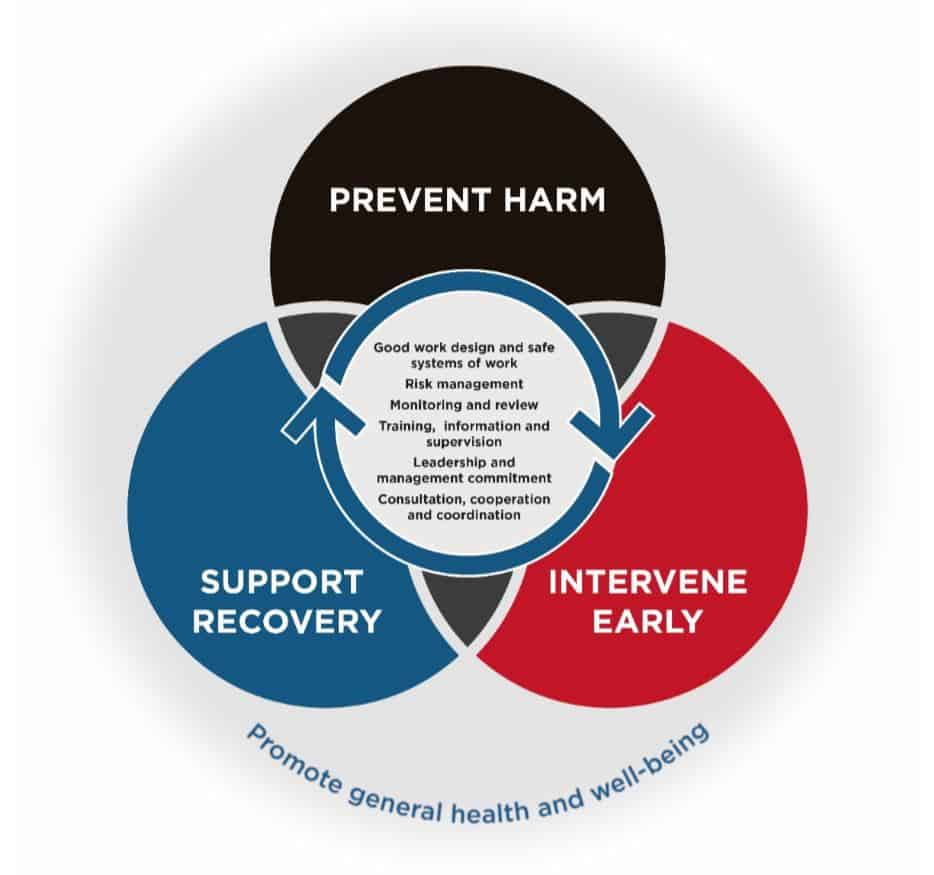
Systematic approach to psychological health and safety

One of the most important occupational health and safety (OHS) guidances released the last couple of years is the Safe Work Australia (SWA) guide “Work-related psychological health and safety: A systematic approach to meeting your duties“, but its significance is not being universally embraced.

Recently Australian law firm, Minter Ellison, released an

Subscribe to SafetyAtWorkBlog to continue reading.
Subscribe Help
Already a member? Log in here

The banks are having their culture changed for them and OHS needs to watch and learn

Occupational health and safety (OHS) is easy.  Change is hard.  OHS can identify  workplace hazards and risks but it is the employer or business owner or Person Conducting Business or Undertaking (PCBU) who needs to make the decision to change. All of this activity occurs within, and due to, the culture of each workplace and work location.  OHS lives within, and affects, each company’s organisational culture but a safety subculture is almost invisible, so it is worth looking at the broader organisational culture and there is no better show, at the moment in Australia, than The Royal Commission into Misconduct in the Banking, Superannuation and Financial Services Industry (the Banking Royal Commission).

Public submissions are littered with references to culture but it is worth looking more closely at what one of the corporate financial regulators said in a submission in April 2018.  The Australian Securities and Investment Commission (ASIC) wrote:

Subscribe to SafetyAtWorkBlog to continue reading.
Subscribe Help
Already a member? Log in here

People Risk = OHS for Human Resource professionals

The Governance Institute of Australia hosted a discussion about “Corporate culture and people risk — lessons from the Royal Commission”.  The seminar was worthwhile attending but there was also moments of discomfort.

The reality was that The Royal Commission into Misconduct in the Banking, Superannuation and Financial Services Industry was not discussed in any great detail as it was treated as a ghost hovering behind the discussion but not a scary ghost, almost a ghost of embarrassment.

And it seems that “People Risk” is what the Human Resource (HR) profession calls occupational health and safety (OHS) when it can’t bring itself to say occupational health and safety.

Subscribe to SafetyAtWorkBlog to continue reading.
Subscribe Help
Already a member? Log in here
Concatenate Web Development
© Designed and developed by Concatenate Aust Pty Ltd