Submission on Labour Hire disappoints on OHS

cover of Ai_Group_LabourHireandInsecureWork__November 2015_Final2The public submission phase for the Victorian Government’s inquiry into labour hire and insecure work closed last week.  Public hearings have occurred this week and will continue in February 2016. One industry association, the Australian Industry Group has released its submission.  Its discussion  of occupational health and safety (OHS) of labour hire workers and suppliers is very disappointing.

Representing Members

The AiGroup says, in its submission that

“The interests of both groups [labour hire companies and users of labour hire], as well as the interests of the broader community, are best protected by ensuring that a competitive market is maintained for the provision of labour hire services, and that impediments to competition are removed.” (page 4)

It could be argued that the competitive market has allowed unscrupulous labour hire suppliers to succeed as they have been offering the cheapest labour.  These suppliers have succeeded, mostly, because there is a ready market for opportunities to maximise profit by reducing the legal rights of workers.  A competitive market may help fix the problem but it is also a problem that it helped create. Continue reading “Submission on Labour Hire disappoints on OHS”
Missed lessons from work-related traffic incidents

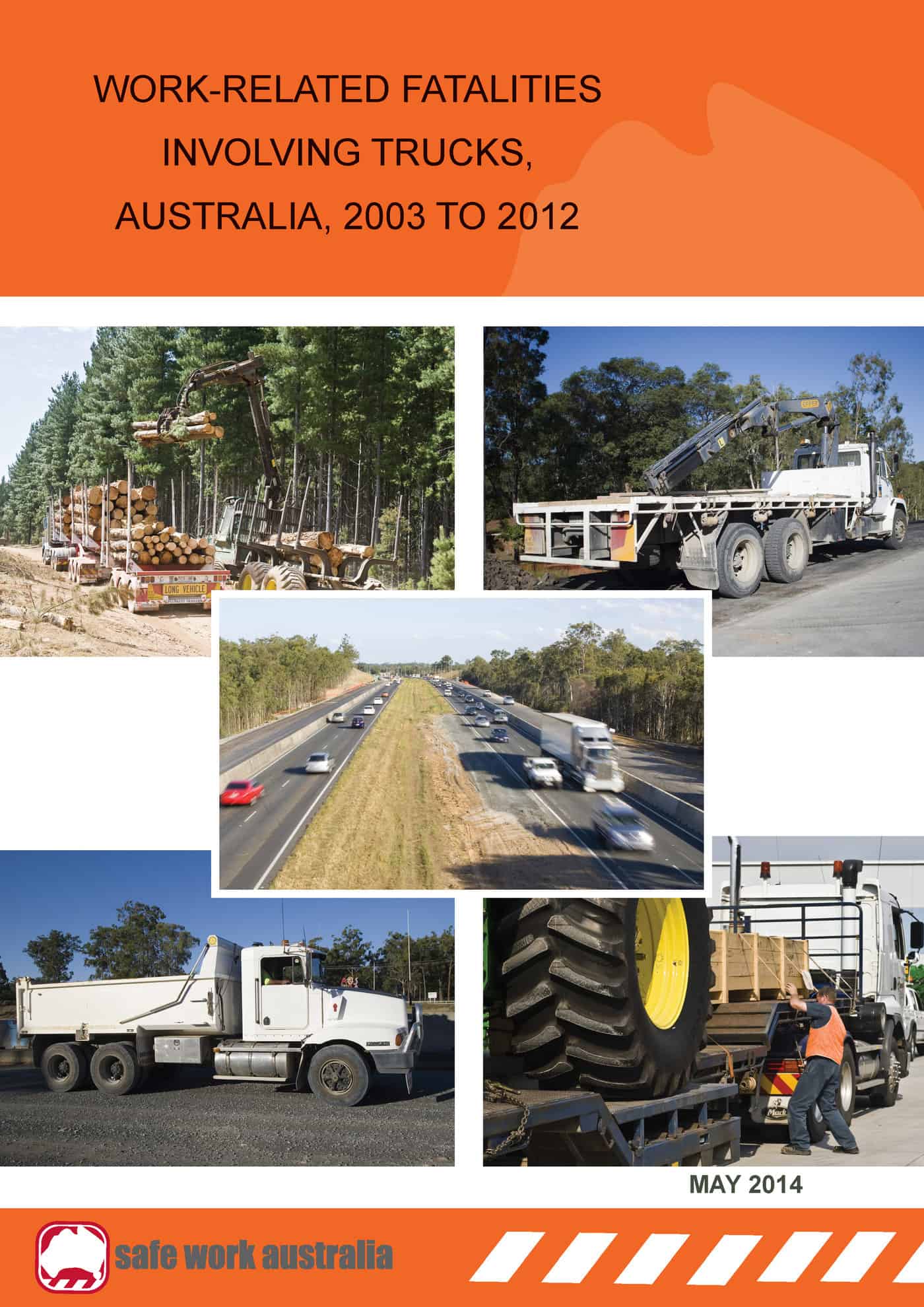
Cover of Work-related-fatalities-involving-trucksIn early 2014 a truck driver drove his vehicle into an intersection, collided with a car resulting in the death of four out of five members of one family. The truck driver, Jobandeep Gill, has been sentenced to 10 years jail.  Video of the incident site shows a company name on the side of the van.  It is not possible to determine who Gill was driving for or what his employment status was but, regardless of this, it seems a work vehicle was involved in the death of four people, and therefore occupational safety laws (OHS) may have been broken.

It is accepted by OHS regulators that a truck is a workplace for the driver and that OHS responsibilities of all workers include

“… take reasonable care for the health and safety of persons who may be affected by the employee’s acts or omissions at a workplace…” (Section 25 of the Victorian OHS Act 2004)

On 25 November 2015, Dr Rwth Stuckey stated at an ISCRR seminar that:

“WRR (work related road) crashes [are the] leading cause of traumatic work-related fatality & injury in most westernised countries.”

So why don’t OHS regulators follow-up WRR crashes by interviewing the truck owners or the employers of the drivers?  Perhaps statistics don’t support Dr Stuckey?

Subscribe to SafetyAtWorkBlog to continue reading.
Subscribe Help
Already a member? Log in here

OHS benefits of motion sensors and contemporary anthropometry

Several years ago, at a workshop over the development of the next Australian National Strategy for occupational health and safety (OHS), participants were asked to forecast an issue that would appear or be useful in the next decade.  I suggested sub-dermal implants that would record or transmit real-time health data.  My suggestion was received with laughter and a little bit of horror.

The sub-dermal implants for OHS monitoring are yet to occur but the electronic collation of important health data has progressed to a high level of relevance. This not only involves measuring body stresses but the bodies themselves. Continue reading “OHS benefits of motion sensors and contemporary anthropometry”

New workplace bullying report raises awareness in UK

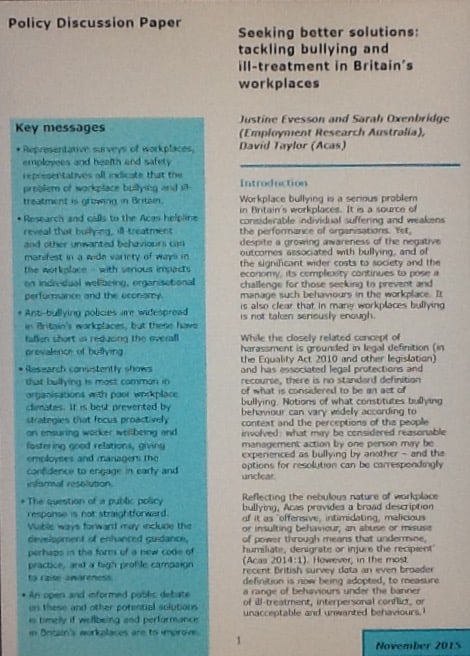
imageRecently workplace bullying gained increased attention in the United Kingdom due to media report about a discussion paper released by Advisory, Conciliation and Arbitration Service (Acas).

The report called “Seeking better solutions: tackling bullying and ill-treatment in Britain’s workplaces” is a very good summary of thinking on workplace bullying that acknowledges the Australian experience but seems to indicate that Britain remains in the early stages of tacking the workplace bullying situation after a series of false starts on the issue.

SafetyAtWorkBlog posed some questions about this paper to Dr 

Subscribe to SafetyAtWorkBlog to continue reading.
Subscribe Help
Already a member? Log in here

Time to reassess our approaches to machinery safety

9781472450777.PPC_alternative mobilitesTalking about workplace safety and machine manufacturing is unfashionable, perhaps because Australia’s manufacturing capacity is in strong decline. And occupational health and safety (OHS) seems preoccupied at the moment with psychosocial hazards and wellness.  But one Australian researcher, Elizabeth Bluff, has undertaken an empirical study of safety attitudes, motivations and practice in the manufacturing and OHS regulatory sectors and produced a remarkable book that needs to be read by everyone involved with workplace health and safety.

Bluff writes

“In illuminating the mechanisms underlying manufacturers’ responses for machinery safety the research also makes wider conceptual and theoretical contributions.  It provides insights into knowledge and motivational factors as principal elements shaping firm performance for social and regulatory goals, and advances understanding of how these elements are constituted in the everyday operations of firms and their interactions with external actors.” (page 3)

Continue reading “Time to reassess our approaches to machinery safety”

OHS Professionals get, or want, global attention

Pages from INSHPO_2015-OHS_Professional_Capability_FrameworkThe International Network of Safety & Health Practitioner Organisations (INSHPO) has launched the “The OHS Professional
Capability Framework – A Global Framework for Practice“.  The document reflects many of the issues raised in recently published research on occupational health and safety (OHS) professionalism, accreditation and certification.  However there are a couple of useful issues to note, from a very brief review, that indicate a major step forward.

Professional, Practitioner, Generalist

Australian OHS professionals have felt insulted over the last few years by the use of the title “OHS Generalist”.  The proponents of this concept failed to understand that the term was divisive (and insulting to some) and this failure indicates a persistent problem in communicating change to the OHS profession in a manner that fosters cooperation.  The INSHPO document seems to drop the Generalist category so beloved by the Australian OHS Education Accreditation Board. Continue reading “OHS Professionals get, or want, global attention”

Concatenate Web Development
© Designed and developed by Concatenate Aust Pty Ltd