
Following, ostensibly, the Four Corners exposé of labour hire exploitation in Australia last year, the Victorian Government established an inquiry. That Inquiry’s final report has been released with lots of recommendations, several pertaining to occupational health and safety (OHS). The Government’s media release response is HERE. The main recommendations related to OHS are: I recommend…
Category: law
Early speculation and reporting on theme park deaths is unhelpful
Late yesterday four adults were killed on the Thunder River Rapids ride at the Dreamworld theme park in Queensland Australia. Investigations are ongoing and it was only recently that the names of some of the victims were released. The first few days after any fatality are confusing as new information is uncovered, old concerns are voiced and our sympathies for the dead expressed. However there are usually some comments that are unhelpful, and this morning was no exception.
ABC Radio’s AM program led with a report called “Union expresses concerns to Queensland safety regulator about Dreamworld rides”. In the report Ben Swan, Queensland Secretary of the Australian Workers Union says that the union raised safety and maintenance concerns with the company running DreamWorld, Ardent Leisure Group, earlier this year. Swan said that the concerns involved maintenance regimes and equipment but did not specify that Thunder River Rapids was part of those concerns.
Swan was at pains to not distract people from the incident investigation yet his readiness to be interviewed did just that. The union could have made its point about past safety concerns by pledging to cooperate with official investigations by the Coroner and Work Health and Safety Queensland.
Lawyer, Sugath Wijedoru was interviewed by AM over an incident at the theme park in April 2016 that involved his client. The incident involved a different ride and different circumstances.
Swan’s and Wijedoru’s comments and the structure of the AM report, imply that there was a systemic OHS problem with the theme park’s administration but how does this help the investigation less than a day after the deaths? Does this add to the grief and trauma of the relatives who have only just been informed of the deaths, or provide comfort? DreamWorld may have systemic safety management problems but identifying this is the role of the investigators.
The information that Swan, Wijedoru and others have about the Thunder River Rapids ride and Dream World’s OHS practices generally is sure to be of interest to the investigators, regulators and Courts but did they need to comment within 24 hours of the tragedies? Who did this help?
The report also end with the reporter Katherine Gregory reminding the listener that
“there is no national regulator for theme parks in Australia. Instead it is managed by each jurisdiction.”
The implication is that there should be one. Why? The only National OHS regulator Australia has is Comcare and that only covers a selection of workplaces and industries. The fact is that Australia has no national regulator of workplace safety in the manner of other countries. OHS is almost always dealt with by the States which makes the concluding comments curious and unnecessary.
Mainstream media feels the need to report news and the deaths of four people on an amusement ride is certainly news but does it need to encourage speculation about incident causes at the time that the company is trying to work out what happened and address the concerns of its workers, various investigators are only just getting the level of access to the scene they need, and relatives are finding out why some of their family are not coming home?
Cabbage Salad and Safety – Episode 5
October is National Safety Month in Australia and episode 5 of the Cabbage Salad and Safety podcast discusses a range of topics to mirror the diversity of National Safety Month.
Siobhan Flores-Walsh and myself talk about:
- Conferences
- Culture
- Gender in Safety
- Mental Health
- Simple Safety vs Complex Safety
- Innovation
- Marketing and social media
The Gender in Safety conversation is one that I intend to expand upon in the coming weeks and is useful to notion relation to the increasing number of “women in safety”- type events.
 This podcast is a mixed bag but I am interested in hearing your thought on the podcast and the topics it contains so post a comment here or email me.
Young worker research misses the mark
On October 7 2016, Victoria’s trade union movement held a Young Worker Conference. The major public statement from that conference was the launch of a survey report called Young Workers Health and Safety Snapshot. The report has received some mainstream press which is not unusual for this type of trade union member survey. Almost twenty…
Does accessing government assistance need to be so hard?
Nothing is ever easy in farming. Several Australian States have introduced a rebate scheme to help farmers improve the safety of the quad bikes so the vehicles, also inaccurately called All Terrain Vehicles (ATV), should be made safer. The argument over safety has persisted for many years and has resulted, most recently, in rebates for safety improvements provided by the government. However, two States – Victoria and New South Wales – have different processes to accessing these rebates and the NSW process seems to deter farmers from applying for the rebates.
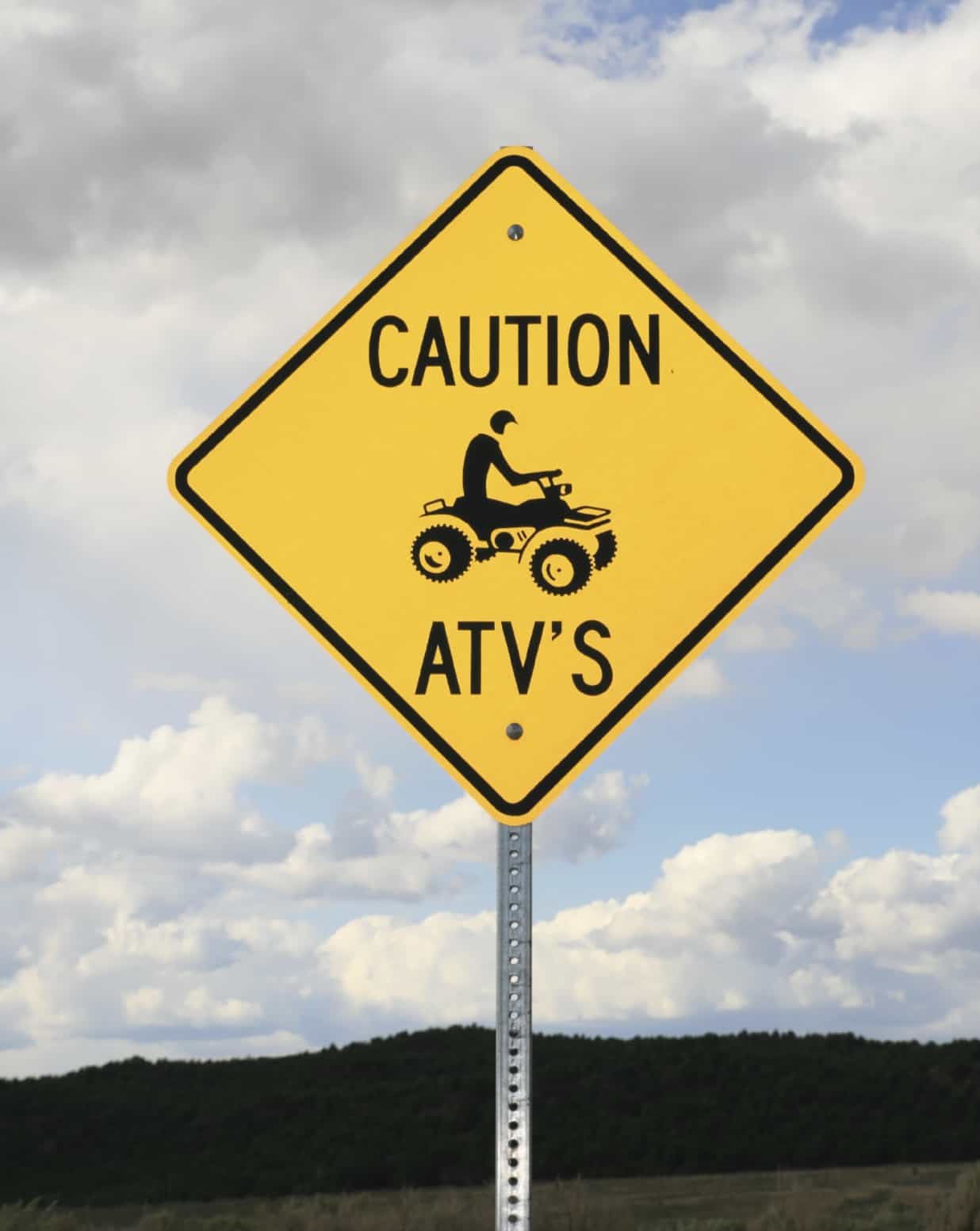 The Victorian Government’s rebate scheme is administered through WorkSafe who provides a Frequently Asked Questions which is simple and clear. The dates of activity are listed and, primarily, proof of purchase is the main document for eligibility. Victorian farmers can obtain a rebate for:
“$1200 for the purchase of an alternate vehicle such as a side-by-side vehicle (SSV) or a small utility vehicle (SUV). The alternate vehicle must be designed for use in agriculture and at point of sale have rollover protection and a fitted seatbelt. Sport vehicles and small commercial vehicles, such as utes, are excluded.
Up to $600 for the purchase of up to two operator protection devices (OPD). The OPD must have been designed and manufactured in accordance with approved engineering standards and independently tested to be eligible for the rebate. There are currently two OPD devices that meet this criteria and are eligible for the rebate. They are the Quadbar™ and the ATV Lifeguard.”
The NSW process is funded by SafeWork NSW with a complex set of terms and conditions. The purchase options seem narrower but the major difference in the two rebates schemes is New South Wales’ insistence that farmers must attend an “educative interaction”. According to a SafeWork NSW FAQ farmers are required to:
- “get along to a Farm Safety Day run by SafeWork NSW or one of its program partners
- visit the SafeWork NSW stand at an Agricultural Field Days
- request a free on-farm Workplace Advisory Visit and we will come to you
- attend one of the 100 training events being offered by Tocal College.”
SafetyAtWorkBlog has been told that farmers find this to be condescending and are suspicious of SafeWork NSW’s intentions, particularly in relation to the “free on-farm Workplace Advisory Visit”. Such visits are likely to be SafeWork NSW’s preferred option as there are only a limited number of Field Days available every year. WorkSafe Victoria does not insist on educative interactions as part of the rebate scheme which increases NSW framers’ suspicions.
The Federal Chamber of Automotive Industries (FCAI) recently released a new video to support its claims that Operator Protection Devices (OPD) or Crush Protection Devices (CPD) “are not the answer“. The FCAI has been out of step with the issue of quad bike safety for many years and it is difficult to sympathise with its position when governments are “endorsing” OPDs through rebate schemes.
The FCAI’s position seems to be shortsighted as the rebates are encouraging farmers to apply a Gordian Knot solution to the bickering over quad bike safety. Both the NSW and Victorian rebate schemes encourage farmers to purchase side-by-side vehicles (SSV) which, due to the framework over the driver, have no need for the OPDs on offer. SSVs are more expensive than quadbikes but can be seen as endorsed safer options by the regulators of safety in each of the States.
Having dug in to a contrary position of additional safety measures on quad bikes, the FCAI is getting more out of step with the regulators’ positions and the safe desires of farmers and farming families. But perhaps criticising the FCAI is unfair, after all, it is a body representing the interests of automotive manufacturers. Generations have grown up equating motor vehicle manufacturing with safety, ever since “Unsafe at Any Speed” was published in the 1960s, but the FCAI seems different. It has its own definition of workplace safety that is not in step with government or safety regulators.
Farmers, like all business operators, need to decide for themselves who they trust more for their own safety – regulators or salespeople.
Taking Total Cost of Injury seriously could substantially change how safety is managed
Cost is the last consideration in occupational health and safety (OHS) but is usually the first consideration in all other decisions. “Can we afford to improve something? No. So let’s do something else”. There is something fundamentally skewed in determining the cost-benefit analysis when it comes to workplace safety. For several years Safe Work Australia (SWA)…
Wellness programs need to fit business management
Recently Corporate Bodies International circulated an annual membership offer (no costs listed in this link) to its Australian market. It said:
“Employees and their families have access over to over 300 live webinars and exercise classes, monthly health videos, posters, online GP, Dietitian and Exercise Physiologist appointments – from anywhere in the world, just to name a few of the inclusions. All of this for little more than the cost of a cup of coffee.”
It is the last line that requires a bit more consideration as no program only costs just what marketers claim.

The CBI offer included a link to a flyer about its Healthy Bodies Subscription which involves $A1,800 per annum for companies with less than 100 staff to about ten times that for a much larger number of staff. The services extend from webinars, posters for toilet walls and newsletters to “GP2U Online GP Access” which involves:
“Diagnosis, immediate prescriptions, specialist referrals and medical certificates, all from the convenience of the office. Designed for critical workers or the executive team, minimising work disruption”.
For an organisation that has no occupational health and safety (OHS), Human Resources or well-being resources, purchasing a package like this may be financially attractive but it can also lock one into a pool of medical advisors that could generate conflicts later on with, for instance, insurers, legal representatives, project partners and others. The provision of “immediate prescriptions” may also be a benefit that needs some further investigation – prescriptions by who? For any medication?
A company needs to decide whether it wants to be in total control of the medical services it may offer, or may need to offer, to its employees and whether subscriptions are sufficiently responsive to meet the fluctuations that occur with any workforce and with the business’ profitability.
It is also worth considering whether employees can choose to opt-out and continue being diagnosed or treated by their own physician. How would such a corporate subscription allow for this worker right? If the worker opts out, would this be seen as being disloyal? Would this reduce the number of workers covered by the subscription and affect the overall cost to the company?
Owning the welfare program for one’s own employees allows a company to shop for the best deal and to tailor the program to match the fluctuations of the company’s needs. Would this cost more than the subscription fees in the table above? Almost certainly, IF the subscription cost was the only cost involved. It is important to look beyond cost to operating costs like management control, good governance and due diligence – to the broader context to which occupational health and safety law is pushing Australian companies. These factors are rarely costed and are frequently overlooked, probably as a consequence of not being measured. It is a shame that such “intangibles” are accepted as part of economic assessments but are dismissed in relation to OHS.