Compensation denied because police officers only saw the aftermath of fatal incident

In 2003, emergency responders attended a major rail incident at Waterfall in New South Wales, in which multiple passengers were injured and seven died.  According to a 14 April 2010 article in The Australian (page 7, not yet(?) available online):

“The officers [David Wicks and Philip Sheehan] were among the first at the scene of the crash that killed seven people, including the driver, who lost control of the train after he had a heart attack”.

Those officers have been denied compensation under the NSW Civil Liability Act because

“they did not witness the crash, only its aftermath.”

Both police officers had been diagnosed with post-traumatic stress disorder (PTSD) and been medically discharged.

Their claim for compensation has now reached the High Court of Australia Continue reading “Compensation denied because police officers only saw the aftermath of fatal incident”
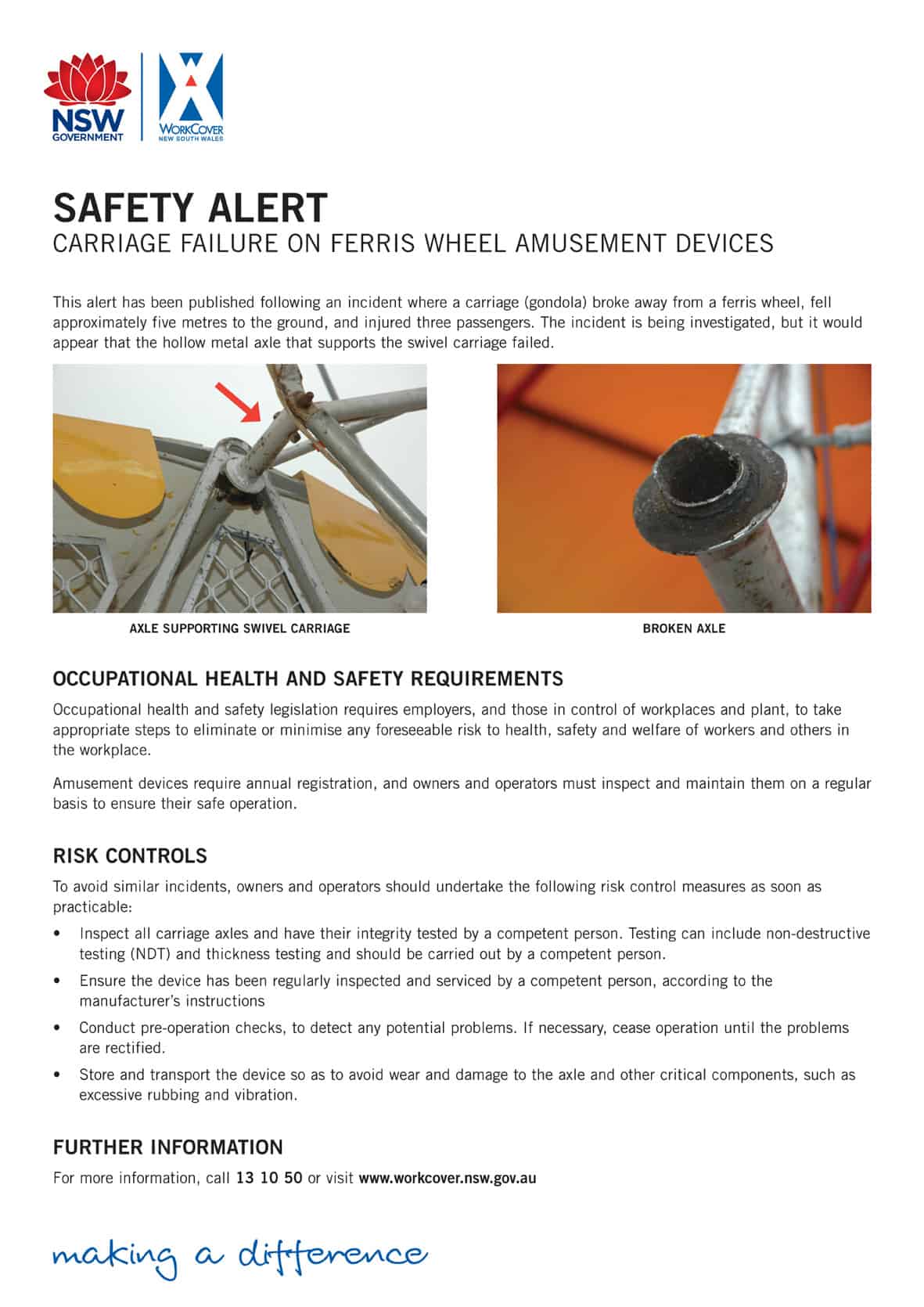
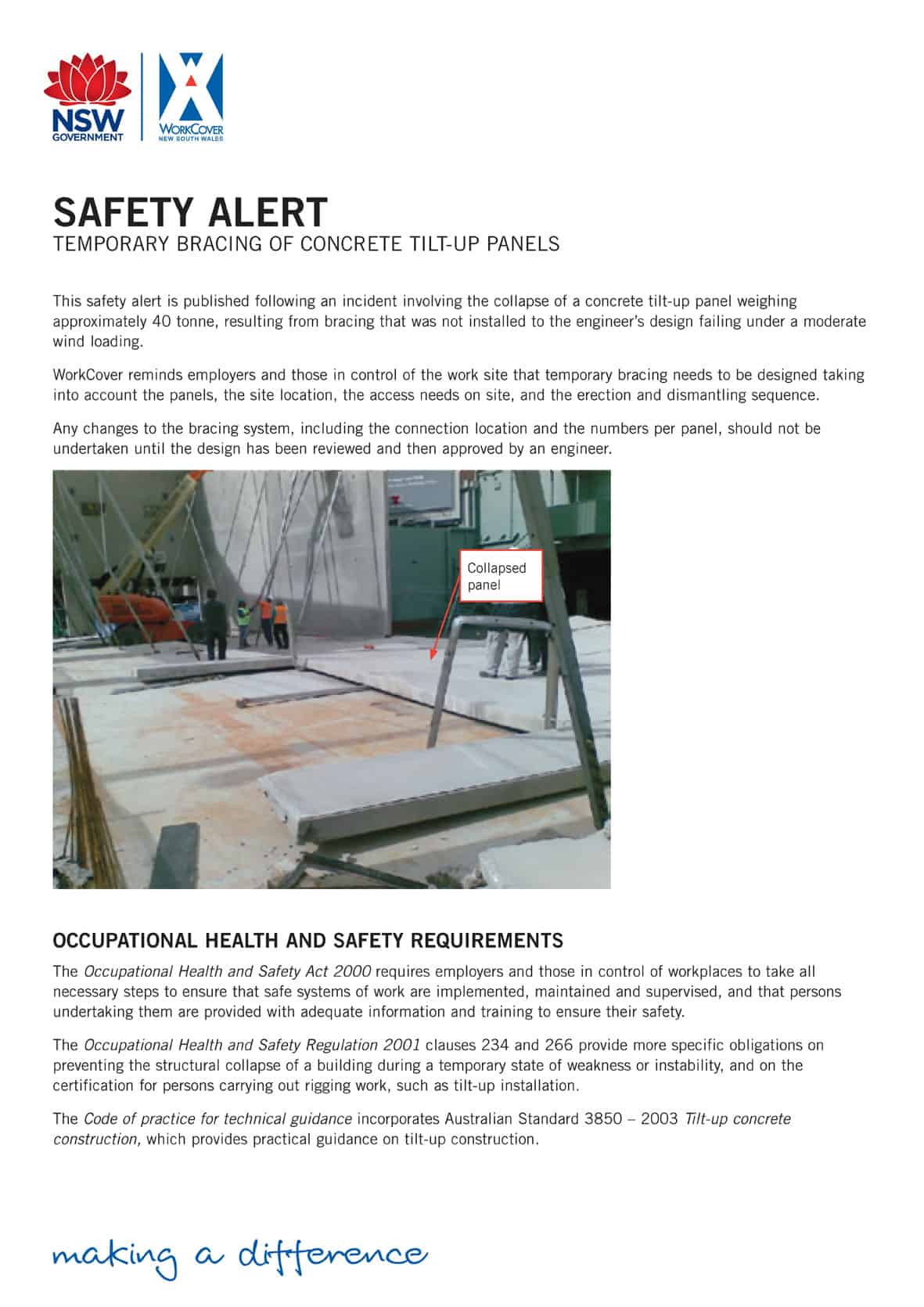
Three Australian Safety Alerts – asbestos, rollercoaster and tilt-up construction

Workcover New South Wales issued three safety alerts in early April 2010 that deserve attention.

New South Wales seemed to have a spate of faults on amusement rides over the last few months – Ferris wheelrollercoaster (with video). Continue reading “Three Australian Safety Alerts – asbestos, rollercoaster and tilt-up construction”

Safety professionals must understand RTW in order to avoid unnecessary costs

The rationale for the Australian government’s evangelism of harmonisation is the reduction of “red-tape” on the logic, or assumption, that business costs will also be reduced.  Dr Mary Wyatt, according to a report on ABC News Online, says that cost reductions may be possible be reducing over-servicing of injured workers.

Dr Wyatt says:

“We have an increasing focus on the medicine, and we have lots of scans that tell us there are things wrong with our bodies, and then when those scans are done it’s often labelled as a serious problem, and then the worker gets worried and we often go off on a tangent..” Continue reading “Safety professionals must understand RTW in order to avoid unnecessary costs”

Restorative Justice research gets funding boost as US hearings focus on workplace bullying and suicide

The role of restorative justice in workplace incidents has received a major boost from the Legal Services Board in Victoria.  According to an April 2010 newsletter from the Creative Ministries Network additional research funding has been received for a quality assurance framework.  As mentioned in the article below restorative justice could have particular benefits to instances of workplace bullying.

Several of the suggestions and areas of research echo some of the issues raised in US Assembly Labor Committee hearings on workplace bullying and suicides in the last few days.

“The Creative Ministries Network has received a further grant from the Legal Services Board to undertake a project to develop a Victorian quality assurance framework for any restorative justice service operating in the area of work-related death.  The project will also examine whether this framework may apply to work-related injury, especially in areas such as workplace bullying. Continue reading “Restorative Justice research gets funding boost as US hearings focus on workplace bullying and suicide”

Information flow is critical for sound Board decisions on OHS

Peter Arthur, a Partner with Australian law firm, Allens Arthur Robinson, spoke on Boardroom Radio on 1 April 2010 about new duties that national OHS laws will place on Directors.

Although there are six elements in the new general duty, Arthur says that they all can come under the category of “information flow”.   Continue reading “Information flow is critical for sound Board decisions on OHS”

Employees’ OHS responsibility and working beyond the maximum hours

One of the most powerful motivators for behavioural change in workplaces is the legislative obligation on employees to not put themselves at risk of injury nor to act in such a way as to place others at risk.

Reported in the Australian media on 31 March 2010, Fair Work Australia has ruled that employees in the fruit-picking industry may volunteer for work beyond the standard 38-hour week without receiving penalty rates or overtime.  The union movement is understandably concerned about how this financially disadvantages workers and how this ruling may spread beyond the fruit-picking industry.

The ruling allows fruit-pickers to choose to work beyond their regular shifts.  Will they be able to work safely?  Will they not be fatigued?  Will they have sufficient daylight to undertake the tasks safely?  Will there be sufficient downtime for workers to recover from a long work day and be fit for work?  Could the workers’ choice to undertake additional fruit-picking tasks be a breach of their OHS obligations to look after their own safety, health and welfare?

The employees may choose to ignore their own occupational health for the sake of additional dollars but should they then be eligible for workers’ compensation if the effects of those longer hours are found to have contributed to an injury or illness? Continue reading “Employees’ OHS responsibility and working beyond the maximum hours”

Psychosocial hazards are now, formally, occupational diseases

On 25 March 2010, the International Labour Organization released an updated list of occupational diseases.  On the ILO website, it is stated that

“Mental and behavioural disorders have for the first time, been specifically included in the ILO list.”

All occupational diseases, including psychosocial hazards, had to satisfy the following criteria in order to be considered:

  • “…that there is a causal relationship with a specific agent, exposure or work process;
  • that they occur in connection with the work environment and/or in specific occupations;
  • that they occur among the groups of workers concerned with a frequency which exceeds the average incidence within the rest of the population; and
  • that there is scientific evidence of a clearly defined pattern of disease following exposure and plausibility of cause.”

The exact text from the revised List of Occupational Diseases Recommendation R194 is

“2.4. Mental and behavioural disorders

2.4.1. Post-traumatic stress disorder

2.4.2. Other mental or behavioural disorders not mentioned in the preceding item where a direct link is established scientifically, or determined by methods appropriate to national conditions and practice, between the exposure to risk factors arising from work activities and the mental and behavioural disorder(s) contracted by the worker”

What this means in practice is unclear and is likely to vary from country to country in relation to recognition of UN and ILO recommendations.  What it does establish is that an international authoritative OHS body has acknowledged the existence of psychosocial hazards.

“The Eagle has landed”  however there will remain some organisations who will always believe that occupational causes of psychosocial problems belong on the same sound-stage as the Apollo moon landings.

Kevin Jones

Concatenate Web Development
© Designed and developed by Concatenate Aust Pty Ltd