
Psychosocial hazards are gaining attention online, but the pace of change remains sloth-like. Two recent online events provide good, basic occupational health and safety (OHS) and organisational psychology information and some insight into the slow pace.
Category: law
Significant workplace culture investigation but OHS missed again
Australia’s news media is reporting a shocking report about the workplace culture of parts of the Nine Entertainment organisation – bullying, sexual harassment, abuse of power – all the elements of organisational culture that can be found in any company if one scratches the surface. Scratching is one of the aims of the occupational health and safety (OHS) discipline – investigating the causes of harm at the source.

Learn about OHS through alternative perspectives
On the iconic discount table in Readings Carlton bookshop is one of the most interesting occupational health and safety (OHS) books – The Careless State by a Professor of Political Science at Melbourne University, Mark Considine. This book was not written by an OHS specialist with all the associated ideological and philosophical baggage. And really, it is mainly one chapter that justifies the description “Worker’s Health and Safety.”
“Does my business comply with the OHS/WHS law?”
Employers struggle to know if their businesses comply with the local occupational health and safety (OHS) or work health and safety (WHS) laws. They always have and, likely, always will. Employers are hungry for certainty and are often annoyed with OHS advisers who refuse to give a definitive answer to the question in this article’s title.
In the 1990s, particularly in Victoria, there was almost a frenzy for a simple audit tool developed through WorkSafe Victoria called SafetyMAP. It disappeared well over a decade ago, but my Goddess, it was popular, and small business operators especially wanted it. Even when its effectiveness was questionable.
Positive duties everywhere
One area where human resources (HR) and occupational health and safety (OHS) do not overlap in practice is diversity, equity, and inclusion (DEI), but they should. OHS cannot operate without effective consultation, and part of that effectiveness comes from a diversity of information, respectful conversations, and the inclusion of sometimes uncomfortable perspectives or truths.
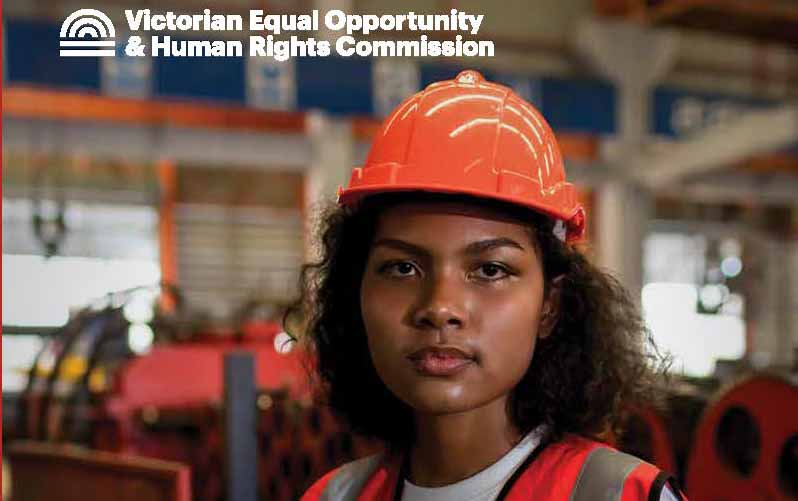
Recently, the Victorian Equal Opportunity and Human Rights Commission (VEOHRC) published a guideline on race discrimination in the workplace, which illustrated the need for HR and OHS to begin talking (and listening to) the same language.
The Australian Institute of Health and Safety embraces AI
The Australian Institute of Health and Safety (formerly the Safety Institute of Australia) recently launched an Artificial Intelligence tool for the institute’s members to access its extensive data sources. I posed SPARK a couple of questions to evaluate its effectiveness.
According to the September 25 2024 media release:
“The “Safety Professional Assistant and Resource Knowledge-Base” tool, known as SPARK, … has been trained on State-based legislation and regulations, OHS Body of Knowledge content, OHS Professional Magazine content, and general organisational information stored on the AIHS website.”

Another alleged work-related death at EY. This time – India
The workplace culture of EY and other major consulting companies came under scrutiny several years ago following an apparent work-related suicide at the offices of EY in Sydney. EY’s workplace culture is again being examined after the death of a young EY employee in India, allegedly due to work stress.