
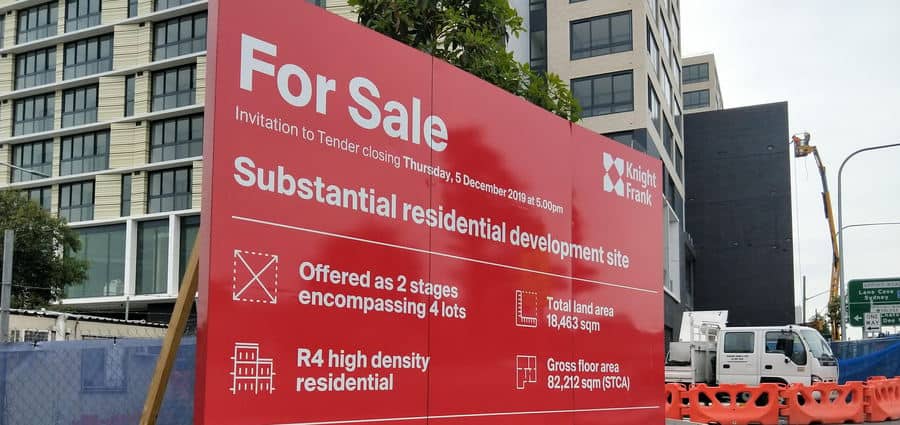
The judgement against GN Residential Construction P/L, part of the Ganellen group, is now publicly available. GN/Ganellen pleaded guilty to work health and safety breaches that lead to the death of a young worker (Christopher Cassaniti) and serious injuries to another worker (Kahled Wehbe), and was fined $900k. The judgement provides much more detail than the media reports at the end of last year, with important information about scaffolding and also a requirement to establish a “Scaffolding Industry Safety Standard Working Group”. The curious part of this latter requirement is that New South Wales has had an industry standard for scaffolding since 2008.
Category: law
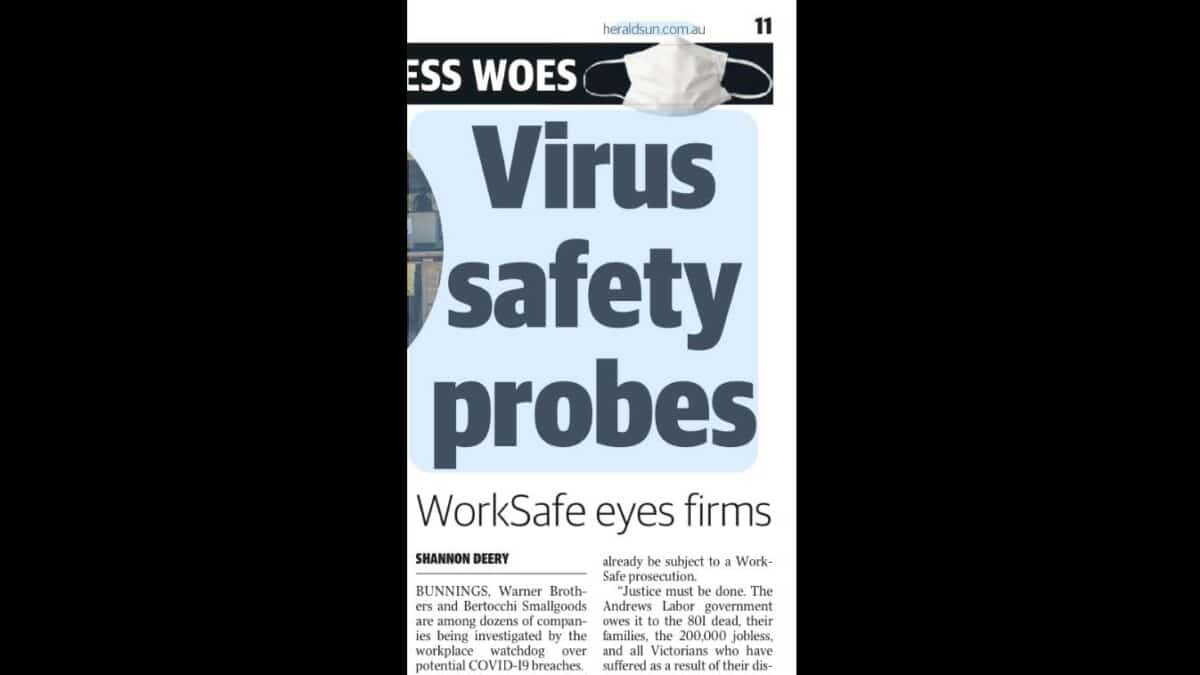
WorkSafe Victoria’s COVID19 OHS investigations
WorkSafe Victoria and its CEO Colin Radford have been pilloried by a couple of political and economic commentators recently, especially over the handling of the Hotel Quarantine Program. Radford and WorkSafe have wisely not reacted to the loudest voices and have continued their work investigating COVID19-related breaches of the occupational health and safety legislation.
One of the accusations of the commentators is that the OHS regulator has been slow to act. The Herald-Sun newspaper published an article on January 7, 2021 based on the list of companies being investigated but mentioned only a handful. The full list is included below.
Newspapers must make editorial decisions in relation to newspaper space so the omission of the full list is understandable. However, the online version, for which space is not an issue, still omitted the list or at least a hyperlink to the list. The online and printed articles are almost the same except that the online version omits the name of Australia’s largest hardware stores, Bunnings, from the first paragraph; an editorial decision (or error) that is hard to understand.

Seeking accountability in a pandemic
The Australian newspaper’s Robert Gottliebsen continues to bash the Victorian Premier and WorkSafe Victoria over the outbreak of COVID19 that originated from workers in the Hotel Quarantine Scheme. He insists that the government has occupational health and safety (OHS) responsibilities for the workers in the hotels, especially the security guards through which transmission to the community occurred. His arguments are logical, but what he is really searching for is accountability and, perhaps, in a global pandemic, there is none.
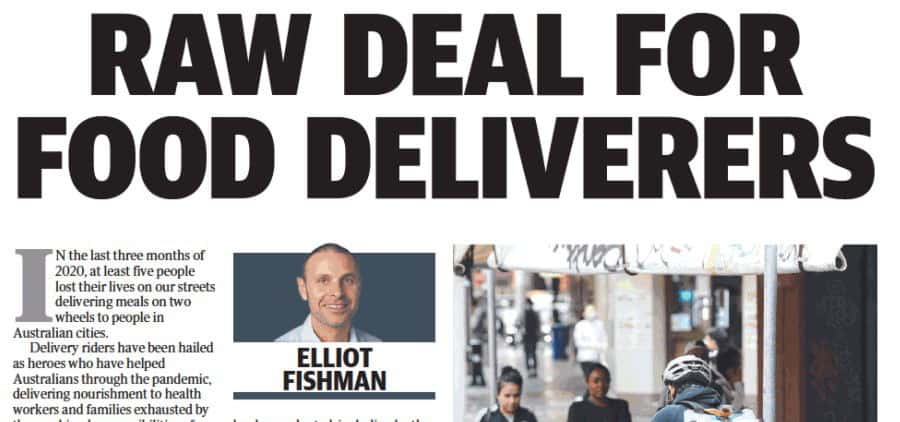
“safety theft” in the gig economy
An opinion piece by Dr Elliot Fishman, of the Institute for Sensible Transport published in the HeraldSun newspaper on January 3, 2021 mentions Industrial Manslaughter in relation to food delivery drivers. (The article appears to be unavailable online) The link is tenuous and seems outside of Dr Fishman’s main area of expertise, but that seems to be the nature of Industrial Manslaughter penalties, they pop up in all sorts of discussions, many unrelated to the point being made.
The point Dr Fishman seems to be making is that the delivery of food on two-wheeled vehicles is dangerous, as shown by recent deaths of several riders in Victoria and New South Wales, and he poses several questions and suggestions to improve the situation:

Selling remediation as prevention is dishonest
Regular readers of, and subscribers to, this blog know that I am a strong advocate for the prevention of suicides, especially those related to work. Mental illness is not always connected to suicides but there is often a correlation between, mental stress, self-harm, suicide ideation and suicides. as such it is useful to keep an eye on suicide statistics, particularly in industries or times of great stress.
In early December 2020, Victoria’s Minister for Mental Health, James Merlino, addressed the Parliamentary Accounts and Estimates Committee (PAEC) to discuss the 2020-21 Budget Estimates. At that time, Merlino made some clear statements about the rates of suicides, which are useful to remember when evaluating suicide and mental illness prevention strategies like those mentioned in the Productivity Commission’s recent inquiry into Mental Health.
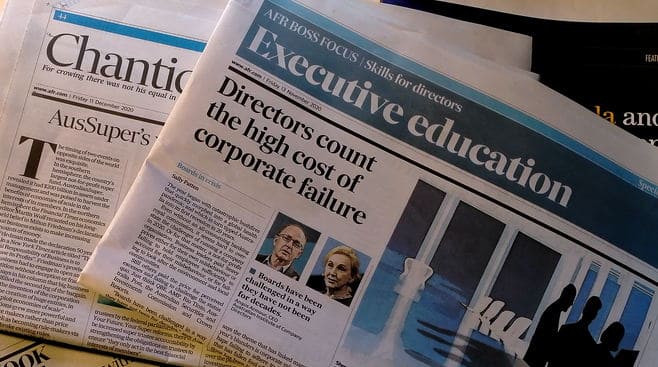
Business nuggets from the Australian Financial Review
It is not possible to write as many occupational health and safety (OHS) articles as I would like to, and my newspaper clippings files are bulging by the time I get some time to tidy up. The Australian Financial Review (AFR) is an expensive business newspaper that often touches on OHS matters even though OHS may not be the core of the story. Below is a short discussion of many of those clippings from 2020. Most of the AFR articles are paywalled but can often be tracked down through other measures.
“exponential increase in mental injuries in the workplace” and other statements in a Victorian Parliament committee
Three years ago, WorkSafe Victoria indicated that it would consider prosecuting farmers for breaches of occupational health and safety (OHS) laws. That possibility seems to have disappeared based on the latest Minister for Workplace Safety’s appearance at the Public Accounts and Estimates Committee (PAEC).
Ingrid Stitt‘s appearance centred on questions related to the 2020-21 Budget Estimates and touched on Industrial Manslaughter, gig workers, mental health, and construction and farm safety.