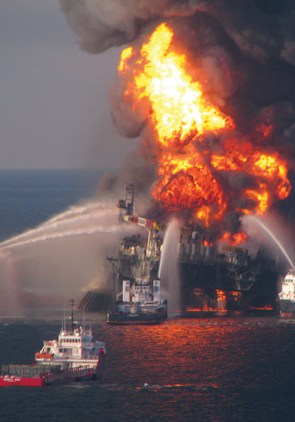
Latest Andrew Hopkins book focusses on engineering decisions

The latest Andrew Hopkins book steers clear of analysing corporate leadership, and this is a good thing.  Australian National University sociologist, Andrew Hopkins, has established an international reputation for his enlightening analyses of the failures of organisational culture in major disasters but his latest book, Disastrous Decisions: The Human and Organisational Causes of the Gulf of Mexico Blowout, purposely leaves leadership out.

This may disappoint many but Hopkins says that

“The critical role of top leaders in accident prevention cannot, however, be overstated.  It is they who must learn from major accidents and, unless they do, nothing can be expected to change.

There is one group of decision-makers that has received rather less attention in accident investigations: office-based engineers.” (page 8) Continue reading “Latest Andrew Hopkins book focusses on engineering decisions”

Safety leadership and culture require accountability

At the recent Safe Work Australia Awards, the Minister for Workplace Relations had a dig at “safety culture“, according to an article from the National Safety Council of Australia.   Bill Shorten said :

“It is not the systems or the fancy talk about culture that will save people’s lives.”

This has been interpreted by some as Shorten disparaging the advocates of safety culture.  I agree that safety culture can be used as a euphemism for “Act of God” and therefore take no preventative action but safety culture is not designed by Gods, it is designed and implemented by Chief Executive Officers and Boards of Directors, often under the rubric of “leadership”. Continue reading “Safety leadership and culture require accountability”

The social context of OHS laws is being poorly handled

Australian lawyer Michael Tooma is mentioned regularly in the SafetyAtWorkBlog, mostly because Tooma is one of the few who consider workplace safety in the broader social context.  In The Australian newspaper on 10 February 2012 Tooma wrote that new work health and safety laws being introduced in Australia present

“…a march … into the traditional heartland of the public safety, product safety and professional liability territory, and it brings with it a criminalisation of what was once an exclusively civil liability domain.  The new laws did not invent this trend, they just perfected it.”

Right-wing commentators would jump on this and declare “nanny state” but it is vitally important to note that this trend of “protectionism”, or the “compensation culture” as described in the United Kingdom, did not originate in occupational health and safety (OHS) laws.  The OHS profession, business operators and workers will need to learn to accommodate and manage this social trend that has been imposed.

Tooma writes that ”

“…we have not had a proper debate about the incursion of the laws into nontraditional areas and its impact on the resources of firms, regulators and ultimately work safety standards.”

The debate may already be over. Continue reading “The social context of OHS laws is being poorly handled”

Transocean executives gain safety bonuses

News that Transocean are awarding their executives substantial safety bonuses has the internet aflame with outrage.  Certainly it seems hard to justify the bonuses given after the death of 11 workers and the damage to the local environment, economy and community but the action will also affect safety management.

 Safety management is increasingly relying on statistics to identify performance levels.  Transocean’s actions illustrate that some statistics bear little relation to reality or, at least, the real-world context of its operations.

AFP  quotes Transocean as reporting to the US Securities and Exchange Commission that:

“Notwithstanding the tragic loss of life in the Gulf of Mexico, we achieved an exemplary statistical safety record as measured by our total recordable incident rate and total potential severity rate” Continue reading “Transocean executives gain safety bonuses”

Operational Risk Management – a timeless book, sadly

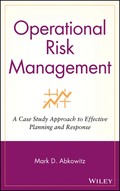
For several years now Mark Abkowitz’s book “Operational Risk Management” has been sitting on my “to-read” shelf.  Given my recent wish for a case study approach to leadership and given the Fukushima nuclear issues, the book caught my attention.

Books that analyse disasters are far superior to watching real-time disasters because the distress is minimised, the analysis can be dispassionate and time can provide a more detailed context.  (The quickness of production of some of the books about the BP/Gulf of Mexico suffered from the curse of topicality)  Books provide a distance that the constant exposure to “disaster porn” does not.

Operational Risk Management looks at many at many disasters from the last 30 years but the disasters are not only industrial and process disasters, although Chernobyl and Bhopal are covered. Continue reading “Operational Risk Management – a timeless book, sadly”

Managerial OHS walk-arounds and D&O liabilities

The latest edition of The National Research Centre for Occupational Health and Safety Regulation’s newsletter lists two new working papers, one from Andrew Hopkins and one from Neil Foster.  Both should be obligatory reading.

Hopkins discusses how to increase the value of the “management walk-arounds” an increasingly common key performance indicator for senior executives.  Hopkins, naturally, uses the Deep Water Horizon case as an illustration of the flaws in the process but walk-arounds should not only be for large projects.

Hopkins shows that the VIPs had an inadequate understanding of safety.  They identified the slips, trips and falls hazards rather than asking questions about the potential major hazards of the facility.  This is a common trap for managers and safety professionals, for those with suitable OHS skills, and one that needs to be actively countered.  Continue reading “Managerial OHS walk-arounds and D&O liabilities”

Is capitalism anti-safety? Systemic failures in oil industry

The Wall Street Journal and other media around the world have reported on systemic failures of the global oil industry and government regulators identified by the National Commission on the BP Deepwater Horizon Oil Spill and Offshore Drilling.  These articles are based on the release of a single chapter, Chapter 4, of the final report due for release on 11 January 2011.

A media release from the Commission includes the following findings from Chapter 4

“The well blew out because a number of separate risk factors, oversights, and outright mistakes combined to overwhelm the safeguards meant to prevent just such an event from happening.  But most of the mistakes and oversights at Macondo can be traced back to a single overarching failure—a failure of management.  Better management by BP, Halliburton, and Transocean would almost certainly have prevented the blowout by improving the ability of individuals involved to identify the risks they faced, and to properly evaluate, communicate, and address them.”

“. . .the Macondo blowout was the product of several individual missteps and oversights by BP, Halliburton, and Transocean, which government regulators lacked the authority, the necessary resources, and the technical expertise to prevent.”

“The blowout was not the product of a series of aberrational decisions made by rogue industry or government officials that could not have been anticipated or expected to occur again. Rather, the root causes are systemic and, absent significant reform in both industry practices and government policies, might well recur.”

“What we. . .know is considerable and significant:

  1. each of the mistakes made on the rig and onshore by industry and government increased the risk of a well blowout;
  2. the cumulative risk that resulted from these decisions and actions was both unreasonably large and avoidable; and
  3. the risk of a catastrophic blowout was ultimately realized on April 20 and several of the mistakes were contributing causes of the blowout.”
The significance of these quotes is that the Commission is critical of an industry and not just a single company.   Continue reading “Is capitalism anti-safety? Systemic failures in oil industry”
Concatenate Web Development
© Designed and developed by Concatenate Aust Pty Ltd