
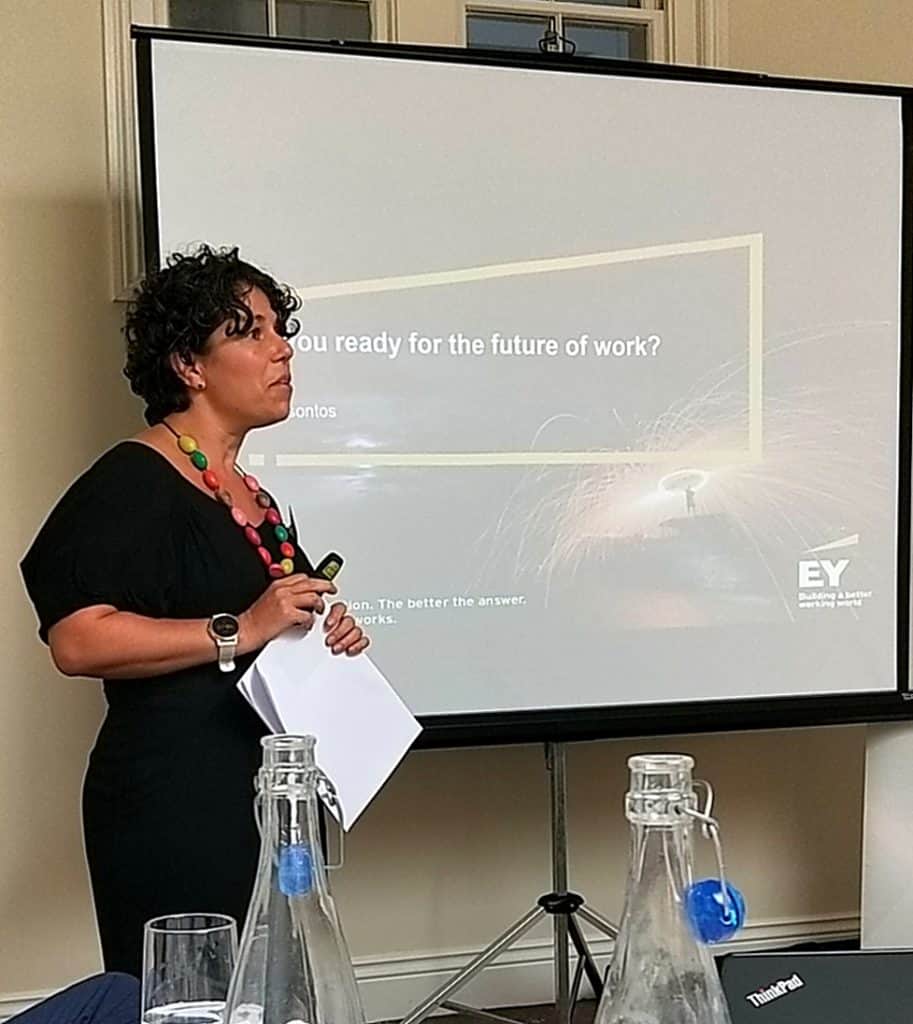
The future of work is usually portrayed as a future dominated by Artificial Intelligence (AI) and electronic technology, and one with which humans will struggle to cope. As other industrial sectors panic over potential job losses, it may be good news for the occupational health and safety (OHS) profession which feeds on the potential for harm. The future will still contain harm, but probably new types.
Consultation has been critical to OHS and its ability to improve health and safety, but many OHS people do not have to leave the office. There activities revolve around complicated Excel spreadsheets of intricate injury classifications and risk calculations. But OHS existed long before these technological burdens, which some would describe as dead-ends and others as the accumulation of valuable data. However, talking about safety and, more important, listening to others discussing safety is the most important tool an OHS profession has and will have in the Fourth Industrial Revolution.
This was reinforced recently by EY’s EHS Partner Andi Csontos (pictured above) at a seminar in Ballarat Victoria. Csontos paraphrased a recent EY discussion paper:
 One of the common questions I am asked, usually face-to-face rather than online curiously, is what changes I would suggest for improving occupational health and safety (OHS). Following on from the
  The strong readership of the article on truck driver safety based on the
 Many have been claiming that the era of neoliberal economics and the associated politics is over or, at least, coughing up blood. However, occupational health and safety (OHS) is rarely discussed in terms of the neoliberal impacts, and vice versa, yet many of the business frustrations with red tape, regulatory enforcement strategies, reporting mechanisms and requirements and others have changed how OHS has been managed and interpreted.