
Inexactitudes could lead to OHS myths

Consulting firm Deloittes recently announced the merging of its occupational health and safety (OHS) and sustainability sectors in order to provide better customer services.  In the article Deloittes says about the importance of workplace mental health:

“Given that one in six working age Australians live with mental illness including depression, that is costing Australian businesses at least $11 billion dollars each year, this is a growing area“.

But the source of this statement is unclear and this lack of clarity may be contributing to some of the inexactitudes in the mental health/wellbeing debate. Continue reading “Inexactitudes could lead to OHS myths”

Mental health missing from key OHS statistics

Cover key-whs-stat-2015Part of the core duties of any occupational health and safety (OHS) regulator is the production of data. Recently Safe Work Australia (SWA) released its “Key Work Health and Safety Statistics” for 2015 and given the amount of media attention on workplace mental health, one would expect mental health to be one of the key statistics.  It’s not.
In fact mental health is referenced only once in the document on page 28.  The table states that for the decade of 2000-2001 to 2010-2011

“mental disorders…did not display a clear overall trend of increase or decrease”.

This is significant in the context of workplace mental health reporting.  Is the reported increase in workplace mental health a myth?  Safe Work Australia’s statistics seems to support this.

Subscribe to SafetyAtWorkBlog to continue reading.
Subscribe Help
Already a member? Log in here

The exploitation of happiness

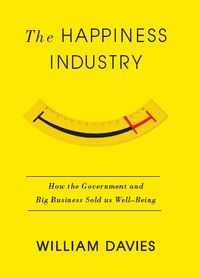
As the Australian Government analyses the productivity of the workplace it is vital that that analysis reflects the modern workplace and management practice. At the moment Australian workplaces are awash with training programs focusing on resilience and happiness, implying that each individual can change and improve a workplace culture but there has always been an undercurrent of manipulation to these courses and seminars.  A new book by William Davies provides a fresh perspective that, rightly, questions the motives behind this modern trend and provides an important historical context. (For those who can’t purchase the book but want to know more, look at this series of articles)

Davies’s book,  “

Subscribe to SafetyAtWorkBlog to continue reading.
Subscribe Help
Already a member? Log in here

Enforceable Undertakings on OHS – Good and Bad

In 2010 Queensland’s former Attorney-General Cameron Dick said of enforceable undertakings that:

“Enforceable undertakings promote the introduction of long-lasting and more wide-ranging safety changes that would not have occurred under the prosecutorial system that imposes fines after the event.”

Enforceable Undertakings can be a powerful force for improving occupational health and safety (OHS) but they could also be used by employers to forestall investment in OHS and minimise the financial penalties should an incident occur.

Continue reading “Enforceable Undertakings on OHS – Good and Bad”

An OHS conference split into monthly meetings

I am a Life Member of the Central Safety Group (CSG), a small network of OHS professionals who meet in central Melbourne each month. CSG seems to me to provide the best return on investment for professional development in my area and I’d like to recommend  membership, if you are local.

The Central Safety Group has operated for over 40 years, continues to meet monthly, providing access to important guest speakers, like those listed below, and to networking opportunities. Continue reading “An OHS conference split into monthly meetings”

Book Launch of Job Quality in Australia

Last week this blog reviewed the book Job Quality in Australia emphasising how worker safety, health and well-being is a vital element of job quality which, in turn, is crucial for Australia’s productivity. In preparation for a book launch in Sydney on 23 June 2015, the University of Sydney has released a media statement (available…

Subscribe to SafetyAtWorkBlog to continue reading.
Subscribe Help
Already a member? Log in here

Annual Reports need OHS engagement

Successful safety management relies on communication. Sometimes this is informal, as in prestart meetings or toolbox talks; sometimes it is formal, such as with Annual Reports and legacy documents. It is important for occupational health and safety (OHS) professionals to understand how to communicate in these two formats and to address different audiences and readerships.

The latest Australasian Reporting Awards were handed out last week with the Civil Aircraft Safety Authority garnering the Work Health and Safety Reporting Award for 2015. Safe Work Australia’s Chief Executive Officer, Michelle Baxter, said, about the award:

“By including high quality work health and safety information in your annual report, you can establish your organisation as a leader in work health and safety, one in which work health and safety is not an ‘add on’, but integrated into business decisions and processes.”

In terms of Annual Reports, the OHS professional needs to be involved early in the report writing process rather than, as seems to happen most of the time, leaving it to the company secretary or the Communications unit.  Annual reports need a consistent

Subscribe to SafetyAtWorkBlog to continue reading.
Subscribe Help
Already a member? Log in here
Concatenate Web Development
© Designed and developed by Concatenate Aust Pty Ltd