
Already a member? Log in here
Category: OHS
Is methamphetamine a significant workplace hazard?
The Australian Industry Group (AIGroup) submission to the Australian Government’s Parliamentary Joint Committee on Law Enforcement inquiry into crystal methamphetamine, commonly known as Ice, has been made publicly available. The submission focuses on the risks to all workplaces, primarily, by imposing non-work statistics onto the workplace, lumping Ice in with other illicit drugs, and relying on anecdotal evidence. This approach is not unique to AiGroup and can also be seen regularly in the mainstream media but such an important Inquiry requires a much higher quality of evidence than anecdotes.
The submission references a recent Australian Crime Commission (ACC) report into Ice saying it:
“… paints a bleak picture for the community and Australian workplaces. This combined with greater ease of access, including in regional areas, places Australian workplaces at risk.
A key requirement for employers seeking to manage safety risks arising from persons attending work affected by Ice is the ability to conduct workplace drug and alcohol testing.” (page 3)
The ACC report refers almost exclusively to the hazards presented to hospital and emergency staff, not by Ice use by staff, and yet is able to link Ice-affected public to the drug testing of workers. Continue reading “Is methamphetamine a significant workplace hazard?”
“Job Quality” progresses OHS thinking
 On housing affordability this week, Australia’s Treasurer, Joe Hockey, suggested a solution would be to get a “good job”. This occurred a month or so after the publication of a terrific book (that Hockey obviously has yet to read) called “Job Quality in Australia“, edited by Angela Knox and Chris Warhurst for Federation Press. The editors write about the importance of job quality which “…affects attitudes, behaviour and outcomes at the individual, organisational and national level” (page 1) and job quality’s political context:
“While the current Abbott government is primarily concerned with improving Australia’s macro-economic position, such a position is unlikely to be achieved and sustained without a policy agenda focusing on job quality.” (page 2)
Significantly for this blog’s readership, the book has a chapter, written by
New research lays down the challenge on quad bike safety
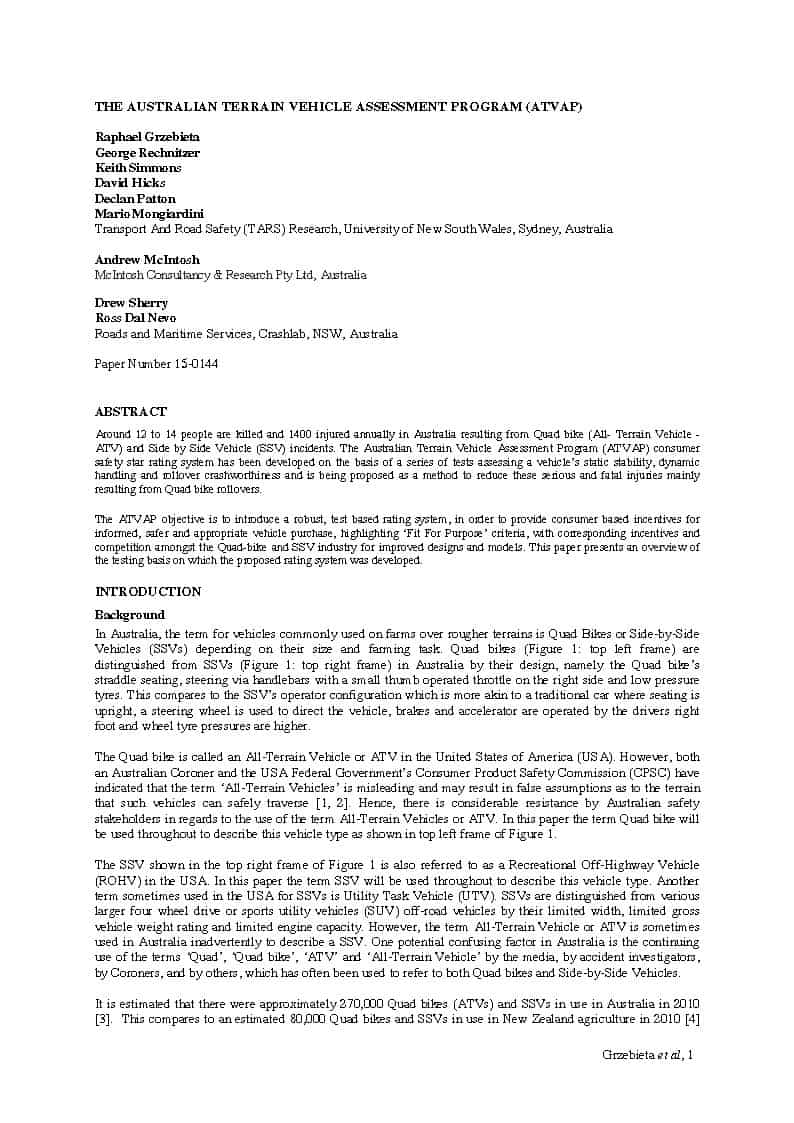 In June 2015 a research report was presented to a traffic safety conference in Gothenburg, Sweden that is set to reignite the debate on quad bike or all terrain vehicle (ATV) safety in Australia.
The paper entitled “The Australian Terrain Vehicle Assessment Program (ATVAP)” (Paper No.15-0144-W in the Technical Papers section of the
Agricultural safety case study from Australia
In early June 20915, the Rural Industries Research and Development Corporation (RIRDC) provided a case study of agricultural safety and the importance of safety culture – Raby Stud, part of Hassad Australia. The study shows great potential but the promotion of this case study would be more convincing if more OHS detail was available and if there was better coordination of its media.
RIRDC emphasised that:
“The injury rate is now close to zero at ‘Raby Stud’, near Warren in New South Wales, thanks to the attitude that ‘it won’t happen to me’ is simply not good enough to ensure everyone gets home safely to their families every night.”
Continue reading “Agricultural safety case study from Australia”
The dichotomy of OHS
 There are two potentially conflicting approaches to changing the occupational health and safety performance of managers and workers – cultural change or individual inducements. In some ways this reflects a societal dichotomy between the group and the individual, the big picture and the small, employers and workers, white-collar and blue collar, blame the system or blame the worker, and other combinations.
A colleague brought an article by Ross Gittins to this blog’s attention in which Gittins, an economics journalist, criticises key performance indicators and suggests looking at “intrinsic motivations”, based on the work of Jana Gallus. It seems we should be looking at awards rather than rewards. Gallus’s work provides a useful counterpoint or entry point to a recent book called Risky Rewards, written by Andrew Hopkins and Sarah Maslen. Continue reading “The dichotomy of OHS”
OHS media could increase its influence, if it wanted to
The decline of newspapers and other mainstream media is well-established (an excellent recent analysis of this has been undertaken by Ross Gittins), as is the increase in the influence of online or digital media. The information sources for occupational health and safety (OHS) have undergone a similar change, often due to the same technological and economic factors affecting the mainstream. But OHS has ALWAYS been a niche issue in communications and the media and it will continue to be so except that the niche can increase in size and the new media technologies could increase OHS’ influence in managerial and business decision processes, if someone accepts the challenge.
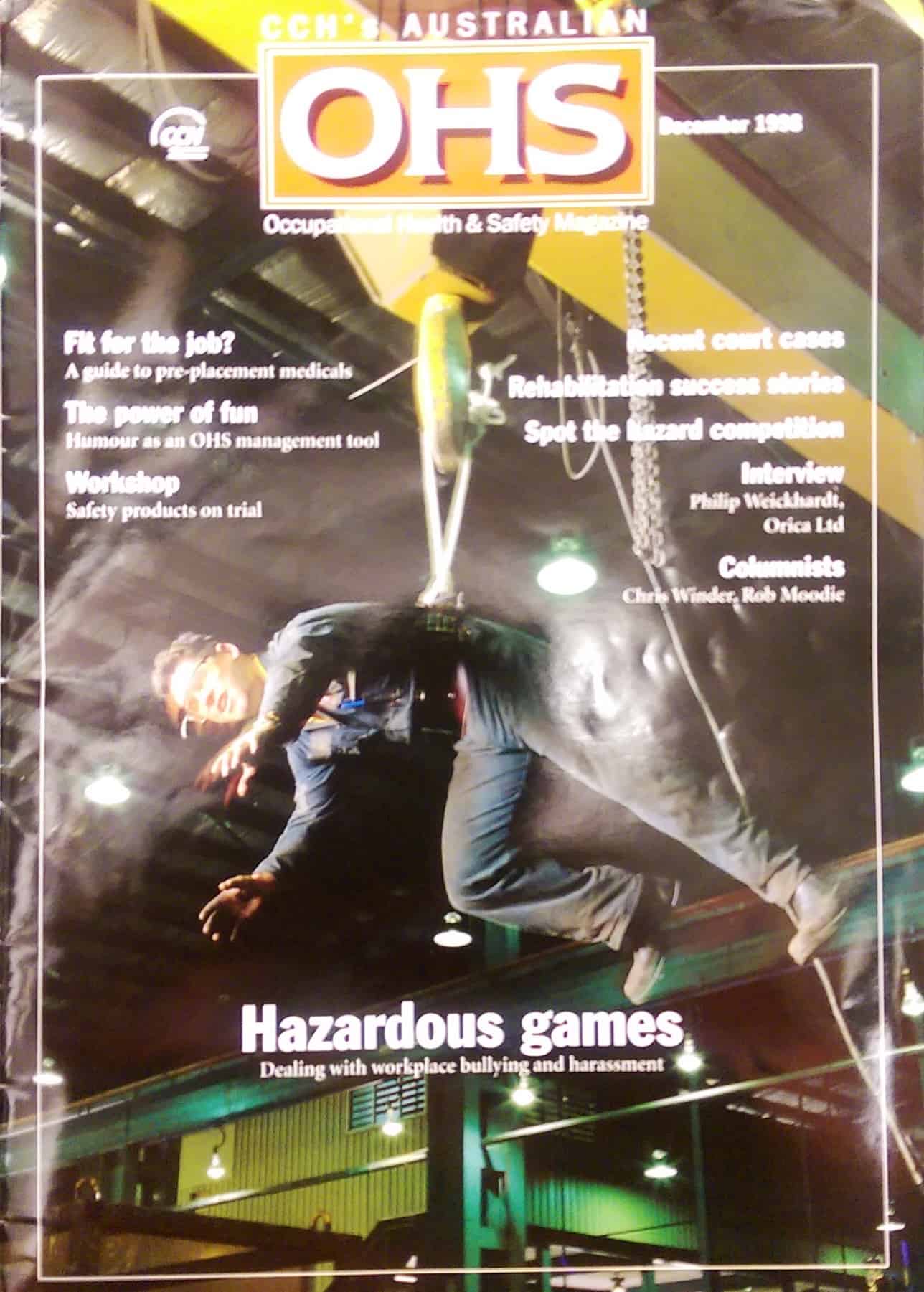 It is important to look at a major fault in communication strategies related to OHS. The mainstream media never covered workplace safety issues to the extent possible. OHS was almost always covered by the industrial relations reporter, if the newspaper had one. The tripartite nature of industrial relations (IR) negotiations – government, business, unions – provided the main sources for OHS content and OHS was always communicated in or with the IR context. Rarely was OHS seen to merit its own story.