WorkSafe tries a new promotional approach

The increasing prevalence of pictorial social media has generated a surge in organisations generating “infographics” from workplace health and safety statistics Almost always these images are a technique for generating internet traffic through established websites, blogs and other online services. Fundamentally it is stealth advertising for the unwary online user. However, such images have much greater legitimacy when offered by OHS regulators.

In the week prior to its WorkSafe Week 2012, WorkSafe Victoria issued two online infographics as part of a media statement. Both are attractive by their simplicity but the simplicity can also be a problem.

The cost comparison infographic is super general but clearly illustrates that the cost to prevent harm is much less than any fine that may come from prosecution. However, the risk of being prosecuted in Victoria and receiving a monetary penalty seems to be declining as non-pecuniary penalties, such as enforceable undertakings and others, are made available to the Courts.

Fines are only one of the potential costs. An inescapable cost is the cost to the injured worker, the disruption to that worker’s family life, the disruption to the worker’s employer. Continue reading “WorkSafe tries a new promotional approach”

SafetyAtWorkBlog gains a 2012 top blog honour

SafetyAtWorkBlog is proud to accept the honour of being one of the 2012 honorees of LexisNexis’ Top 25 Blogs for Workers’ Compensation and Workplace Issues. According to Lexis Nexis’ website:

“For a number of years now, Australian editor Kevin Jones has been writing and compiling an excellent mix of “news, commentary and opinion” on workplace safety and health in “the Land Down Under.” Aided by several other contributors, Jones offers timely and interesting entries that should interest workers’ compensation professionals in North America, as well. The blog takes a broad and thoughtful swath.”

We strongly recommend that SafetyAtWorkBlog readers look at the other honorees for 2012.

Thank you to all our readers and contributors. We hope to continue for some time.

Kevin Jones

The world looks to Australia for quad bike safety changes

On 19 October 2012 in a video address to an Australian forum on quad bike safety, the US Consumer Product Safety Commissioner Robert Adler stated

“We at the US CPSC are monitoring your activities closely with the hope that what you learn can help us back here in the United States.”

That places considerable attention on the safety initiatives and negotiations in Australia but also may indicate that the United States is struggling to achieve change in this area.

On October 17 2012, the Weekly Times devoted its front page, a double page spread and its editorial to the safety of quad bikes, or All Terrain Vehicles (ATVs).   The editorial called  on the Government to

“…mandate all ATVs are fitted with roll-over protection ..[and to] provide a rebate to allow retro-fitting of roll-over protection to existing ATVs.”

ABC News provided an excellent summary of the issues associated with quad bike safety in its news report on 17 October 2011 and showed some scary images of young children riding quad bikes.

Following the forum, Australia’s Workplace Relations Minister, Bill Shorten issued a media statement outlining to the outcomes.  It stated:

“The Minister said he has asked Safe Work Australia to report on the key findings of the quad bike issues paper and today’s forum, and that he would direct Comcare*, the Commonwealth workplace safety regulator, to immediately implement the following:

Half bored and tired to death

They both nodded in agreement when she said, “I’m half bored to death in this job, nearly had it”.  Both women were freezing, sitting outside in the covered area.  Their fingers blue.

The short morning break.  You hurry, you panic, get a quick hot drink, a cigarette, quickly back into it.  Hour after hour after hour “for the last 20 years” she said.  From 5 am when she gets up to do things before rushing to work to start at 7 am.  Rush back home at 3 pm to pick up ‘the youngan-whydidIdoit’ as she said of her late in life baby.  She looked about 40.
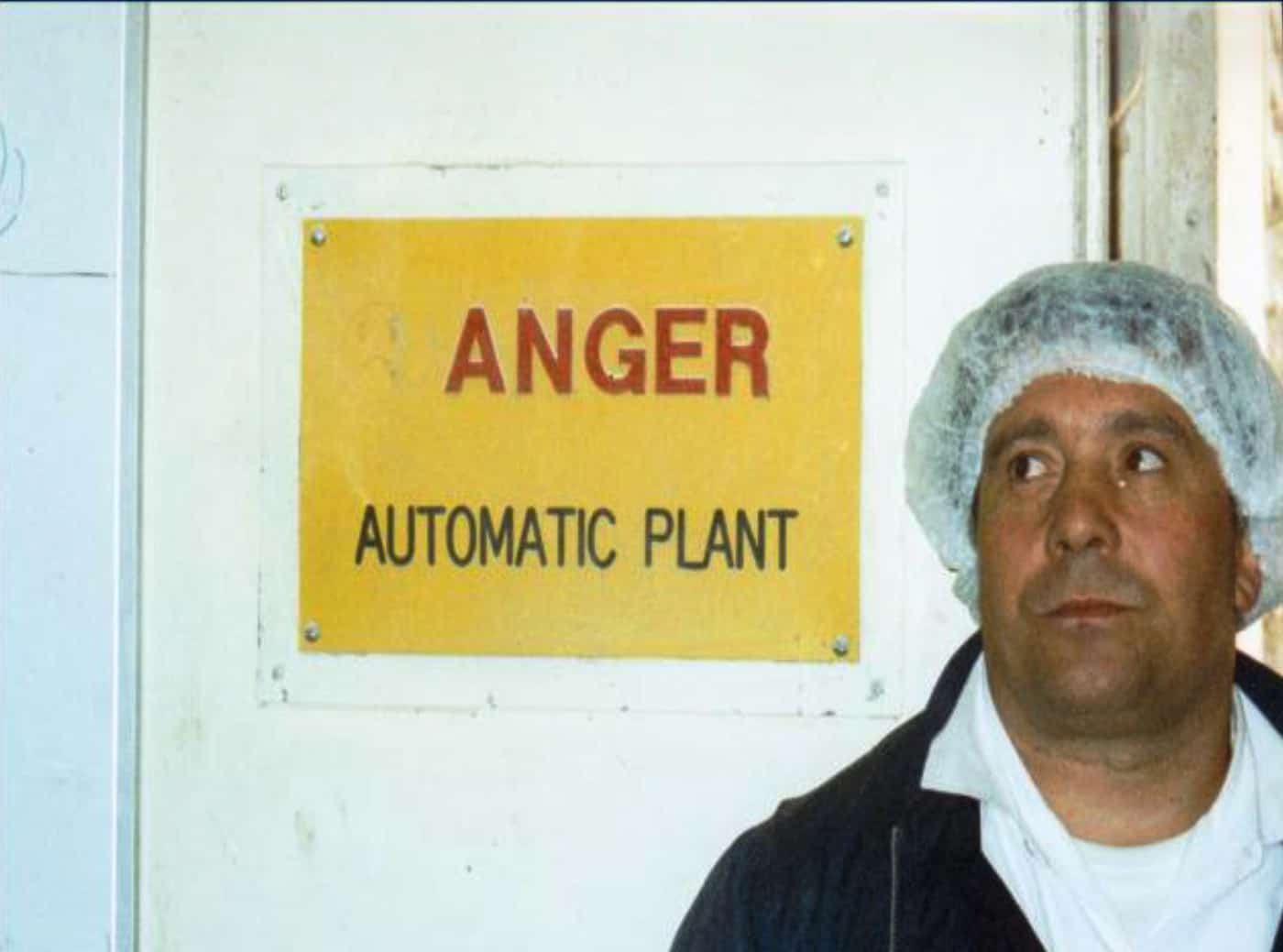
Of course workplace fatalities and injuries are heart breaking tragedies.  People work to earn a living, this is not a war zone.   But the more common issues at work, those that grind people hour by hour for decades of their one single life are not to do with that.

They are to do with what in polite text will spawn dots.  It’s to do with the daily tiredness, humiliation and wall-to-wall disrespect experienced by so many workers on a daily basis. It’s to do with that exhausting sense of,  ‘I’ve just about had enough’.  It’s to do with what I call F..kwit Fatigue. Continue reading “Half bored and tired to death”

John Darley speaks to SafetyAtWorkBlog

Independent Member of the South Australian Parliament, John Darley, provided SafetyAtWorkBlog with some background to the package of amendments he has for that State’s Work Health and Safety laws currently before Parliament.

Darley acknowledged that he delayed the Work Health and Safety Bill since December 2011 and admitted that the Bill looked like common sense but his approach is to jump ahead an consider how the Bill would look as an Act and determine its social impact.  The opposition parties in South Australia believed the Bill was so bad that it should have been defeated before it proceeded to the committee stage but Darley knew that could imply that he was not interested in workplace safety.  Darley believes that the reassessment of the WHS Bill over such a long time indicates his commitment to the safety of workers.

Darley said that union right-of-entry was not an issue of concern in December 2011 but he came to see the significance of the  issue after delegations and meetings with people affected by workplace deaths but who were also very dissatisfied with the operations of the OHS regulator, SafeWorkSA.  The union OHS representatives offered an alternate but Darley felt that union access needed Continue reading “John Darley speaks to SafetyAtWorkBlog”

New workplace safety laws set to pass in South Australia in October

South Australian Independent Member of Parliament, John Darley, has been negotiating on that State’s Work Health and Safety laws for many months.  On 17 October 2012, according to a media release from SA’s Premier Jay Weatherill and Workplace Relations Minister Russell Wortley, Darley agreed to support the passing of the laws after achieving some amendments.  Those amendments involve changes to

  • height limits,
  • duty of care,
  • the right to silence, and
  • the right of entry.

Tammy Franks, a Greens MLC, was able to achieve an expansion of the number of days available for OHS representative training.

A spokesperson for John Darley told SafetyAtWorkBlog that another change was for any WHS codes of practice to undergo a small business impact assessment in consultation with the Small Business Commissioner.  Darley’s spokesperson said that the MP had met with Business SA after it changed its position on the WHS laws.  The amendment above is likely to address the small business concerns that BusinessSA raised in its letter to its members earlier this month.  The flip-flopping of BusinessSA on workplace health and safety laws was always curious and it is likely to put the organisation at a negotiating disadvantage once the laws passed.  It may try to claim a mini-victory through the small business change but the change appears to have occurred due to Darley’s efforts and not through any relationship with the South Australian Government. Continue reading “New workplace safety laws set to pass in South Australia in October”

Victorian Minister claims “safest state in Australia”

Victoria’s Minister for WorkCover, Assistant Treasurer Gordon Rich-Phillips, obviously felt obliged to get in early for the 2012 WorkSafe Week by stating, in a media release, that:

“Victoria is the safest state in Australia in which to work”

Rich-Phillips quotes a range of statistics based on a recent report by Safe Work Australia (SWA) – the Fourteenth Edition of the Comparative Performance Monitoring.  His claims may be correct, but he is selective.  He mentions his State’s workers’ compensation claims performance:

“Victoria had nine serious injury and disease claims for every 1,000 employees, far fewer than the national average of 12.2 claims. It was also well ahead of the Northern Territory (11.2 claims), Western Australia (12), South Australia (12.3), Australian Capital Territory (13), New South Wales (13.7), Queensland (14.7) and Tasmania (15.6).”

However, it is well-known that workers’ compensation statistics indicate the performance of the workers’ compensation scheme and claims,  and not the real workplace injury rate.  The SWA report provides information on both safety performance and workers’ compensation claims.  The Minister extrapolates the performance of one element and applies it to the other.

The Comparative Performance Monitoring report also measures each State’s regulatory safety performance against the agreed National OHS Strategy.  Against the Injury and Musculoskeletal measure, again based on claims data, only South Australia exceeded the “36% improvement required to meet the long-term target of a 40% improvement by 30 June 2012.”

Victoria came third, after New South Wales, with a 31% improvement rate.

Safe Work Australia stated that

” It is unlikely that Australia will meet the target.” (page 2)

The targets of the OHS National Strategy established in 2012 have been aspirational for some time and without any fear of sanction or reward for attainment, the worth of any National OHS Strategy is dubious.

SWA’s report also includes very positive national statistics on fatalities but still insists that:

“The volatility in this measure means that this improvement should be interpreted with caution and consistent improvement is still required to ensure the target is actually achieved.” (page 3)

This caution is missing from the statements of Gordon Rich-Phillips. Continue reading “Victorian Minister claims “safest state in Australia””

Concatenate Web Development
© Designed and developed by Concatenate Aust Pty Ltd