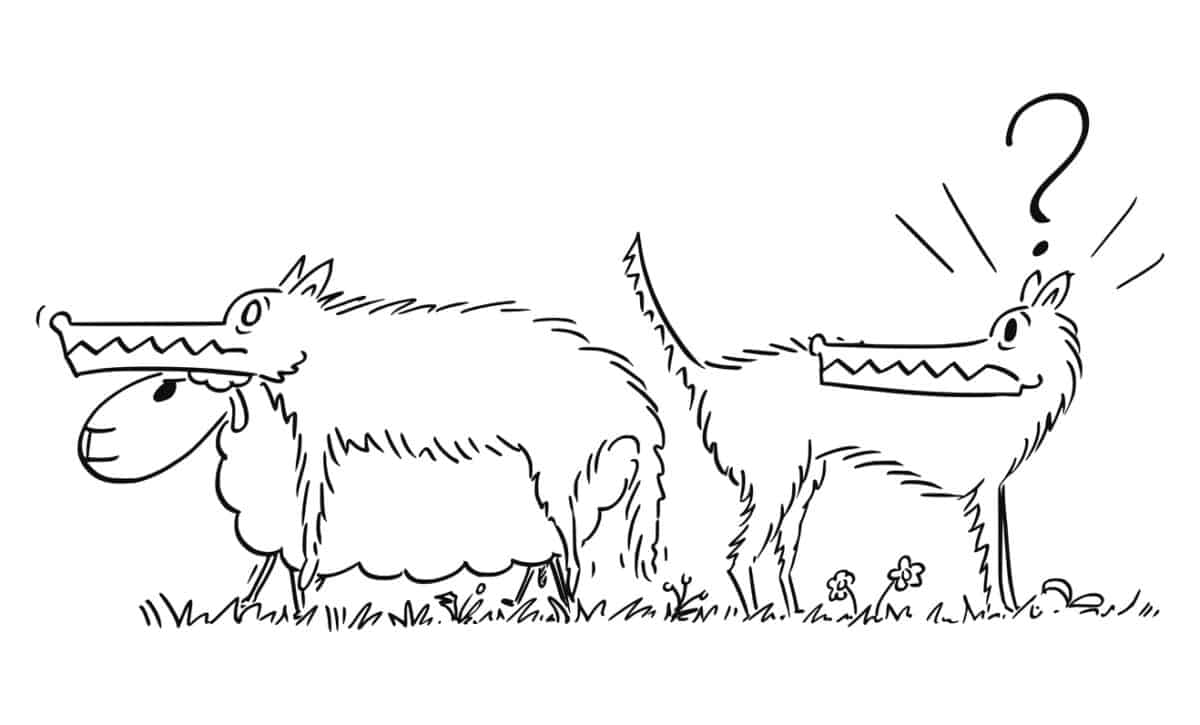
Law firms are a focus for sexual harassment reforms

This year coverage of The Australian newspaper’s annual Legal Partnership Survey has focused on the number of women partners in law firms. This increase has generated discussion on sexual harassment, which has revealed some of the activities that law firms use to prevent the psychological harm (and brand damage) from sexual harassment; many strategies that are already very familiar to the occupational health and safety profession

Sex Discrimination Commissioner Kate Jenkins has been paraphrased in the article (paywalled), saying

Non-disclosure agreements should be used to protect people who have been the subject of sexual harassment, rather than to reduce brand damage to organisations…..”

[link added]
Subscribe to SafetyAtWorkBlog to continue reading.
Subscribe Help
Already a member? Log in here

The restricted state of knowledge – NDAs and OHS

A core element of the management of occupational health and safety (OHS) is creating and maintaining a “state of knowledge” on hazards and risks. There is an enormous amount of information already available in various OHS encyclopaedias, wikis and bodies of knowledge, but some of the most important information continues to be locked up in non-disclosure agreements and confidentiality clauses. On the issue of workplace sexual harassment, a recently established inquiry in Victoria, Australia, is set to look at the mechanisms that are principally used to protect the reputation of companies and executives but that could also have broader OHS benefits.

Liberty Sanger and Bronwyn Halfpenny are heading a task force designed by the Victorian Government to

“…develop reforms that will prevent and better respond to sexual harassment in workplaces.”

Subscribe to SafetyAtWorkBlog to continue reading.
Subscribe Help
Already a member? Log in here

Look to the greed behind the corporate culture

Today the Governance Institute of Australia distributed a promotional email for its September national conference. These conferences often provide a useful perspective on broad occupational health and safety (OHS) issues. One gets to see how OHS is seen to fit (if at all!) in the established business and governance structures.

A key theme of this year’s conference is Culture which is a critical issue for most companies, even if they don’t realise it, and one with which the OHS profession is very familiar. However, the Institute, its members and conference delegates should be challenged to analyse Culture more deeply than what is indicated in the promotional email and article.

Subscribe to SafetyAtWorkBlog to continue reading.
Subscribe Help
Already a member? Log in here

What is behind the fluctuation of mental health claims?

If you are contemplating running a survey about workplace health and safety, make it longitudinal. That is, structure your survey so that data can be compared over a long period of time by clearly defining your questions to the general rather than the topical. Topical questions can be included occasionally (they can freshen up a survey), but the core of the survey needs to be robust.

Recently Safe Work Australia (SWA) released the 6th edition of workers compensation claim data for psychosocial health and safety and bullying in Australia. It is a short statement of data that offers some interesting trends and continues the survey’s limitations.

Subscribe to SafetyAtWorkBlog to continue reading.
Subscribe Help
Already a member? Log in here

OHS subtext in Industrial Manslaughter discussions

Senator Deborah O’Neill continued her attack on Australia’s Liberal/National party government in Senate Estimates hearing last week.

With the Work Health and Safety (WHS) ministers split on the introduction of an Industrial Manslaughter (IM) offence in the Model WHS laws, Senator Michaelia Cash, Attorney-General, Minister for Industrial Relations and chair of that WHS meeting, could have voted in favour of these IM changes but declined. O’Neill saw this as a political weakness and challenged Senator Cash to justify her decision. The justifications, with a hint of arse-covering, were morally weak but legally sufficient. At one point, Senator Cash said:

“… a fundamental principle of work health and safety regulation in Australia, as you would be aware, is that liability should focus on risk, not outcome, because the evidence shows that when you focus on risk, as opposed to outcome—and the outcome that you are referring to here is a terrible outcome: a death in a workplace—it’s been proven to actually improve health and safety in workplaces.”

Hansard, June 2, 2021, page 8
Subscribe to SafetyAtWorkBlog to continue reading.
Subscribe Help
Already a member? Log in here

Industrial Manslaughter laws are not quite dead

The Hansard of June 1, 2021, Senate Estimates Hearings provided some nice background to the May 20 meeting of the Work Health and Safety (WHS) Ministers at which a national Industrial Manslaughter law was dismissed. Again, the politics of occupational health and safety (OHS) were on clear display.

Subscribe to SafetyAtWorkBlog to continue reading.
Subscribe Help
Already a member? Log in here

Cause is not the same as Correlation

Politicians and executives love to claim a cause when there is only a correlation. This was displayed recently in Australian Senate Hearings on the issue of occupational health and safety (OHS) and Industrial Manslaughter (IM).

Wiktionary defines Cause as:

The source of, or reason for, an event or action; that which produces or effects a result.

And Correlation as

A reciprocal, parallel or complementary relationship between two or more comparable objects.

The conflation of these two very different relations has been a serious drag on OHS progress in practice and policy.

Subscribe to SafetyAtWorkBlog to continue reading.
Subscribe Help
Already a member? Log in here
Concatenate Web Development
© Designed and developed by Concatenate Aust Pty Ltd