Deaths of Health Care workers from COVID19

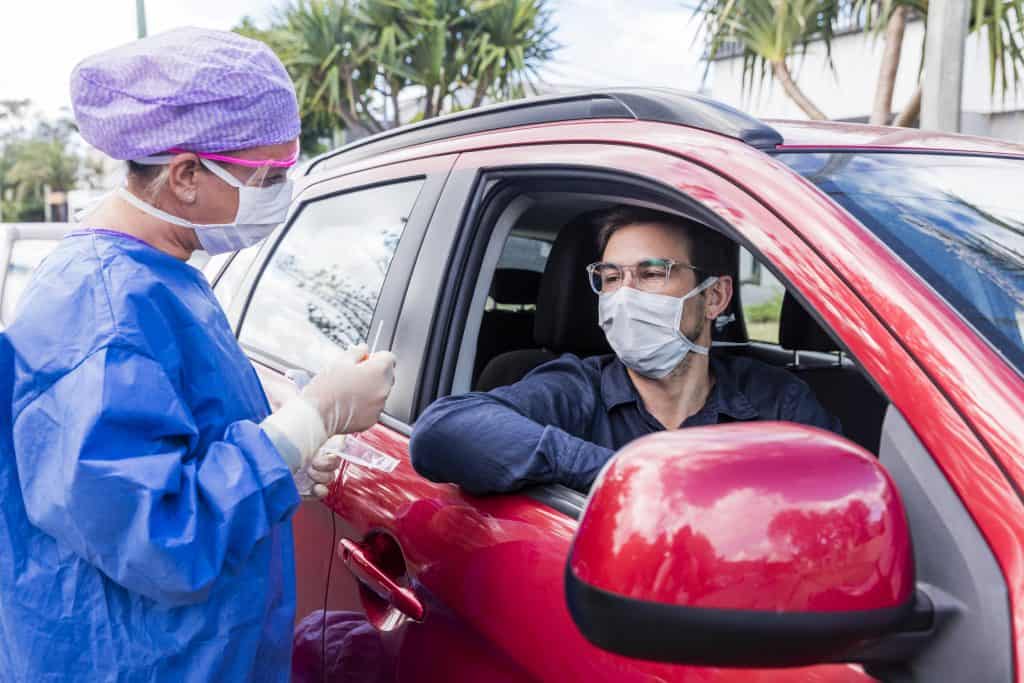
A doctor in a protective suit taking a nasal swab from a person to test for possible coronavirus infection

The theme for most commemorations on April 28 is the COVID19 pandemic. This is understandable as the pandemic has disrupted lives and economies globally and many people have died. Perhaps the most tragic of these deaths are those of medical and healthcare staff who have contracted the infection through their work. The largest public outrage over this situation has been in the United Kingdom, but a similar situation could easily have occurred in Australia, New Zealand and elsewhere if those governments had not acted as quickly as they did or were less better prepared.

Some research has already commenced on healthcare worker infection deaths showing important initial clues on how governments, hospitals and medical employers can do better.
Subscribe to SafetyAtWorkBlog to continue reading.
Subscribe Help
Already a member? Log in here

Reasonably Practicable for the real world

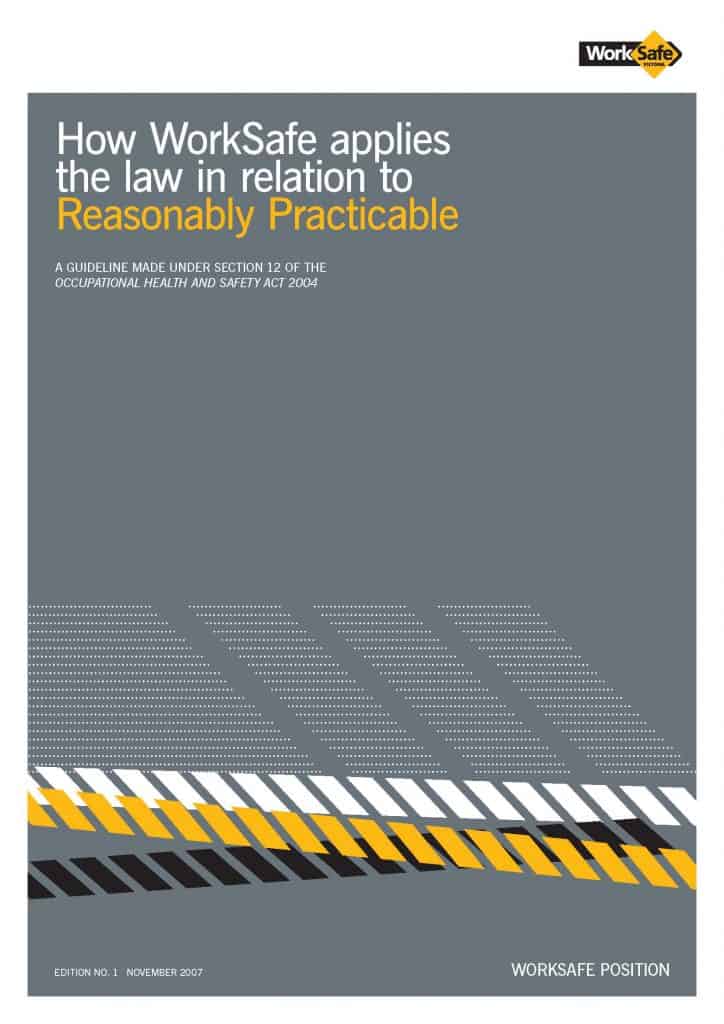
The best public document on determining what is reasonably practicable under occupational health and safety (OHS) law remains this one from WorkSafe Victoria but, importantly, it is also unhelpful. The unhelpfulness is there in the title:

“How WorkSafe applies the law in relation to Reasonably Practicable”

What is needed more is a document about how an employer is expected to apply reasonably practicable to their workplace rather than how the law is interpreted. The focus should be on achieving a safe and healthy workplace but the discussion of Reasonably Practicable is almost always reactive and reflective with little advice on how to use this concept in Consultation to satisfy the positive (some still say “absolute”) duty of care. Below is a brief attempt at clarification.

Subscribe to SafetyAtWorkBlog to continue reading.
Subscribe Help
Already a member? Log in here

Jail or Ruin? Is deterrence still effective?

This week Dr Rebecca Michalak wrote that penalties for breaches of occupational health and safety (OHS) laws need to be personal for people to understand the potentially fatal consequences at the work site or decisions that are made in the comfort of the boardroom. In this sentiment she echoes the aims of many who have been advocating for Industrial Manslaughter laws and also touches on the role of deterrence. But when people talk about Jail, are they really meaning Ruin? And do these options really improve workplace health and safety?

Subscribe to SafetyAtWorkBlog to continue reading.
Subscribe Help
Already a member? Log in here

Lessons from the US

The current COVID19 pandemic has presented businesses with a confusing risk challenge. Is the risk of infection a public health issue or an occupational health and safety (OHS) issue? The easy answer only adds to the confusion – it is neither and both.

In relation to epidemics and pandemics these are public health risks within which the OHS risks must be managed. In Australia, many of the OHS regulations and agencies were slow to provide the level of detailed guidance that employers were requesting and this was partly due to the regulators and agencies having to scramble together working groups and experts to rapidly produce such guidance. The situation in the United States offers a useful and reassuring comparison to how the Australian governments have responded but also offers OHS lessons for Australian employers.

Subscribe to SafetyAtWorkBlog to continue reading.
Subscribe Help
Already a member? Log in here

OHS and Rebecca Michalak

Dr Rebecca Michalak is the founder of PsychSafe, a company advising companies on issues related to the interconnectedness of occupational health and safety (OHS), Human Resources (HR) as well as the psychological hazards and structures at work and of work. Her combination of skills and experience is a new one for Australia and Dr Michalak is quickly becoming a strong influence on workplace health, safety, and corporate governance.

Dr Michalak has accepted the opportunity to provide a more personal insight into what she does and why she does it in the latest in a series of articles about humanising OHS.

Apology:  Due to unauthorised reproduction of this article in breach of Copyright, access has been restricted to Subscribers Only.  Should you require access to this article particularly, please email the Editor
Subscribe to SafetyAtWorkBlog to continue reading.
Subscribe Help
Already a member? Log in here

Progress back to the old normal

The discussion about recovery from the COVID19 pandemic is starting, particularly in Australian and New Zealand where the infection and death rates seem to be declining quicker than in other countries. The Business Council of Australia (BCA) released its recovery plan on 20 April 2020. The media release is entitled “Business crucial to a safe return to normal“. The word “normal” is more loaded at the moment than normal 🙂 because it belies an assumption that what existed before the outbreak of COVID19 is how the world should be, even though the pandemic has illustrated weaknesses in what used to be the “normal”.

SafetyAtWorkBlog will focus on those elements of the BCA plan that directly or indirectly affect the physical and psychological health of workers but there is also some text, and subtext, that illustrates the ideological position of the BCA.

Subscribe to SafetyAtWorkBlog to continue reading.
Subscribe Help
Already a member? Log in here

COVID19 disruption may be unprecedented but was it foreseeable? You bet

Almost twenty years ago, there was a surge in discussion and analysis about disaster preparedness, mainly, due to the terrorist attacks of September 11 2001 and the aftermath, especially the use of biological weapons. The risks of viruses was considered around that time but there was so much fear and multiple threats, real and perceived, that the preparedness for social harm and disruption due to naturally-occurring viruses was largely overlooked or neglected. However, in this time of COVID19 it is useful to remember that viral pandemics and preparedness were being discussed. Whether the discussions became actions, or should have, is a different discussion.

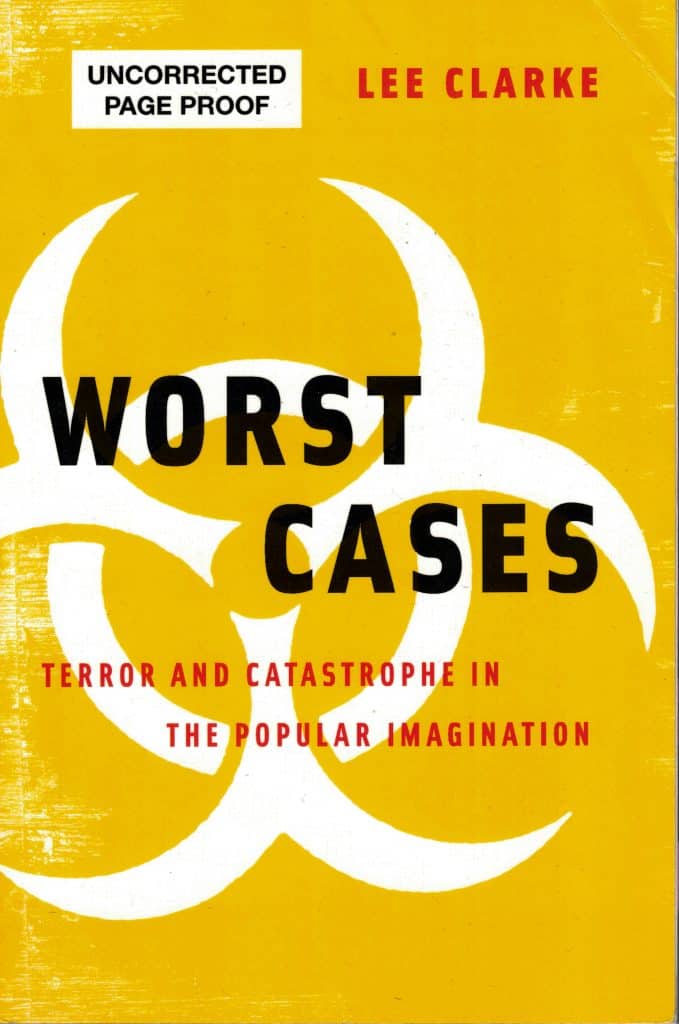
Professor Lee Clarke’s book “Worst Cases – Terror and Catastrophe in the Popular Imagination” provides a useful and pre-COVID19 lesson.

Subscribe to SafetyAtWorkBlog to continue reading.
Subscribe Help
Already a member? Log in here
Concatenate Web Development
© Designed and developed by Concatenate Aust Pty Ltd