Workplace hazards outside the window

Alerts on December 7 2019

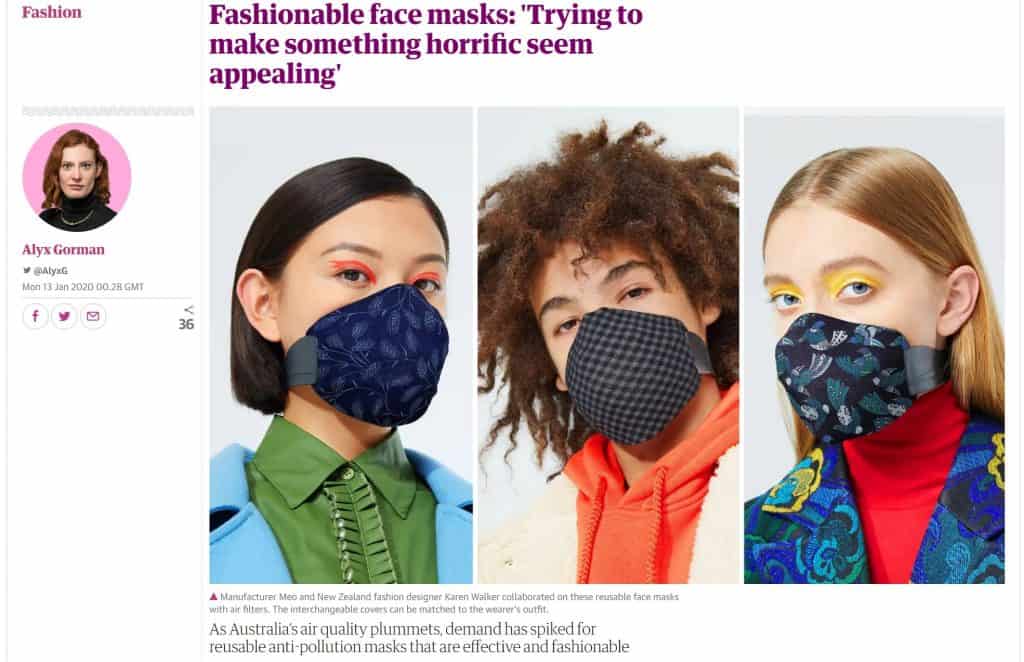
I am entering the last of my four week’s work on a construction site in Sydney.  In my first week, the city was blanketed with thick smoke from nearby bushfires and all construction sites closed early for a day because the air was deemed hazardous.  That smoke has persisted for all of my time in Sydney.  Last Friday I was on site when the occasional piece of ash fluttered on to me.  The bushfire situation is unprecedented and my experience has shown me that Australia and Australian companies seem to struggle with how to operate in a disaster that will undoubtedly return.

Subscribe to SafetyAtWorkBlog to continue reading.
Subscribe Help
Already a member? Log in here

Reduce deaths and injuries to achieve a sustainable industry

Agriculture is one of the most dangerous workplaces in Australia and other countries. This reality is supported by many statistics and over a long time.

Agriculture is, perhaps, at the forefront of changing production methods to ensure sustainability in a world that is changing in ways that no farmers have had to face in the past. Agriculture therefore needs to be both a safe and a sustainable industry.

So why is workplace health and safety not being given a top priority in the Victorian Government’s Smart Farms program?

Subscribe to SafetyAtWorkBlog to continue reading.
Subscribe Help
Already a member? Log in here

Focus on the hoops and not the holes

There is a confluence of investigations into mental health and suicides in Australia at the moment, and most of them overlap with occupational health and safety (OHS).  Each of these increases the understanding of the relationship between work and mental health but no one seems to be connecting the threads into a cohesive case.  This article doesn’t either, by itself, but hopefully the threads of the issues are identified through the themes of various SafetyAtWorkBlog articles.

Recently Tim Quilty of the Liberal Democratic Party addressed the issue of suicide in relation to his contribution to the debate on Industrial Manslaughter (IM) laws in the Victorian Parliament.  His assertions seem a little naïve:

Subscribe to SafetyAtWorkBlog to continue reading.
Subscribe Help
Already a member? Log in here

Do workers have a real choice about their safety?

I apologise for spending so much time recently writing about Industrial Manslaughter (IM) laws, but the discussion of these laws is illustrating many of the interpretations of occupational health and safety (OHS) laws and management.  For instance, the recent IM debate in Victoria has repeatedly mentioned the need to apply IM laws to the acts and decisions of employees, as if employees have an unfettered choice to put their safety before the wishes of their employer – a nonsensical myth.

On November 26 2019 in Victoria’s Parliament Rod Barton MP of the Transport Matters Party acknowledged that the IM laws may focus the employer’s attention on ensuring truck drivers do not work while fatigued (an obligation already required by the OHS Act).  He then said:

Subscribe to SafetyAtWorkBlog to continue reading.
Subscribe Help
Already a member? Log in here

What is needed is a discussion of the “safe system of business”

By the time you read this, one of Australia’s States may have Industrial Manslaughter laws. One sad part of all of the IM argy-bargy is that it has focused on the penalty of going to jail rather than on the enhancement of occupational health and safety (OHS) which can prevent harm. Part of this seems to be because people are uncertain how to talk about OHS. For instance, some arguing against IM laws have started talking about making these laws fair. But fair to who?

Recently the Australian Industry Group released a media statement titled “Industrial manslaughter legislation must be fair“. Firstly, although the IM Bill is a piece of legislation, it is not an Act or Regulation in itself. It is an amendment to the existing OHS Act. But this Act and its Duties hardly gets discussed in the current debate, which is a bit curious but convenient.

Subscribe to SafetyAtWorkBlog to continue reading.
Subscribe Help
Already a member? Log in here

Froth and bubble replaced with sensible discussion

A recent court case over workers’ compensation gained a great deal of media attention in Australia because the case related to the employment status of a contestant on a reality television show. (Outside of workplace deaths the last media occupational health and safety (OHS) frenzy concerns a public servant being injured during sex.) Commentators left and right were both chuckling at the latest court decision and being alarmist about it setting a precedent. Finally a newspaper and online article has spoken of the case sensibly.

Nicole Prince, an OHS professional, competed in a reality program about house renovations. She and her partner were portrayed on the show as the nasty couple, a role that most reality TV shows look for and/or create. After leaving the show, Prince argued that she could be considered an employee of the broadcaster, Channel 7, and so was entitled to workers compensation for the psychological distress that resulted from her treatment by Channel 7, and especially on social media.

Subscribe to SafetyAtWorkBlog to continue reading.
Subscribe Help
Already a member? Log in here

Paper provides historical context to OHS laws

Barry Naismith of OHSIntros has provided excellent independent analysis of Victoria’s occupational health and safety (OHS) data for many years. His latest “Deaths at Work” report (available publicly for a limited time) includes a detailed discussion on the social context of Victoria’s proposed Industrial Manslaughter (IM) laws.

But of more immediate interest is Naismith’s longitudinal analysis. One of his graphs showing death statistics back to the commencement of Victoria’s modern-era OHS laws in 1985 supports the statement popular with politicians that the rate of work-related deaths is declining over that time but Naismith points out that the five-year trend to 2018 is reversed and that this is part of the justification for the IM Laws.

Subscribe to SafetyAtWorkBlog to continue reading.
Subscribe Help
Already a member? Log in here
Concatenate Web Development
© Designed and developed by Concatenate Aust Pty Ltd