Identifying work-related mental health

Recently the Medical Journal of Australia published new guidelines for general practitioners (GPs) on how to identify work-related mental health conditions (MHC). This is vital information as GPs are often the first opportunity where mental health conditions can be identified or confirmed. It also assists occupational health and safety (OHS) professionals by acknowledging the role of work in the positive and negative mental health of workers.

Subscribe to SafetyAtWorkBlog to continue reading.
Subscribe Help
Already a member? Log in here

Bereaved families group demands changes

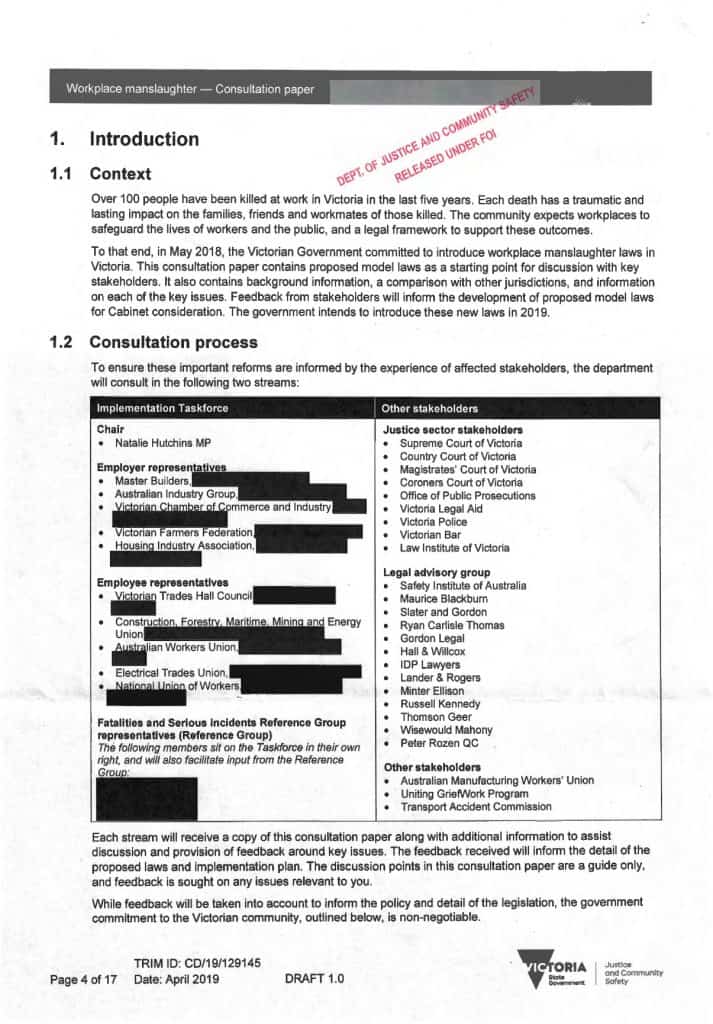
Documents related to the development and implementation of Industrial Manslaughter laws in Victoria and seen by SafetyAtWorkBlog say that the Department of Justice and Community Services will draft a policy paper on the laws prior to the proposed Industrial Manslaughter Bill being presented to Parliament in October or November. October’s Work Health and Safety Month promises to be lively this year.


Participants in the Workplace Fatalities and Serious Incidents Reference Group had expressed concerns about the phoenixing of companies after a workplace fatality and that workplaces where deaths have occurred should be treated as a crime scene that:

“…should not be operational until a full investigation is complete”

Subscribe to SafetyAtWorkBlog to continue reading.
Subscribe Help
Already a member? Log in here

Grab bag of OHS issues – heavy vehicles, mental health, bullying and fatigue

There are a few occupational health and safety (OHS) matters in Australia that happened in the last week that are of note. SafetyAtWorkBlog has put together a quick list of those matters of interest.

Big Mental Health Challenge

“The Australian Capital Territory has appointed its first “dedicated psychological health officer [who] will equip workplaces with the tools and resources needed to support the social and emotional wellbeing of working Canberrans.

The psychological health officer will provide employees, managers and supervisors with support such as information sessions, accessible resources and training programs. WorkSafe ACT inspectors will also receive training and access to ongoing mentoring for responding to psychological hazards.”

Subscribe to SafetyAtWorkBlog to continue reading.
Subscribe Help
Already a member? Log in here

The Victorian Government remains secretive on Industrial Manslaughter laws

Victoria’s Department of Justice and Community Safety’s Freedom of Information correspondence is headed:

“Information Integrity & Access”.

For the last few months SafetyAtWorkBlog has been chasing the Workplace Manslaughter Consultation Paper through official channels and been granted “two pages in full”, “four pages in part” and been refused access in full to most of the Consultation Report.  This decision (available here) is because

“These documents include information concerning opinion, advice or recommendation of an officer and the personal affairs of third parties, which cannot be disclosed [for reasons given in the letter]”.

Subscribe to SafetyAtWorkBlog to continue reading.
Subscribe Help
Already a member? Log in here

The economics, and politics, of prevention and the cost of doing nothing

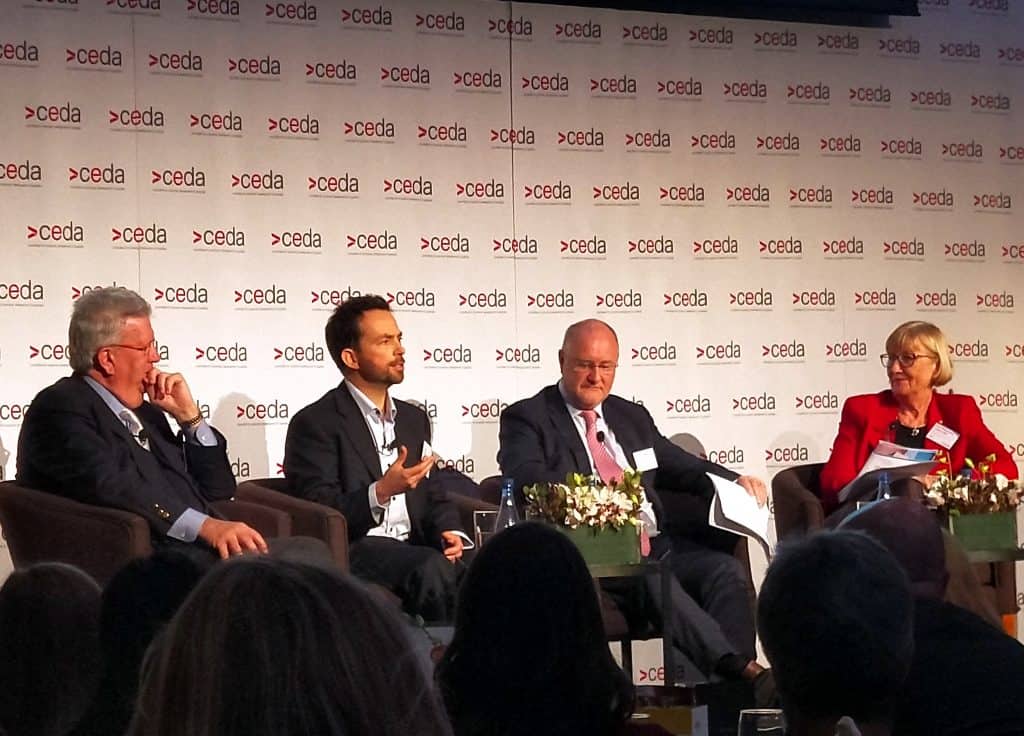
LtoR: Terry Nolan, Rod Campbell, Tony Dudley, Rosemary Calder

On July 9 2019, the Committee for Economic Development of Australia (CEDA) conducted a lunchtime seminar in Melbourne about “the economics of prevention“. The event was supported by GlaxoSmithKline who launched a report about the value of vaccines so the lunch promised to be very medical but that quickly changed when Rod Campbell of The Australia Institute (a late replacement for Richard Denniss) spoke. On the issue of cost-benefit analysis, an important consideration in occupational health and safety (OHS) , Campbell was blunt:

“A huge amount of government decisions are not made by informed economic analysis. They’re made by political decisions.”

Subscribe to SafetyAtWorkBlog to continue reading.
Subscribe Help
Already a member? Log in here

Medical and OHS sectors must start speaking the same language on mental health

For many years, the Australian medical has been supportive of a “Health Benefits of Good Work” (HBGW) initiative. This initiative, started in 2010, is directly relevant to how Australia is determining its mental health policy and strategies especially as they relate to workplaces. The initiative was developed by:

“…. the Australasian Faculty of Occupational and Environmental Medicine (AFOEM) of The Royal Australasian College of Physicians (RACP). This initiative is based on compelling Australasian and international evidence that good work is beneficial to people’s health and wellbeing and that long term work absence, work disability and unemployment generally have a negative impact on health and wellbeing.”

This initiative can be seen behind many of the public statements about the mental health status of the unemployed as this sits within the public health and the social welfare sectors, but it is rarely mentioned by those providing occupational health and safety (OHS) advice.

Subscribe to SafetyAtWorkBlog to continue reading.
Subscribe Help
Already a member? Log in here

The need for evidence in mental health inquiry

Workplaces and employers have not been totally absent from Victoria’s Royal Commission into Mental Health SystemsPublic Hearings and the Commissioners have asked about the workplace context several times but it sounds like they are asking the wrong people or not challenging enough. For instance, on Day One when Stigma was a theme, the Commission asked Dr Michelle Blanchard of SANE Australia:

Subscribe to SafetyAtWorkBlog to continue reading.
Subscribe Help
Already a member? Log in here
Concatenate Web Development
© Designed and developed by Concatenate Aust Pty Ltd