A recent occupational health and safety (OHS) prosecution in New Zealand illustrates many issues and attitudes to safety held by small business operators around the world.
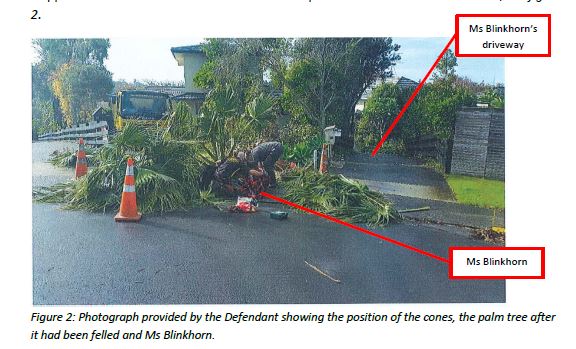

A recent occupational health and safety (OHS) prosecution in New Zealand illustrates many issues and attitudes to safety held by small business operators around the world.
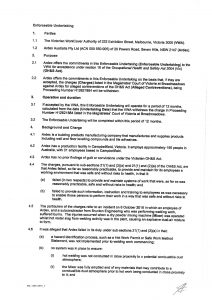 Enforceable Undertakings (EUs) are increasingly popping up in the prosecution lists of occupational health and safety (OHS) regulators. A curious one appeared on WorkSafe Victoria’s website in January 2018.
Ardex Australia P/L was prosecuted for breaching OHS laws after a subcontractor was burnt:
“…when a dry powder mixing machine was operated whilst hot metal slag from welding activity was in the plant, causing an explosive dust-air mixture.”
But what is most curious is the EU’s inclusion of a $A50,000 donation to the Safety Institute of Australia (SIA).
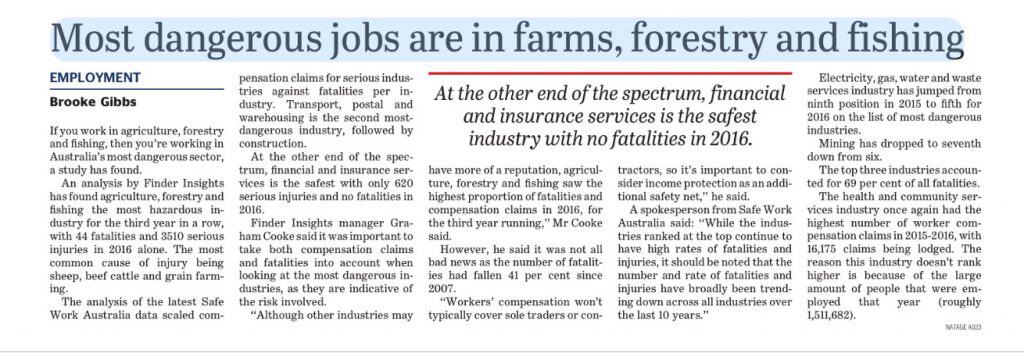
Every couple of months, after the release of official workplace fatality figures and serious injury, the Australian media reports the three most dangerous industries as Agriculture, Fishing and Forestry. The latest article appeared in Australia’s Fairfax Media on 17 January 2018. It is good that occupational health and safety (OHS) is gaining attention. When so little media attention is given, any publicity is useful.
However this type of article also presents some negatives, including that it may be only representing 60% of all workplace fatalities and serious injuries.
 In 2018, Marie Boland will be conducting an independent review of Australia’s Work Health and Safety laws to see if the laws are
“… achieving their original objectives, and if they have resulted in any unintended consequences.”
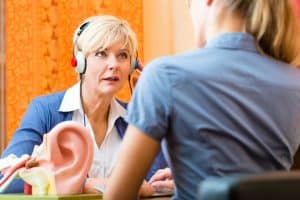
We may already be seeing one of the unintended consequences. On December 22, 2017, SafeWork NSW granted an exemption on audiometric testing requirements.
 A crucial element in achieving the aims of the independent review into WorkSafe Victoria, as discussed in an earlier SafetyAtWorkBlog article, seems to be the operation of the Occupational Health and Safety Advisory Committee (OHSAC). It was difficult to obtain a list of the current members of OHSAC. Due to the appointments being considered “ministerial”, WorkSafe would not reveal memberships.
But it is worth considering whether this type of tripartite-dominated committee is the most suitable or effective way of consulting on occupational health and safety issues. Can it represent the gig economy and new work arrangements? Given the broadening of OHS into mental health and wellness, does the current membership still represent OHS? Where’s the Human Resources representative? Does OHSAC membership fit with the diversity we now expect from our company Boards? But, above all else, does the growth in social media make these often plodding, and sometimes secretive, processes ineffective or redundant?
A spokesperson for the Victorian Government has provided the following names of current OHSAC members as at December 2017. SafetyAtWorkBlog has added titles and links to online member profiles:
 One online news site in Australia has suggested that sexual harassment is an occupational health and safety (OHS) issue. At first blush, it should be. Sexual harassment can create mental ill-health and can certainly be harmful. But from the early days of discussions about workplace bullying and occupational violence in Australia, sexual harassment has been consciously excluded from OHS.
Is It or Isn’t It?
Some of the best discussion on bullying, harassment and violence was written by Dr Clare Mayhew for the Australian Institute of Criminology in 2000. These included a practical handbook on prevention. (It’s peculiar that some of the most perceptive works on OHS occur outside the OHS profession. Well perhaps not so surprising.) In the handbook, Mayhew points out that harassment has always been an element of workplace bullying but excludes sexual harassment from her discussion:
“The Australian Institution of Criminology believes that prevention, rather than post-incident reaction, is the key to improved outcomes. However, the handbook needs to be adapted specifically to each organisation for best results. The discussions exclude activity that could be described as sexual harassment, which is extensively dealt with elsewhere.” (page 1)
This position is reflective of the OHS literature yet, on reflection, this position may have been wrong for it contributed to a fractured approach to managing workplace psychosocial hazards.
 In the middle of 2017 SafetyAtWorkBlog asked why the Victorian Government was slow in releasing the report of an independent review into its occupational health and safety (OHS) regulator, WorkSafe. Victorians have received a Christmas present with the release of the report of the Independent Review of Occupational Health and Safety Compliance and Enforcement in Victoria and the Government response.
In Principle
According to the Minister for Finance Robin Scott’s media release, dated 18 December 2017,
“The review was a Labor Government election commitment and made 22 recommendations – all of which the Government supports in principle.” (emphasis added)