
Recently a reader brought to our attention a research report from Edith Cowan University that used SafetyAtWorkBlog as an important source of occupational health and safety (OHS) dialogue. “A ‘Once in a Generation Opportunity’? Narratives about the Potential Impact of OHS Harmonisation on Smaller Firms in Australia” by Rowena Barrett, Susanne Bahn, and Susan Mayson,…
Category: Premium
Trust, culture and productivity
In September 2015 Dr Matthew Hallowell will be speaking at the National Convention of the Safety Institute of Australia. Hallowell is a bit of an unknown to the Australian occupational health profession so SafetyAtWorkBlog posed a couple of questions to him as an introduction.
SAWB: Is it possible to establish trust and open communication in a company or industry sector, that has a fractious industrial relations relationship with trade unions?
MH: “This is a truly fundamental question to the industry that applies broadly to all project management functions, not just safety.
I think trust can be developed more easily in the context of safety (rather than productivity, for example) because safety involves altruism. I think trust is most dependent on the extent to which the various organizations on a project are willing, able, and encouraged to work together to solve a problem regardless of the contract structure.
In my opinion, integrated project delivery and design-build project delivery methods offer us a new opportunity to work together and build trust because there are more shared objectives and shared incentives.
The traditional lump-sum, design-bid-build contracting strategies with typical regulations around the world (e.g., OSHA that places safety responsibility solely on the contractors and subs), severely limits the opportunity to work together on any one goal.”
10 (better) questions organisations should be asking about workplace bullying
On 14 July 2015, Russell Kennedy lawyers published an article “10 better questions organisations should be asking about workplace bullying”. The article is a great example of the type of advice about workplace bullying that lawyers provide to companies. It is good advice but is limited by the legal process.
Here are my alternate, or complementary, 10 questions for an organisation to ask about workplace bullying, in no particular order:
SWMS – the infectious safety weed
Australian occupational health and safety (OHS) professional, Paul Breslin, is continuing his research into the use and application of the Safe Work Method Statement (SWMS) in the construction industry. His latest paper, recently published in the Journal of Health, Safety and Environment (subscription only) asks an important question:
“If administrative controls are one of the lowest levels of control measures under the hierarchy of control, why has the Safe Work Method Statement become a central element in ensuring safety in the Australian construction industry?”
Breslin’s article title summarises the frustration of many OHS professionals where safety relies on lower order controls of the
Another $11billion mental health estimate
Mental health missing from key OHS statistics
 Part of the core duties of any occupational health and safety (OHS) regulator is the production of data. Recently Safe Work Australia (SWA) released its “Key Work Health and Safety Statistics” for 2015 and given the amount of media attention on workplace mental health, one would expect mental health to be one of the key statistics. It’s not.
In fact mental health is referenced only once in the document on page 28. The table states that for the decade of 2000-2001 to 2010-2011
“mental disorders…did not display a clear overall trend of increase or decrease”.
This is significant in the context of workplace mental health reporting. Is the reported increase in workplace mental health a myth? Safe Work Australia’s statistics seems to support this.
The exploitation of happiness
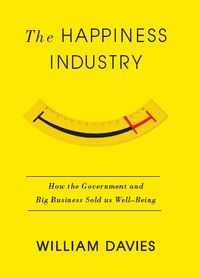 As the Australian Government analyses the productivity of the workplace it is vital that that analysis reflects the modern workplace and management practice. At the moment Australian workplaces are awash with training programs focusing on resilience and happiness, implying that each individual can change and improve a workplace culture but there has always been an undercurrent of manipulation to these courses and seminars. A new book by William Davies provides a fresh perspective that, rightly, questions the motives behind this modern trend and provides an important historical context. (For those who can’t purchase the book but want to know more, look at this series of articles)
Davies’s book, “