At the moment in Australia, a
Category: Premium
Psychologically health workplaces
In some of his research into the operations of WorkSafe Victoria, OHSIntros provided this graph of workers compensation claims for psychosocial issues. Not only does it show the extent of the issue in recent years, it provides a clear historic starting point for the hazard – a hazard that has created an industry of its own and that has complicated the management of workplace safety.

OHSIntros comments on this increase by saying “the conventional rationale in OHS is that when you identify and focus on a risk, the claims flood in…” but significantly states that this logic remains untested. Occupational health and safety (OHS) seems to run on untested logic.
Clearly psychosocial issues in the workplace present a problem. OHSIntros writes that in 2013-14 psychosocial claims overtook manual handling on average cost amounts of A$88,000 to A$67,000, respectively (page 11)
Recently
Sedentary work research features at ergonomics conference
The current International Ergonomics Congress in Melbourne seems to be successful in a number of ways:
- The size and variety of its program
- The quality of its keynote speakers
- Out of 900 delegates, 600 are from outside Australia.
Where it seemed to be less successful was in its profile outside of the ergonomics profession. The information available, some identified on other blog articles, has relevance well beyond ergonomics and it is disappointing that the conference was not marketed more to the general occupational health and safety (OHS) profession. (It should have been possible to exceed 1000 delegates just from local promotion.) The OHS profession needs livening up and have its body of knowledge expanded to areas that both support and challenge its own principles and processes.
Sedentary Work
A major thread in the Congress was the issue of sedentary work, something discussed by the first day’s keynote speaker, Professor
Ergonomics conference provides good, free knowledge
The 19thTriennial Congress of the International Ergonomics Association (IEA 2015) is currently running in Melbourne Australia with 900 delegates, of which 600 are from outside Australia. It offers a fascinating (online) library of ergonomic and occupational health and safety (OHS) research. Below is a sample of the research on offer picked, largely, at random.
It seems unnecessary to state that ergonomics is an essential part of the knowledge base of safety and production but ergonomics still seems to be a “dark art” to many. This is acknowledged by many in the sector and is summarised well by Ruurd N. Pikaar
Penalty rates outweighs workplace bullying
The attention given to the recent draft report of the
Hackett bemoans fluffy OHS cost estimates
The quest for accurate determination of the costs of poor occupational health and safety (OHS) has been a regular discussion point in this blog but the quest may be a never-ending one and ultimately pointless.
Recently the UK’s HSE Chairman, Judith Hackett took the Forum for Private Business (FPB) to task over estimates of OHS compliance costs. FPB stated that
“The cost of compliance for the UK’s 1.2 million micro, small and medium sized businesses is £20 billion of actual costs and £41 billion if you include opportunity costs’.”
Hackett was unable to look at the claims as the FPB report was only for members. This is a common marketing tactic where some information is released publicly in order to generate a demand which can be satisfied only with a membership or payment. The downside of this tactic is that the carefully constructed statements become accepted as fact without allowing those facts to be independently verified.
Coronial findings and research – another step on the rocky road
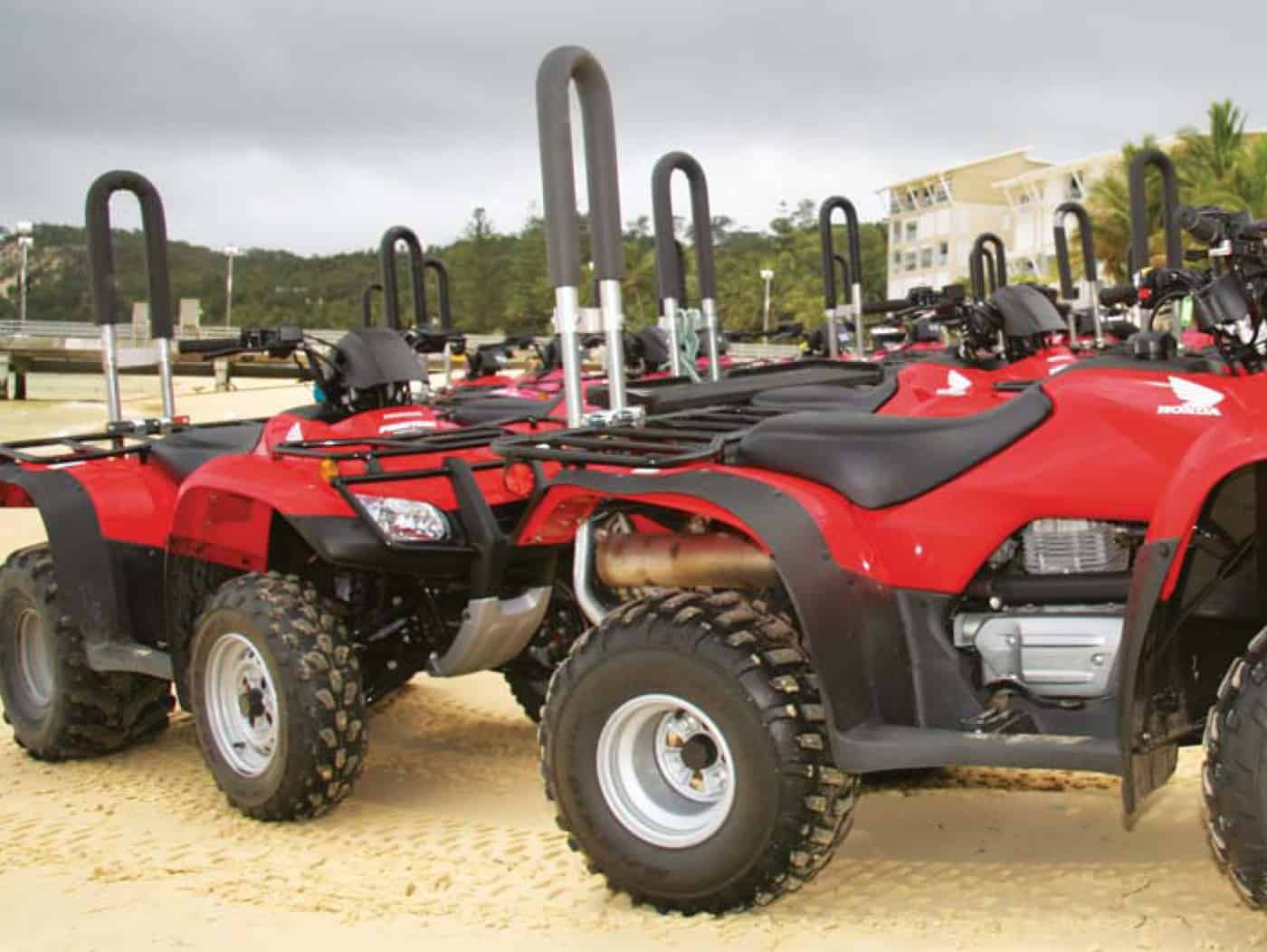
The final report into quadbike safety has finally been released by the University of New South Wales in a series of five papers and in the wake of Queensland coronial findings into nine quadbike-related deaths. (A New South Wales inquiry is currently underway)
It has been a