Two OHS regulators under investigation

Almost all the government agencies that regulate occupational health and safety (OHS) in Australia have been subjected to various independent inquiries. These inquiries have been a mix of political, financial and cultural. The review of SafeworkSA closes submissions at the end of this week. SafeWorkNSW is to have a six-month audit (paywalled) of its performance by the NSW Auditor-General, according to Adele Ferguson in the Sydney Morning Herald.

The Auditor-General is yet to release a media statement on the audit, but Ferguson identifies several serious concerns.

Subscribe to SafetyAtWorkBlog to continue reading.
Subscribe Help
Already a member? Log in here

Minister could have spoken stronger on OHS at a business event

Recently Australia’s Minister for Resources, Madeleine King, spoke at an event hosted by the Western Australian Chamber of Commerce and Industry. The speech aimed to reassure the State’s mining sector to not feel threatened by the new Australian Labor Party government. However, her words about sexual harassment were a little odd.

According to the publicly released speech, King said this on the issue of the labour shortage in mining and resources:

Subscribe to SafetyAtWorkBlog to continue reading.
Subscribe Help
Already a member? Log in here

Who is responsible for Burnout? And for preventing it?

I apologise for often referring readers to paywalled content. This restriction can affect the impact and flow of a story, but I want readers to be able to verify the sources of my comments and my information. And I acknowledge that this blog, for many, is an example of the economic reality of paywalled content.

However, there was an article in The Guardian on October 11, 2022, about burnout that is well worth reading (You may be able to get short-term access). Below are some extracts from that article with my thoughts.

The Guardian article “‘I didn’t see how I could ever get back to a normal life’: how burnout broke Britain – and how it can recover” by Gaby Hinsliff,, recounts several cases of burnout and near-burnout that are typical of responses to work-related mental ill-health.

Subscribe to SafetyAtWorkBlog to continue reading.
Subscribe Help
Already a member? Log in here

Rebuilding the “Duty TO Care”

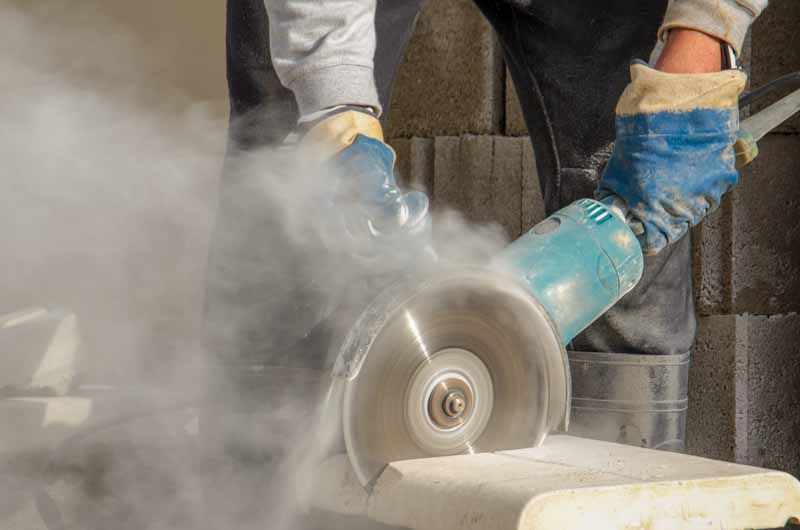
Decades ago, the occupational health and safety (OHS) conferences had speakers regularly urging us to focus on the “H” in OHS. The “H” was often “Health”, but it was also the “Human”. OHS professionals have long acknowledged that the profession, and the OHS regulators, focussed for too long on traumatic physical injuries and less on health risks, often related to dust, or human risks associated with bullying, harassment and other psychosocial harms. Those days have gone by, but employers and institutions are yet to catch up.

Part of the reason for this lag is the intransigence of the neoliberal ideology and economics epitomised by Margaret Thatcher in the UK, Ronald Reagan in the USA, and Bob Hawke, Paul Keating and John Howard in Australia. (Australia’s neoliberalism was sneakier than in other countries and not just nationally. Jeff Kennett, I am talking about you). Neoliberalism is on the decline, although slower than it should be.

Subscribe to SafetyAtWorkBlog to continue reading.
Subscribe Help
Already a member? Log in here

More bravery is needed on workplace mental health

The bookshops I visit often have two sections of books marked Business and Management. These categories are interchangeable for occupational health and safety (OHS) purposes, but the shopowners and/or publishers differentiate. Both categories have self-help books – leadership varieties, how to be a better manager, how to make lots of money really quickly (without apparently anyone being exploited!!). Books discussing mental health are in both categories, and three, in particular, seem to show the potential for improvement in mental health and the self-imposed limitations to achieving this.

Subscribe to SafetyAtWorkBlog to continue reading.
Subscribe Help
Already a member? Log in here

HWSA on psychological health at work

The Heads of Workplace Safety Authorities (HWSA) is a strange concoction. It operates separately from Safe Work Australia but has some overlapping memberships. According to SWA, HWSA:

“is made up of representatives from work health and safety regulators across Australia and New Zealand. They work together to promote and implement best practice in work health and safety in the areas of policy and legislative matters, education and enforcement. Our CEO attends HWSA meetings as an observer.”

In March this year, SafetyAtWorkBlog put some questions to HWSA about psychological risks in the workplace, a topic that has heated up over the last couple of years. The intention was to obtain an idea about HWSA’s “best practice” perspective. The responses were okay but limited, as one can see below.

Subscribe to SafetyAtWorkBlog to continue reading.
Subscribe Help
Already a member? Log in here

Australia’s mental health industry is in transition

Dr Ian Hickie is a well-respected and knowledgeable advocate of mental health. His CV shows extensive experience in this area since the 1980s. Recently Dr Hickie spoke to the Australian Financial Review about EY’s announcement of a review into its workplace culture following the death by suicide of one of EY’s employees at their offices. The article (paywalled) seems to show a change in traditional approaches to mental health in workplaces, but the change needs to be much more significant and broader.

Subscribe to SafetyAtWorkBlog to continue reading.
Subscribe Help
Already a member? Log in here
Concatenate Web Development
© Designed and developed by Concatenate Aust Pty Ltd