
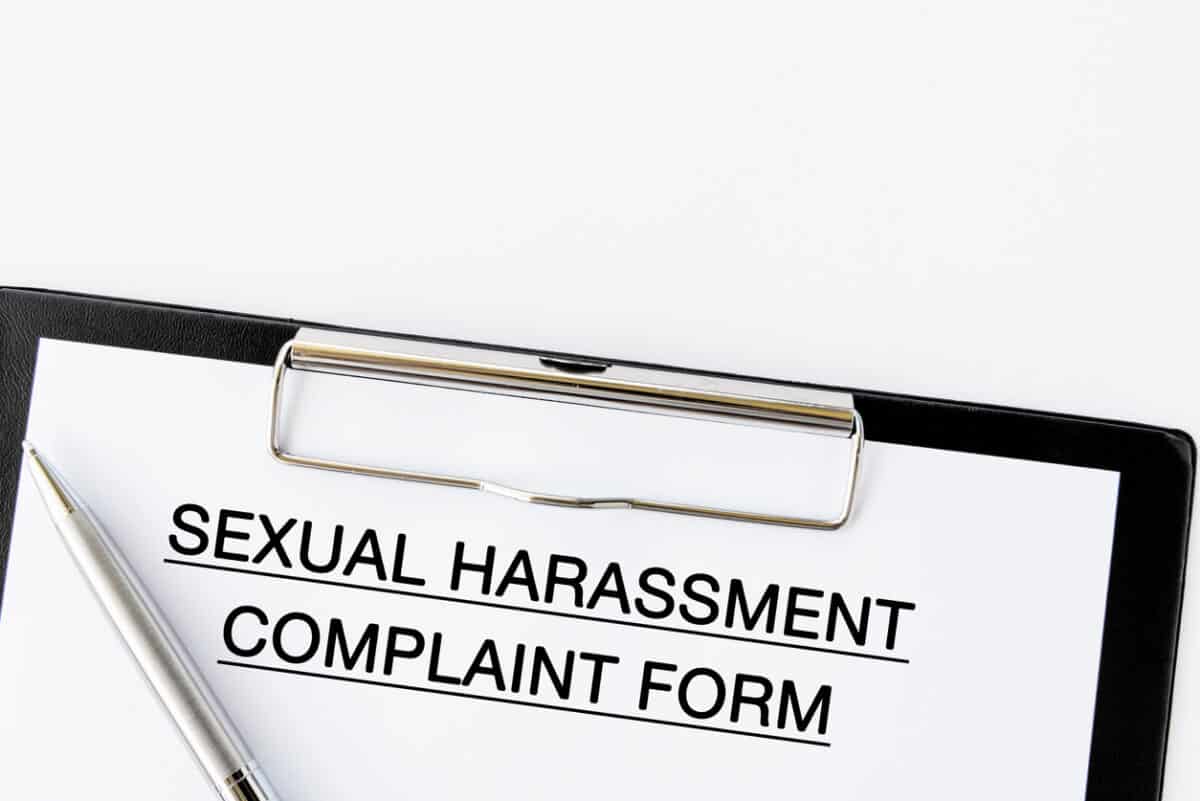
In light of many workplace sexual harassment scandals in Australia, the Victorian Government established a task force to look at the issues and make recommendations. That task force has released its findings, the government has responded, and the media has focused on mainly one issue – non-disclosure agreements (NDAs) – missing out on other important information. And questions like, why did Victoria have the task force at all?
Category: procurement

What does the IPCC report on climate change say about work?
Global warming will affect the way we work. This was acknowledged in the most recent report from the International Panel on Climate Change. The 3,676-page report cited several research papers related to these changes. Below is a list of those papers and comments on the abstracts, where available.
Vanos, J., D. J. Vecellio and T. Kjellstrom, 2019: Workplace heat exposure, health protection, and economic impacts: A case study in Canada. Am. J. Ind. Med., 62(12), 1024-1037, doi:10.1002/ajim.22966. https://pubmed.ncbi.nlm.nih.gov/30912193/
This abstract recommends “Providing worksite heat metrics to the employees aids in appropriate decision making and health protection.” This research adds to one’s state of knowledge but may not help with which on-the-ground decisions need to be made.
We should give a fat RAT’s clacker about COVID-19 testing
Australia’s strategy for combatting the COVID-19 pandemic is almost entirely based on vaccinations. The supplementary control measures of increased ventilation, social distancing, mask-wearing and hygiene are still vitally important but have dropped off the radar a little in the rush to maximise the number of vaccinated citizens and workers. One of the measures not currently listed on the Safe Work Australia COVID-19 website (at the time of writing) is rapid antigen testing (RAT), even though this screening method is integral to reopening businesses in the United States.
RAT has started to appear in Australia. It is a valuable tool, but it is not a replacement for the medical PCR test, and there are administrative considerations that affect the occupational health and safety (OHS) management of COVID-19.

Speak Global, Implement Local
Most of the international reporting in June 2021 was about the G7 meeting, but the International Labour Organisation (ILO) also conducted a World of Work Summit as part of its 109th International Labor Conference. Several world leaders recorded messages for the event, and two are particularly interesting – President Joe Biden and Pope Francis. Such statements do have global influence and can support local occupational health and safety (OHS) initiatives.
Latest Psych Health Code released
The big occupational health and safety (OHS) news in Australia has been the New South Wales release of its Code of Practice for Managing Psychological Hazards at Work. This Code is not mandatory but is a very good indication of what the OHS regulators (and perhaps eventually the Courts) believe are reasonably practicable measures for employers and business owners to take. These measures are discussed in detail below.
Industrial Manslaughter presents an empty hook
New South Wales’ Opposition Minister for Industrial Relations, Adam Searle, spoke recently in support of the introduction of Industrial Manslaughter (IM) laws. In Parliament on May 5 2021, he said
“… legislation is required to enable the prosecution of industrial manslaughter and to fundamentally change the approach across industry in order to raise the standard and embed a culture of workplace safety of a much higher and more stringent nature. We need a culture that supports workplace safety in our State, not a culture, as I indicated before, that allows and encourages the cutting of corners and the fostering of unsafe workplaces…..
page 43, Hansard,
Legislation can achieve many things but not by itself, and that reality often makes such penalties like Industrial Manslaughter little more than symbolic.

OHS needs to get a seat at the ESG table
There has always been an overlap between environmental safety and occupational health and safety (OHS). This has happened not because of any particular similarity between the two disciplines but rather because of company executives’ duties, responsibilities, and accountabilities.
A recent report produced through the Centre for Policy Development (CPD) says this about climate change responses:
“Care needs to be taken to ensure that climate-related targets and analysis are rigorous, underpinned by appropriate governance, strategy and action, reflected in financial statements as required.”
Replace “climate” with “OHS”, and the overlap is clear. This is particularly important at this time when Australia is preparing its next national OHS strategy.