Take a good hard look at your business and do something about it

The Medical Journal of Australia (MJA) published an opinion piece on January 20, 2020 concerning working hours in the medical profession and the risk of mental health and suicide from working excessive hours. It uses the Japanese problem of “karoshi” to illustrate the severity of the workplace risks but it misses a couple of points.

It references the amendments to Victoria’s Occupational Health and Safety (OHS) legislation that introduced an offence of Industrial Manslaughter but implies that this amendment changes the duty of care expected of employers and changes a worker’s right to a safe and healthy workplace.

Subscribe to SafetyAtWorkBlog to continue reading.
Subscribe Help
Already a member? Log in here

Harm prevention gets short shrift from Aigroup report

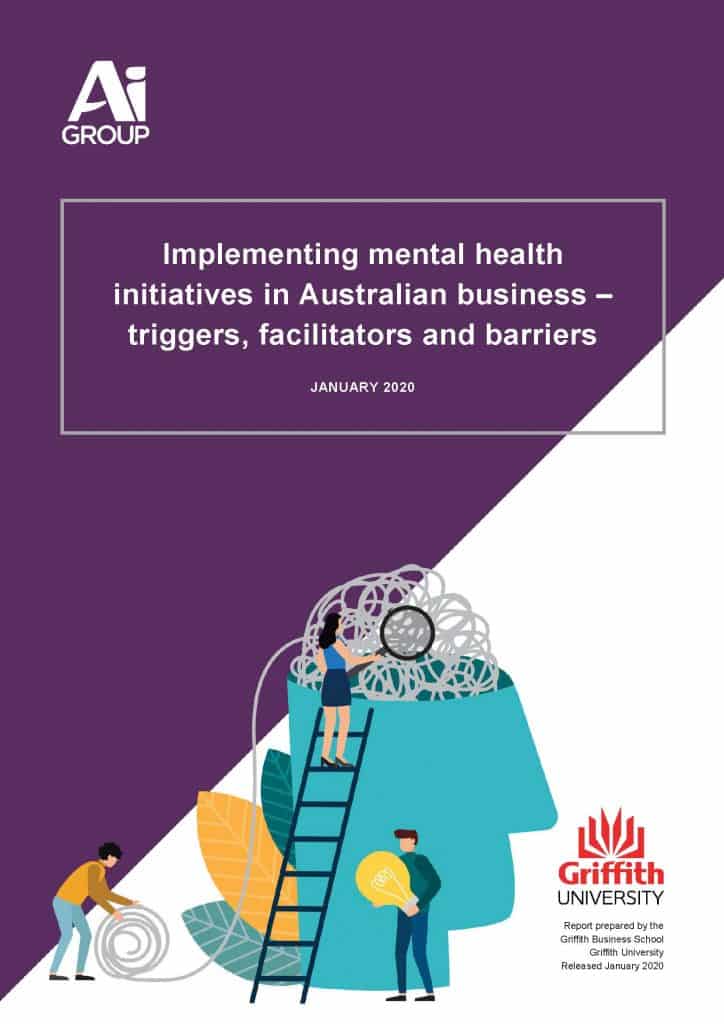
The Australian Industry Group has released research into workplace mental health conducted by Griffith University. The AiGroup claims it is a

“… a landmark study into mental health initiatives taken in local workplaces”.

It is far from it. Workplace mental health will only become more important in 2020 with reports due from the Productivity Commission and the Australian Human Rights Commission. Sadly the AiGroup report gives inadequate attention to the prevention of work-related psychological harm even though this has been identified by some Australian mental health experts as the most cost-effective and sustainable business strategy.

The most obvious problem with the report is with this statement:

Subscribe to SafetyAtWorkBlog to continue reading.
Subscribe Help
Already a member? Log in here

2020 OHS plans for Queensland mines

Open cut rock quarry on the Gold Coast, Queensland, Australia. Source: zstockphotos

The Queensland Government’s “Safety Reset” of its mining industry was a remarkable achievement in 2019. The government intends to be equally active in occupational health and safety (OHS) in 2020, according to a media release dated 18 January 2020. Below are its “current and upcoming health and safety reforms”:

Subscribe to SafetyAtWorkBlog to continue reading.
Subscribe Help
Already a member? Log in here

OHS and Wade Needham

It’s been a while since SafetyAtWorkBlog offered a profile on one of its subscribers. Wade Needham was generous enough to answer some questions about himself. His responses are intriguing and he provides excellents links to other resources.

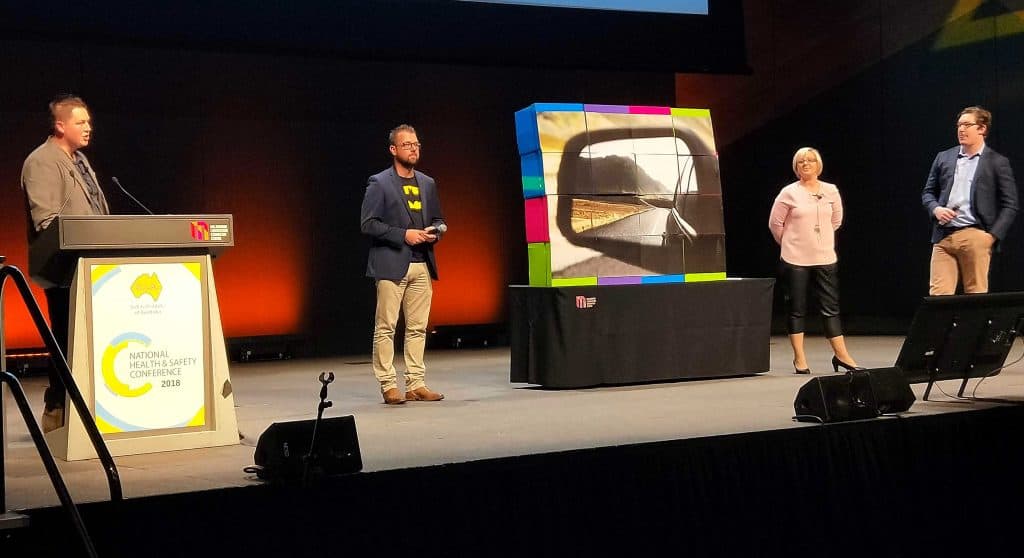
Wade Needham on the far right in 2018 with, from the left, Tim Allred, Andrew Barrett and Naomi Kemp

If you are a SafetyAtWorkBlog subscriber and would like to follow Wade’s lead, email your responses to the following questions:

  • How did you get into Health & Safety?
  • What drives you?
  • What helps you slow down?
  • Regrets?
  • Favourite fiction writer?
  • What is one trend you are watching keenly?
  • Person/s who you watch and take inspiration from in H&S that you think will have an increasing impact in the sector:
  • What are you most excited about in our sector?
  • What’s your favourite quote?
  • Biggest issue facing the H&S profession?
  • What do you wish you had understood sooner?
  • What would you like to see to improve collaboration in our sector?
  • What should you have been doing whilst you answered this?
Continue reading “OHS and Wade Needham”

Mental health prevention is still glossed over

The latest edition of CEO Magazine contains a brief report of a workplace mental health breakfast seminar. It is written by John Karagounis, the CEO of the CEO Circle, the host of the seminar. Prominent speakers included Julia Gillard, Paul Howes and Georgie Harman, all associated with beyondblue. The prevention of mental ill-health at work is only inferred in this article, which reflects the dominant, and limited, perspective of most of the mental health sector. A deeper and broader analysis of workplace mental health is deserved.

However, the article included two statements of note. Clarification is being sought on this Karagounis statement:

Subscribe to SafetyAtWorkBlog to continue reading.
Subscribe Help
Already a member? Log in here

What employers need to know: the legal risk of asking staff to work in smokey air

The following article is reproduced from the excellent academic communication website The Conversation, and is written by Elizabeth Shi, a Senior Lecturer, in RMIT University‘s Graduate School of Business and Law. The article is a very useful contribution to managing the risks of working in smokey environments but is only one contribution to a discussion on occupational health and safety in smokey workplaces that has many, many months to go.

Amid thick bushfire smoke in cities including Canberra and Melbourne, employers need to consider their legal obligations.

Some have directed their workers not to turn up in order to avoid to occupational health and safety risks. Among them is the Commonwealth department of home affairs which last week asked most of its staff to stay away from its Canberra headquarters for 48 hours. Other employers want to know where they stand.

Continue reading “What employers need to know: the legal risk of asking staff to work in smokey air”

Auditors and Exorcists

This article was originally published in the SafetyAtWork magazine in March 2002, has been slightly edited with new links included. It is surprising how slow progress in the auditing sector has been, supporting some of the points raised in the Brydon Review.

The Enron saga means many things to many people. Some see the collapse as a result of greed, others as an inevitable result of US corporate capitalism, yet others focus on the political ramifications of the collapse. From a distance and in the context of workplace safety and risk management, the saga can be seen as a wake-up call for all businesses.

Continue reading “Auditors and Exorcists”
Concatenate Web Development
© Designed and developed by Concatenate Aust Pty Ltd