Biden reverses Trump’s position on workplace safety

It is fair to say that the term of office for President Trump was not supportive of occupational health and safety (OHS). Former President Trump did not seem to see the need for OHS regulations and his attitude to the COVID-19 pandemic meant that it would never be considered as an occupational disease. Reports over the last week in the United States media, and the issuing of an Executive Order, indicate that new President Biden values workplace health and safety.

The New York Times (paywalled) is reporting that

“President Biden directed the Occupational Safety and Health Administration [OSHA] on Thursday to release new guidance to employers on protecting workers from Covid-19.
In one of 10 executive orders that he signed Thursday, the president asked the agency to step up enforcement of existing rules to help stop the spread of the coronavirus in the workplace and to explore issuing a new rule requiring employers to take additional precautions.”

Subscribe to SafetyAtWorkBlog to continue reading.
Subscribe Help
Already a member? Log in here

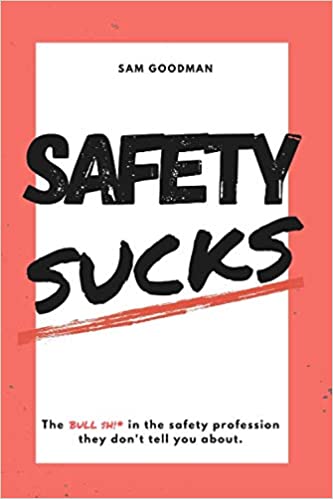
Book Review – Safety Sucks

Several occupational health and safety-related books have been self-published over the last couple of months. They are from a mix of authors, some may be familiar to OHS professionals. The books are

These will be reviewed over a series of blog articles. Safety Sucks is up first.

Subscribe to SafetyAtWorkBlog to continue reading.
Subscribe Help
Already a member? Log in here

Farmers want quad bikes…….

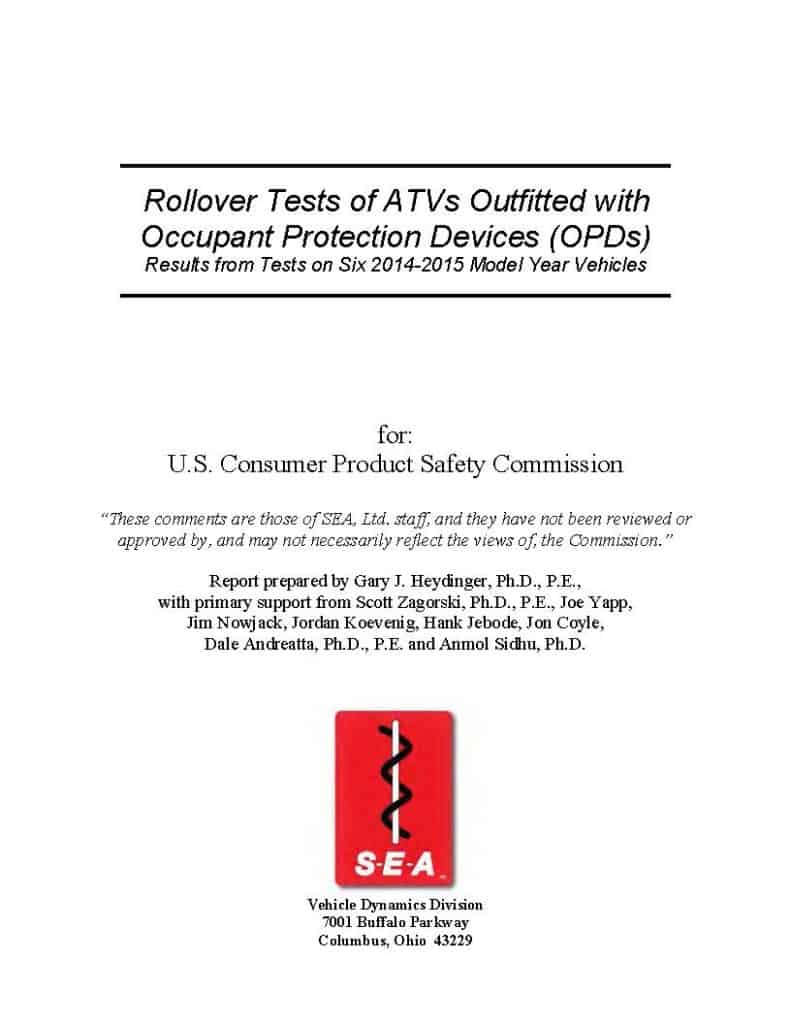
The debate over the safety of quad bikes on farms continues but it is increasingly one-sided. The Australian Competition and Consumer Commission (ACCC) and workplace safety advocates continue to hold the line on the need to install operator protection devices (OPDs) to all quad bikes being sold in Australia. Farmers, often supported by commercial interests, want to keep their quad bikes and as they are, because there are no alternative vehicles that are as versatile as the quad bike.

On July 4 2020, the Western Magazine quoted the CEO of the Federated Chamber of Automotive Industries‘ (FCAI) Tony Weber:

“Evidence suggests in some circumstances CPDs do prevent injuries, other times they create more injuries and that’s not a satisfactory outcome we should address the fundamental problem and that is the way in which humans behave around this machine…”

This quote neatly summarises the points of argument in the safety debate which have been reported on extensively in this blog previously – evidence, most benefit, design, use….

Subscribe to SafetyAtWorkBlog to continue reading.
Subscribe Help
Already a member? Log in here

The reluctant acceptance of quad bike safety changes

One important stage in improving the safety of farm vehicles was completed on October 10 2019 with the acceptance by the Australian Government of recommendations to make Operator-Protection Devices (OPD) mandatory for all quad bikes in Australia. That decision is a substantial achievement that many have lobbied, and fought, over for many years, but it will not save every farmer’s life as quad bike use has always only ever been one part of the occupational health and safety (OHS) risks on farms.

The Australian Government’s recent announcements on this issue have also been a little odd.

Subscribe to SafetyAtWorkBlog to continue reading.
Subscribe Help
Already a member? Log in here

Safety remains a muddle in Australia’s trucking industry

SafetyAtWorkBlog believes the fact that commercial vehicles are also workplaces remains under-utilised in Australia. There are hints that this position is shared by others and that the analysis of occupational health and safety (OHS) in the transport sector is maturing. An Issues Paper released in May 2019 by the Productivity Commission (PC) as party of the review of the 2009 National Transport Regulatory Reform program looks at potential safety outcomes.

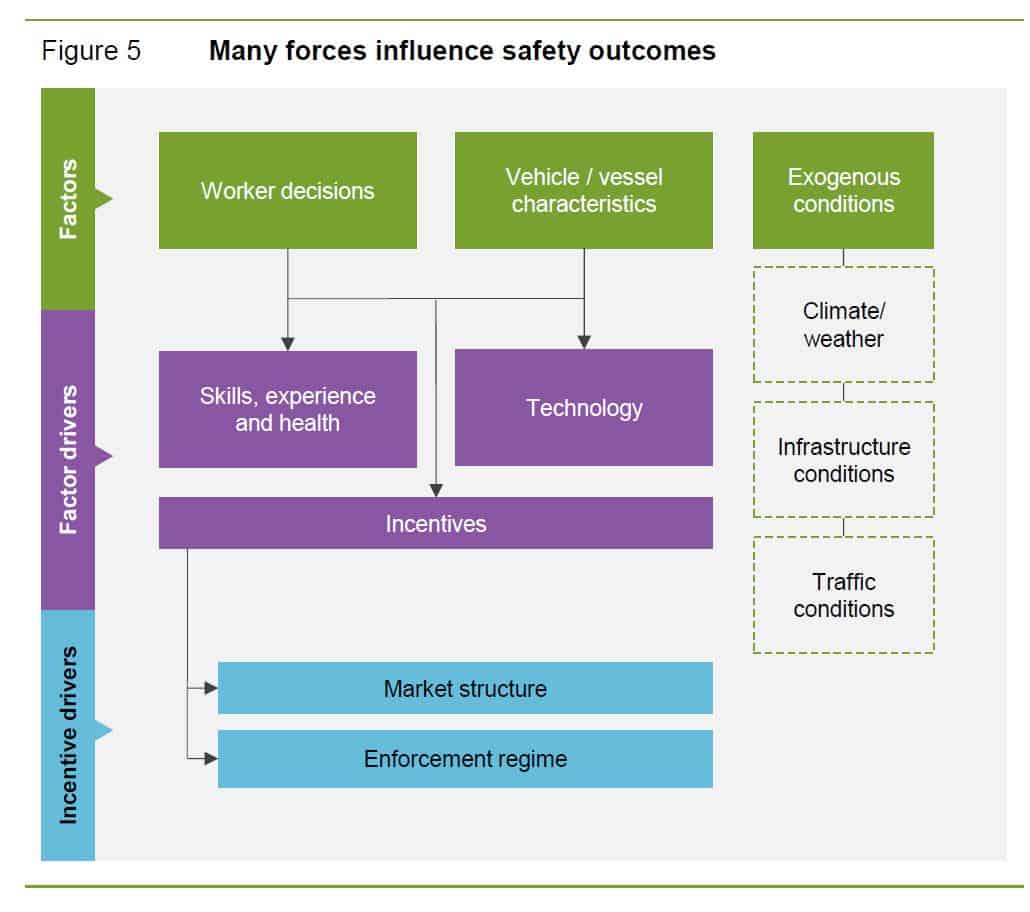
In each of the sectors within the reform program – heavy vehicles, rail and maritime – safety improvements, enhancements and improvements were expected. The PC accepts the multidisciplinary and multi-factorial elements of OHS:

“…. the national laws and regulators are only one influence on safety outcomes. The multiplicity of influences on safety outcomes raises challenges for measurement of the contribution of the national system to any changes in safety outcomes since the system was introduced. The Commission envisages that the direct net benefits from safety related reforms must be assessed by the use of simple methods such as benchmarking (including to other countries) and other descriptive analyses. For example, Hassall (2014) estimates the accident rate (broken down by accident severity) per 100 million kilometres.”

page 12

(Given that the PC has a separate inquiry into mental health, it will be interesting to see if this perspective is consistent across different sectors)

Subscribe to SafetyAtWorkBlog to continue reading.
Subscribe Help
Already a member? Log in here

Exclusive interview with SafeWork SA’s Martyn Campbell

Last year SafeWork South Australia was evaluated by that State’s Independent Commission against Corruption. A couple of years ago Martyn Campbell (pictured right) took on the role as the Executive Director. SafeWork SA had obvious challenges and Campbell has needed to recalibrate the organisation to meet contemporary standards and expectations.

SafetyAtWorkBlog had the chance to put some questions to Martyn Campbell recently. Below are his responses.

Subscribe to SafetyAtWorkBlog to continue reading.
Subscribe Help
Already a member? Log in here

Submission to the National Inquiry into Sexual Harassment in Australian Workplaces

Australian research into occupational health and safety (OHS) is a lot less than research into other areas of business and management, especially in relation to the psychological wellbeing of workers at all levels of the corporate structure.  As such, it has become common for experts, advocates and researchers from the social, non-work, public health areas to overlay general and broad research findings on to workplaces – they are, in effect, filling a vacuum.  But just because the OHS research into psychological harm is thin or immature does not mean that work does not have its own characteristics.

Over many years OHS has produced research and guidelines that include the psychological effect of sexual harassment, but it has been ineffectual or ignored for may reasons.  This submission is an attempt to illustrate the potential already in existence in Australia that could be used to prevent sexual harassment-related psychological harm.

Subscribe to SafetyAtWorkBlog to continue reading.
Subscribe Help
Already a member? Log in here
Concatenate Web Development
© Designed and developed by Concatenate Aust Pty Ltd