

The OHS Professional magazine for December 2020 contains a very good article about workplace psychological risks and the occupational health and safety (OHS) strategy to prevent mental harm. The only negative is that it is not published in a Human Resources magazine, or one for company directors. The preventative techniques are well known to the OHS profession and based on independent scientific evidence, but it is other managerial disciplines that need to learn the difference between preventing psychological harm and providing symptomatic relief.
Category: stress
Suicide statistics could benefit from a different analysis
Regular readers of this blog would be aware that I feel that the prevention of suicide gains less attention than early intervention and that mental health has dominated suicide discussions to the point that suicides without a mental health context are largely ignored. This situation is starting to change with non-psychological pressures gaining some acknowledgement, if not examination. Mental health still dominates but the pool of contributory factors is expanding.
On 30 November 2020, the Medical Journal of Australia published the best recent example of this change, an article called “Suicide by young Australians, 2006-20415: a cross-sectional analysis of national coronial data.” The most useful statement in the research report, and the media release, is:
Clues to the “new normal” of work
The COVID19 pandemic has devastated many countries but it has also created business opportunities. Recently workplace IT company Skedulo released a whitepaper about the new work normal. The document is essentially a marketing strategy but there are some hints about workplace change that may be of interest to occupational health and safety (OHS) advocates and professionals.

The certainty of diagnosis
Occupational health and safety (OHS) is not famous for its certainty. The days of prescriptive compliance to OHS laws are, probably, never to return. But the flexibility offered by modern OHS laws and the pervasiveness of “reasonably practicable” has complicated the management of workplace health safety by increasing that uncertainty.
The attention being given to workplace mental health, over the last 20 years and since work-related stress was identified as a major problem, has highlighted this flexibility/uncertainty. However, some certainty on workplace mental health is accessible if one is prepared to challenge the dominant workplace wellness paradigms.

Work-related mental health remains contentious
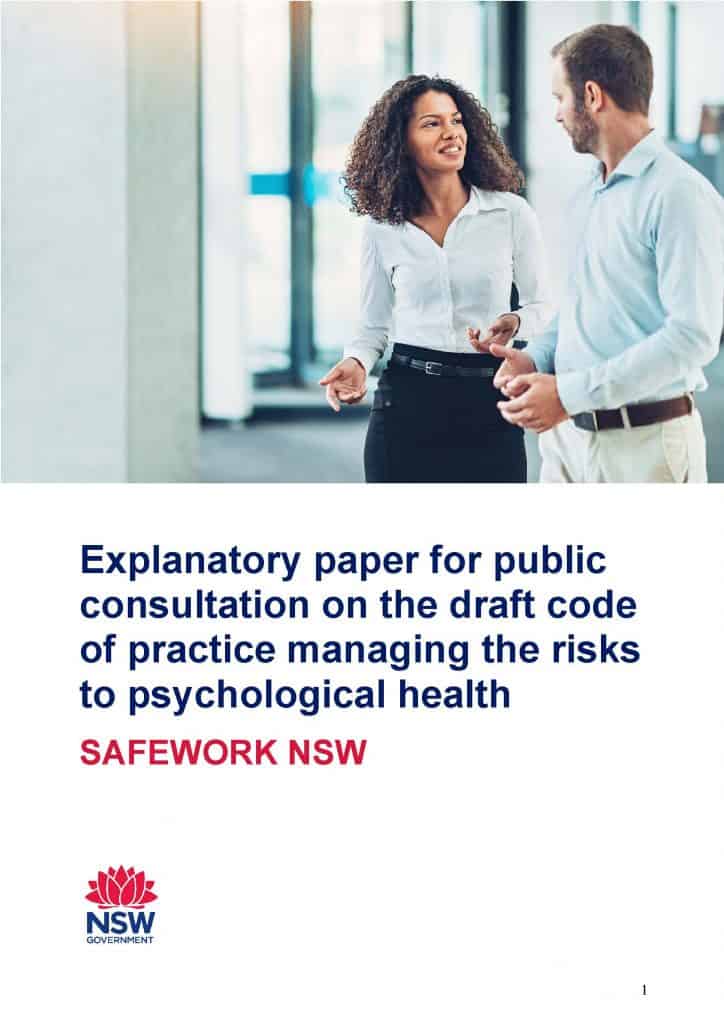
This article is about SafeWorkNSW’s recently released Draft Code of Practice for Managing the Risks to Psychological Health, but it is not going to focus on the Code. Instead the focus will be on the supplementary Explanatory Paper because this presents the rationale for the Code’s contents and, in many ways, is a more useful tool for occupational health and safety (OHS) discussions. However, just as the Code has structural and legislative limitations as part of its Purpose, the Explanatory Paper is a support document for submissions on the Draft Code and therefore has its own limitations.
COVID19 and Safety Managers
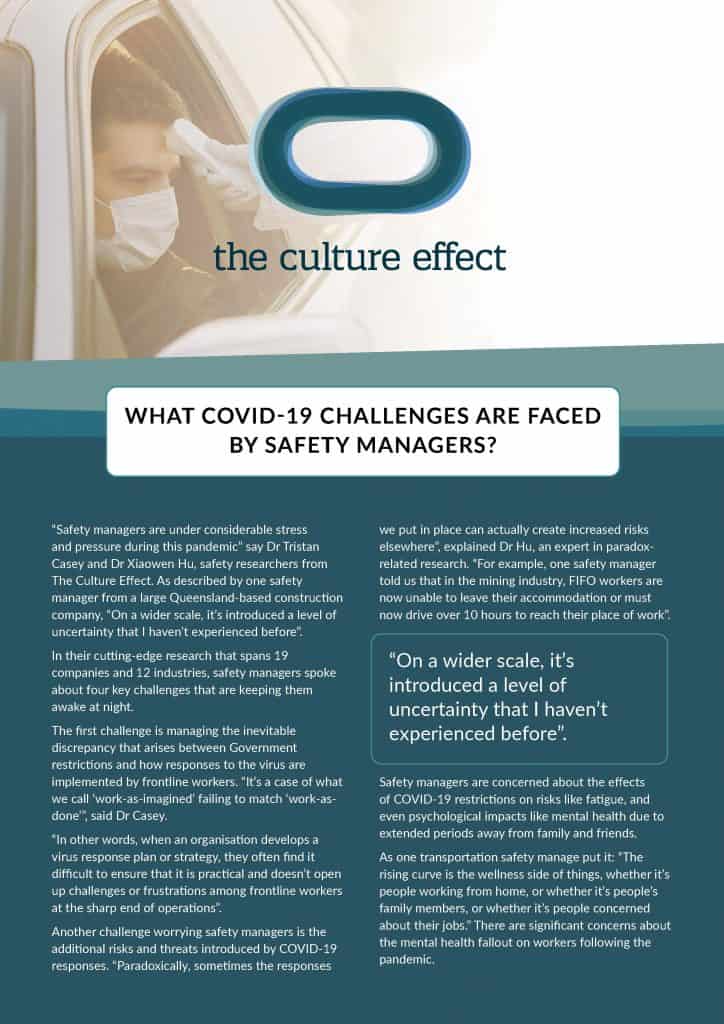
Several weeks ago, researchers from Griffith University and Queensland University of Technology (QUT) commenced a survey about safety managers and COVID19. The research was called “Resilience in a COVID19 World” and aimed at
“Exploring health and safety measures taken by and for ‘essential services’ workers throughout Australia’s COVID-19 crisis, and how their contributions affect personal and organisational resilience.”
Some initial results are in a recent outline published by Dr Tristan Casey & Dr Xiaowen Hu through The Culture Effect consultancy. There were four key challenges but also significant positives.
Tooma on Mental Health – Review
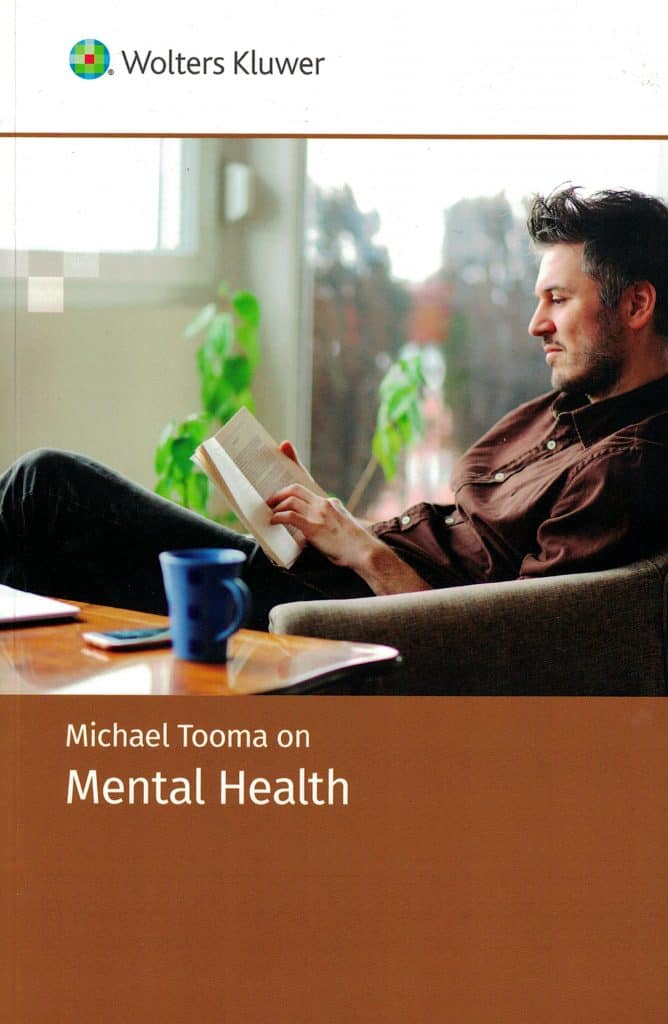
Michael Tooma is probably the most prominent occupational health and safety (OHS) lawyer in Australia. His latest book is, a little pretentiously, called “Michael Tooma on Mental Health“, but it fits with the series of OHS-related publications he has written for Wolters Kluwer. Unusually for a lawyer, there are only two chapters that specifically discuss legislative obligations, and, in many ways, these are the least interesting.
Positive Mental Health
In the Introduction, Tooma goes out of his way to stress the positive benefits of work. He is critical of the current OHS approach to workplace stress writing that we seek a “Goldilocks” application of perfection when this is really subjectively determined by each worker. Tooma challenges this in a major way through the 2012 study by Keller and others: