Relocation is always an option for an improved work/life balance

A couple of years ago there was a campaign in Australia to increase the number of general practitioners in rural areas due to a doctor shortage.  One doctor, Nicole Anderson, chose to relocate from tropical Queensland to temperate Tasmania.  She did so for several reasons including improving her work/life balance.

During the campaign in November 2007 I had the chance to talk with Nicole about her experience and her life choices for a SafetyAtWork podcast

As part of the Rural Health Workforce Australia campaign, short videos were produced of which Nicole’s story was one.  Click HERE to see the wonderful countryside Nicole has chosen to practice in.

Kevin Jones

Panic in disaster planning

Three years ago I had the privilege of arranging for Dr Lee Clarke of Rutgers University to attend the Safety in Action Conference in Australia.  Lee had a book out at the time, Worst Cases, and spoke about the reality of panic.  Lee’s studies have continued and are, sadly, becoming more relevant.

Recently, Rutgers University posted a video interview with Lee on Youtube.

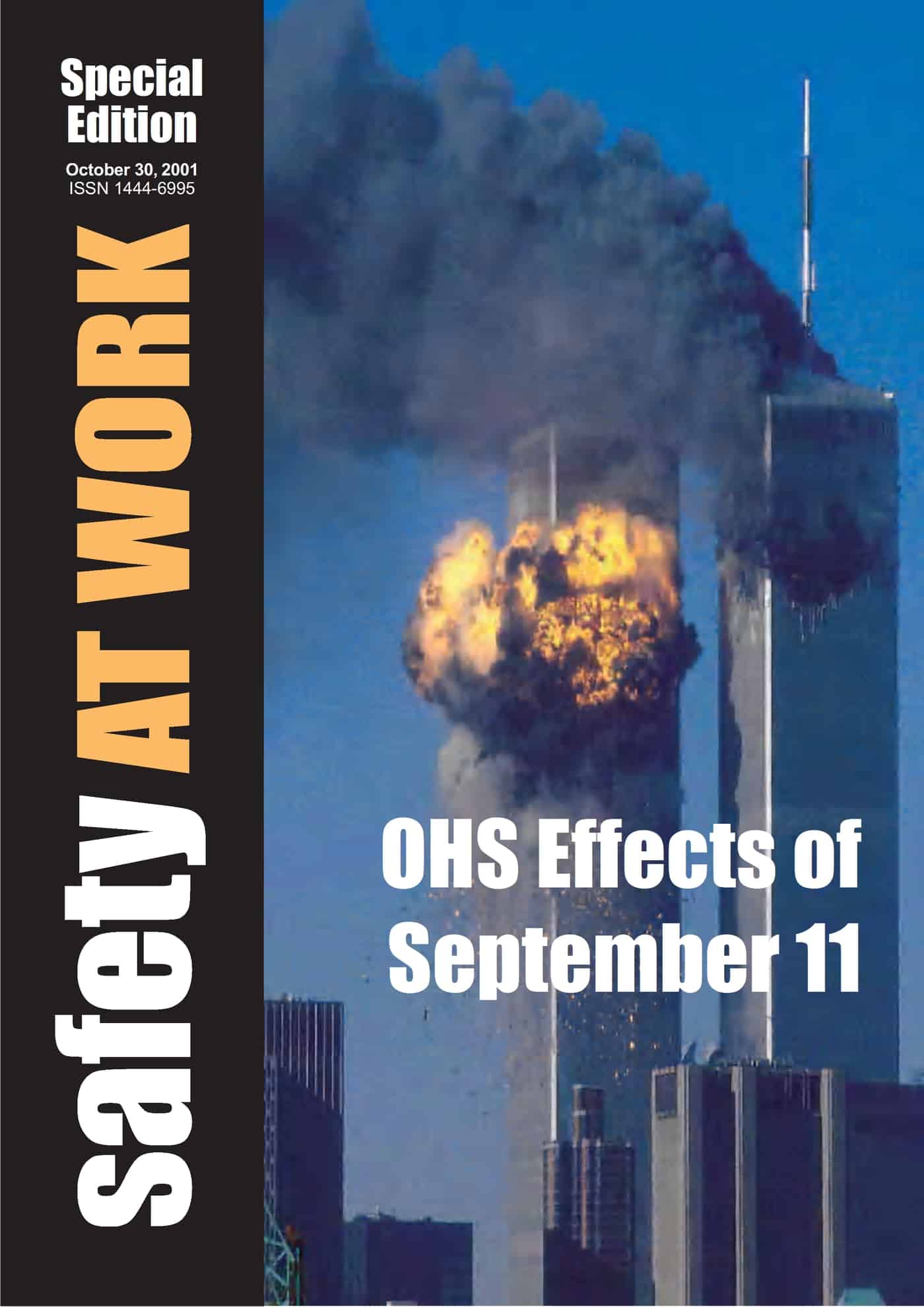
Shortly after the World Trade Center collapse in 2001, I asked Lee to write something about the event from his experience and perspective.  He wrote a piece for a special edition of Safety At Work magazine.  The article has been available through his website for some time and is now available through here by clicking on the image below.

I strongly recommend Lee’s books.  As he says in the video, they’re quite fun, in a sad sort of way.

Kevin Jones

Sept11

Resilience, stress and safety management

The July 25 2007 SafetyAtWork podcast is now available for download.  It includes an interview with Michael Licenblat where we discuss the psychological approach to individuals taking control of their own safety, the benefits of wellbeing programs and the changing workplace.

On listening back to the podcast today, I was struck by several issues he raises:

  • Michael is one of the few wellbeing gurus who directly link the management of stress to the productivity of the worker.  He displays more awareness than many others of the “proactive” OHS context of this approach to human capital.
  • He discusses why it is difficult for all of us to say no to some work tasks, even if  the task is high risk and may injure ourselves and others.
  • He states two core elements of workplace cultures that seem to revolve around the established OHS obligation of consultation.  Perhaps OHS managers can become real agents of change by cranking up consultation.

Kevin Jones

Environmental tobacco smoke, workplace stress – podcast 2006

In 2006, one of the earliest editions of the SafetyAtWork podcast featured several speakers on issues that remain topical.  The podcast is available for download

Anne Mainsbridge, currently a Solicitor with the Public Interest Advocacy Centre talks about her report on environmental tobacco smoke.

This is followed by Associate Professor Tony LaMontagne of the University of Melbourne talking about a systematic approach to managing workplace stress.  This was a report that was published by the Victorian Health Department and, as such, slipped by many OHS professionals.  The report is now available for download

The audio production is rough for such an early podcast, and I apologise, but I think you will find the content of interest.

Kevin Jones

Decency at work

In 2001 the House of Lords was presented with a Dignity At Work Bill.  This seemed a great idea for unifying different elements of the workplace that can contribute to psychosocial hazards.  This would be a similar approach to using “impairment” to cover drugs, alcohol, fatigue and distraction.  However, it never progressed.

Regular readers of SafetyAtWorkBlog would note an undercurrent of humanism in many of the articles but it is heartening to see this in other articles and blogs.  Maud Purcell of Greenwich Times provides an article from early May 2009 on dignity in the workplace in a time of economic turmoil that you may find of interest and use.

Kevin Jones

Workplace bullying possibly increasing

A United States report draws a parallel between increasingly difficult economic situations and an increase in workplace bullying.   This video report is lightweight but is a recent airing of the issue with a different approach.

The angle taken in the story is that of a “pink elephant” that women are just as likely to bully their workmates as men are.  Some of the speakers in the video try to relate female bullying to issues of female empowerment but bullying is more often a reflection of personal nastiness than a social movement.

Bullying received increased focus when workplace culture emerged but rather than a gender issue, our increasing intolerance for bullying is coming from a broader cultural movement than just through the workplace.

The video report originated through research undertaken by the Workplace Bullying Institute, an organisation that has existed for sometime and has very recently upgraded its website.

Kevin Jones

Fatigue is the biggest threat to a person’s safety

Not so long ago, it was considered a legitimate criticism to blame the individual for “doing the wrong thing” at work.  Depending on the type of worksite, this was considered “human error” or “bloody stupid”.

Fatigue is an interesting illustration of how occupational health and safety must cope with new perspectives on established hazards.  Australian OHS legislation operates on a responsibility to manage the systems of work in a workplace, of which only one element is the worker.

A good incident investigation goes beyond the incident to see what led up to a worker acting the way they did, the reasons behind the decision.  Instead of “tell me about your childhood”, OHS practitioners can legitimately ask “tell me about your sleep patterns”, or “tell me about your second job”, or “tell me about your relationship with your partner”, as these can be contributory factors to the decision made on the day or the work environment at the time of the incident.

Some recent AAP articles provide interesting examples of the different contexts in which fatigue as a workplace issue can manifest:

Ambulance Employees Australia (AEA) said weary paramedics had fallen asleep at the wheel and administered wrong drugs because they did not have enough time off between shifts.

They have called for a minimum 10-hour break between shifts, compared with eight hours under the current award.

But Ambulance Victoria has said the fatigue issue was one of 175 union claims, which it said sought $800 million from pay talks.”

Investigators examining the near-catastrophe at Melbourne Airport last month are exploring whether fatigue was a factor after being told the pilot had barely slept the day before the flight.

Emirates pilots are permitted to fly a maximum of 100 hours each 28 days and the pilot was also almost at the legal threshold of the number of hours he was able to fly.

Emirates has issued a statement saying safety was a top priority for the airline.”

A higher priority than a good night’s sleep apparently!  Clearly it is the spread of hours that is the issue not the total over a fixed period.

Both these examples relate to workers’ interactions with the public and reflect the complexity of OHS’s spread to public safety.  

It seems that every investigation now automatically assesses the fatigue level, or impairment, of the participants in incidents in the same way mobile phone records are checked in car accidents and blood-alcohol levels or drug testing in some industrial events.

If your OHS professional does not consider psychosocial issues in developing safety management plans or incident investigation, seek a second opinion, or better yet, make sure the first opinion is comprehensive.

Kevin Jones

Concatenate Web Development
© Designed and developed by Concatenate Aust Pty Ltd