Paspaley clarifies statement on the payment of fines

In this morning’s SafetyAtWorkBlog article, a quote from Janice Murray was included and which originated from an ACTU video dated 25 February 2019. Murray said this of the fine imposed on Paspaley:

“We sat through a very strong legal team. I understand that this is something that they can get covered through insurance. The fine through WorkSafe was minimal for us – a $60,000 fine – and that too was covered by insurance.”

Paspaley has provided SafetyAtWorkBlog with this clarification:

“Paspaley does not propose to engage in further correspondence about this matter which concluded in October 2015 and which has, not infrequently, been the subject of misinformation.

Suffice to say that the fine in question was paid directly by Paspaley and was not covered by insurance.”

Kevin Jones

Responses to the Boland Report into Australia’s Work Health and Safety Laws

The mainstream Australian media has almost entirely ignored the release of Marie Boland’s Final Report of the independent Review of Australia’s Work Health and Safety laws. but some of the usual players in the workplace relations sector have responded. Below is a longer responsive from the Australian Chamber of Commerce and Industry (ACCI) but first some simpler responses.

The trade union movement has almost entirely focused on the Industrial Manslaughter recommendations in the Boland Report. As well as a couple of media statements, the Australian Council of Trade Unions released a video on February 25 2019 with Assistant Secretary Liam O’Brien accompanied by the parents of two deceased workers. The first to speak were Tony and Robyn Hampton whose son, Jarrod, died while working for Paspaley Pearls. The second couple were Janice and Mark Murray whose son, Luke, died when parts of a crane that was being unpacked fell on him.

Subscribe to SafetyAtWorkBlog to continue reading.
Subscribe Help
Already a member? Log in here

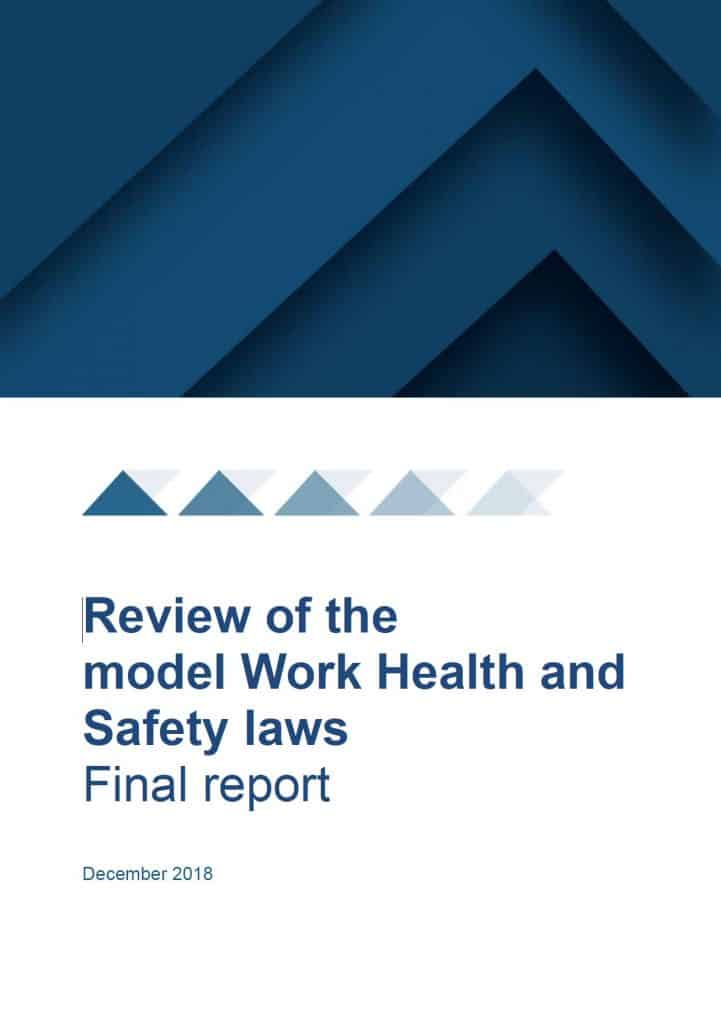
Boland’s WHS Report recommends a practical update of laws and practices

The Australian Government has released the final report of the Independent Review of its Work Health and Safety (WHS) laws, conducted by Marie Boland. Importantly, the Government has not issued its response yet and, given that there is a Federal Election in a couple of months’ time, is unlikely to. Why have another issue complicate the campaign particularly when that response may have to address Industrial Manslaughter laws which would focus on the accountability of business leaders? This Government has already been bruised on a similar issue through a Banking and Finance Royal Commission.

Regardless of this Government’s future treatment of the Boland Report, the report does progress occupational health and safety (OHS) and the operation of the WHS laws, reinforcing some aspects and challenging other. It is obligatory reading for those interested in OHS in Australia.

(SafetyAtWorkBlog is preparing an exclusive interview with Marie Boland for next week)

Subscribe to SafetyAtWorkBlog to continue reading.
Subscribe Help
Already a member? Log in here

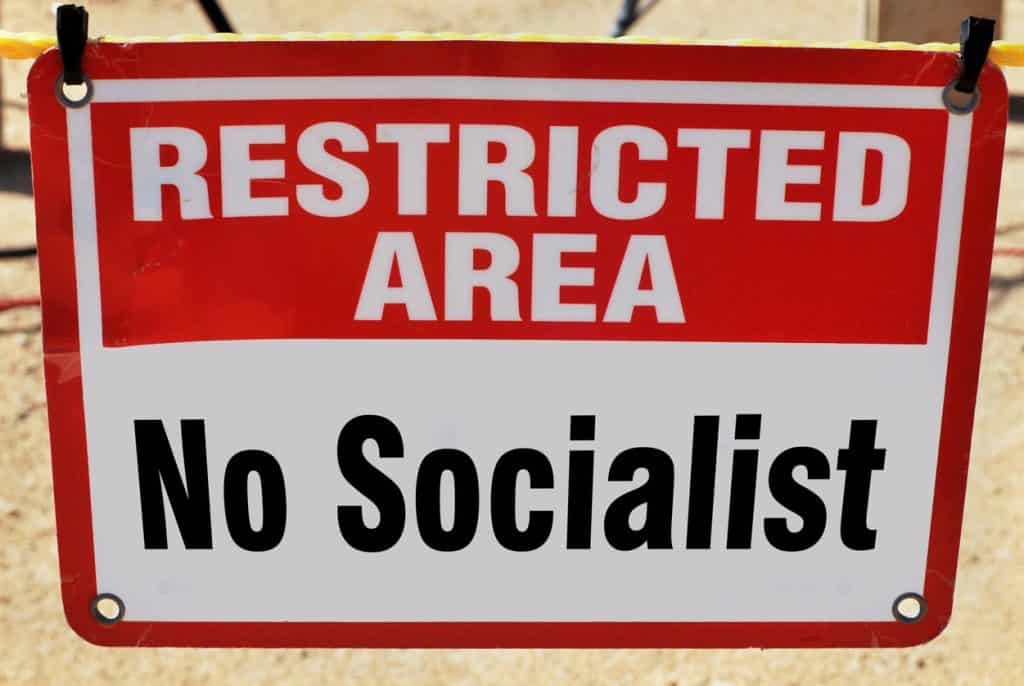
Is OHS a socialist plot?

As the dominance of neoliberalism weakens around the world, people are fearful of what comes next. In some sectors, that fear includes occupational health and safety (OHS). OHS is a business cost, in the same way as every other cost of running a business, but it is often seen as an interloper, a fun-sucker, a nuisance and/or an impediment to profitability. This misinterpretation needs to be contested.

Subscribe to SafetyAtWorkBlog to continue reading.
Subscribe Help
Already a member? Log in here

Annual Leave is an institutionalised mental health break

Occupational health and safety (OHS) and Human Resources (HR) disciplines continue to, mostly, operate in isolation and, sometimes, in conflict.  Part of the reason is that workplace matters are often seen as either OHS or HR, even though they are both.

SafetyAtWorkBlog looks for why Australian workers have four weeks of Annual Leave. Continue reading “Annual Leave is an institutionalised mental health break”

More than warm lettuce needed on Industrial Manslaughter laws

Applying the most effective way to have companies comply with their occupational health and safety (OHS) obligations has been debated in Australia and elsewhere for years.  The issue will arise again in 2019 and in relation Industrial Manslaughter laws as Australian States have elections, or the political climate suits.

There are several elements to the argument put by those in favour of Industrial Manslaughter laws. Workers are still being killed so the deterrence of existing OHS laws has seen to have failed.  Deterrence has been based on financial penalties and workers are still being killed so financial penalties have failed. Jail time is the only option left.

This is a simplistic depiction of the argument, but it is not dissimilar to some of the public arguments. The reality is that deterrence is achieved in two ways – telling the person of the consequences of an action and enforcing those consequences.

Subscribe to SafetyAtWorkBlog to continue reading.
Subscribe Help
Already a member? Log in here

Jordan Barab provides important OHS insights

I learnt more about the politics of the United States from Doonesbury than I did from television news and analysis.  I learn more about the politics of occupational health and safety (OHS)  in the United States from Jordan Barab‘s Confined Space newsletter/blog than I do any other media source.  Although the US’s OHS legal structures are different from Australia and other Commonwealth countries, the political ideologies and maneuverings, and fads and statistics are noted by political parties outside the United States.

Recently Barab posted a Year in Review article which is obligatory reading.  His key issues included:

  • A New and Improved Congress (or at least the House)
  • A Headless Agency
  • Inspectors down, enforcement units down, penalties down
  • Return of Black Lung
  • Brett Kavanaugh
  • Regulatory Rollback
  • The Fate of the Labor Movement

Anything sound familiar in your own jurisdiction?

Subscribe to SafetyAtWorkBlog to continue reading.
Subscribe Help
Already a member? Log in here
Concatenate Web Development
© Designed and developed by Concatenate Aust Pty Ltd