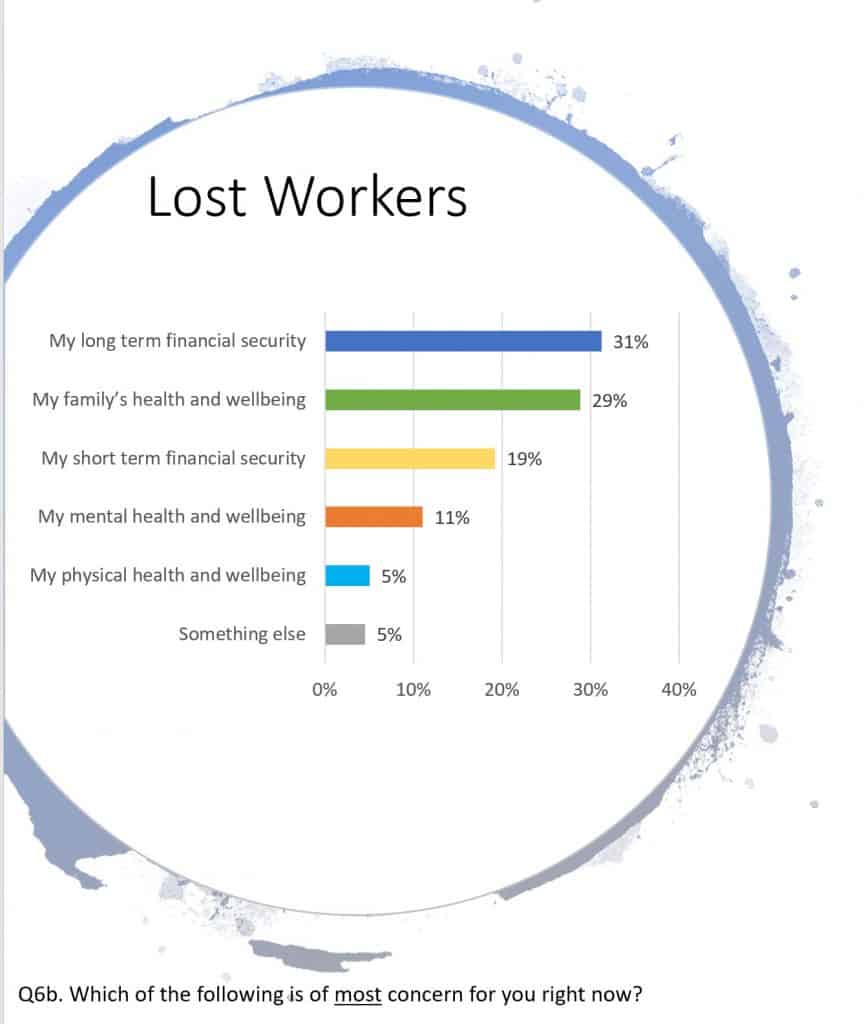
Last week the Australian Council of Trade Unions (ACTU) released some research into workers and COVID19. It is not peer-reviewed and there will certainly be much more research into the disruption and personal and occupational responses to the coronavirus disruption over the next few months. The survey results do not specifically analyse occupational health and safety (OHS) issues but there are clues to future considerations.
The media release, understandably, discusses the changed employment status or arrangements. The OHS hazards associated with precarious work are well-established and the survey illustrates the extent of precarity in Australian workplace, so mental health issues are going to come to the fore as government-imposed isolation continues and/or businesses reopen.


The trade union movement was instrumental in showing that workplace bullying was a pervasive problem in Australian workplaces. Many Codes of Practice and guidances for workplace bullying and occupational violence were written shortly after the action by the Australian Council of Trade Unions almost two decades ago. But, for some reason, although sexual harassment was mentioned in those early documents, it never received the attention in occupational health and safety (OHS) circles that, in hindsight, it should have.
Occupational health and safety (OHS) is often about promises. Employees trust their bosses to provide them with a job and the employer promises to provide a workplace that is as safe as possible. There are also contractual policies which formalise OHS relationships between client and contractor. But OHS is more often about those more personal promises and expectations between the boss and the worker.