Revelations for wellness providers and workers

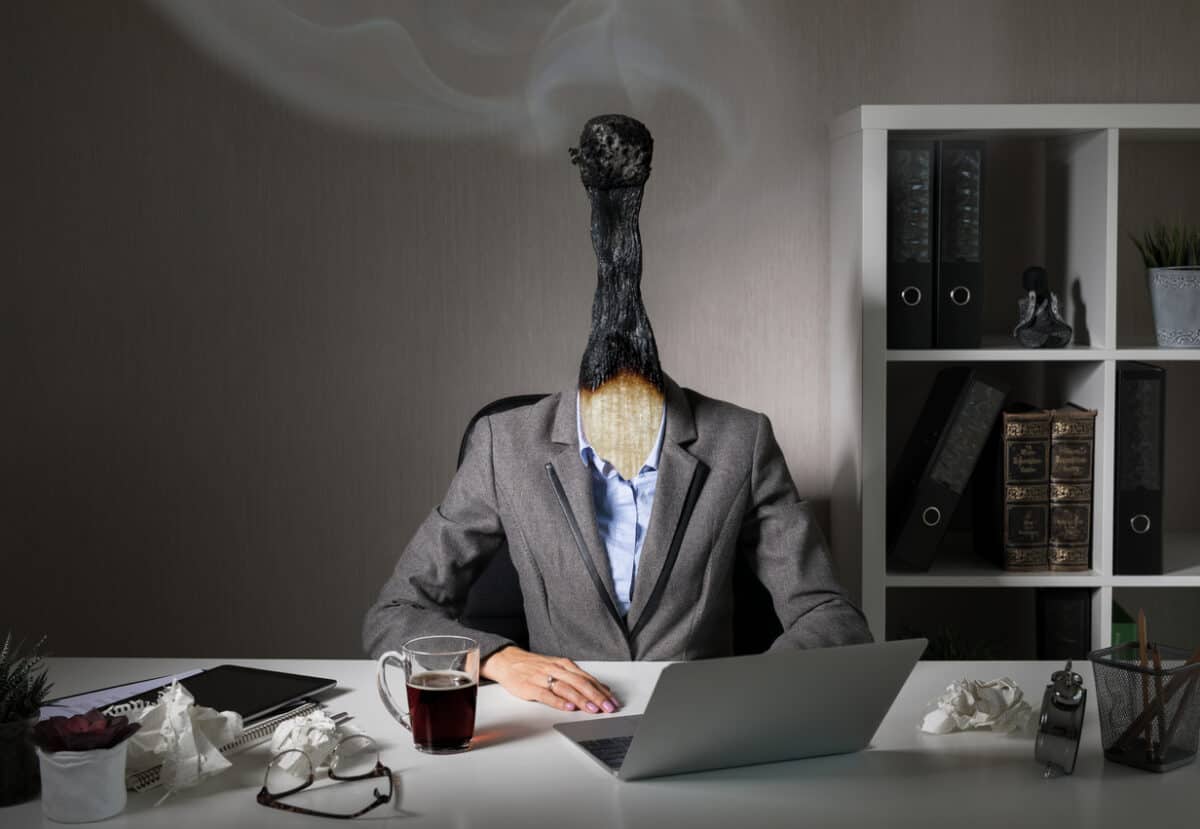
The Australian Financial Review (AFR) is Australia’s national newspaper on business issues. Recently its Editor Michael Stutchbury stated that he purposely focussed the newspaper on being business-friendly. This is understandable as businesses and employers, and entrepreneurs are the paper’s subscriber base and market, but sometimes articles can be too business friendly, and a recent article on burnout and the four-day-week may be an example. Thankfully the AFR article also included a brief mention of a more useful global survey about work in a time of pandemic.

The article, called “Pandemic burnout ignites argument for shorter workweek” (paywalled) included these quotes from a regular AFR contributor Reanna Browne on the possible mental health benefits of a four-day week:

“COVID has intensified these [mental health] issues and also given rise to new forms of workplace exhaustion such as wide-scale increases in working hours, alongside novel health challenges like digital load management and Zoom fatigue…”

Subscribe to SafetyAtWorkBlog to continue reading.
Subscribe Help
Already a member? Log in here

OHS progress needs out of the box thinking

It is generally understood that the attempt to harmonise Australia’s occupational health and safety (OHS) laws failed to achieve the level of change and integration expected. The laws are more harmonised than they were but each jurisdiction claimed special needs and so multiple jurisdictions continue to exist with their own laws and one State, Victoria, is still giving the bird to the rest through poorly justified arguments and pigheadedness. This unwillingness to even consider change, outside of established parameters, is a major impediment to the development of safe workplaces and work practices.

For example, Australia still desires nationally consistent OHS laws as this exchange between Deborah Knight, of radio station 2GB and the CEO of the Business Council of Australia, Jennifer Westacott, shows:

Subscribe to SafetyAtWorkBlog to continue reading.
Subscribe Help
Already a member? Log in here

Can the sex industry be the same as any other industry?

The Australian State of Victoria has committed to the decriminalisation of sex work. It made this decision some time ago, conducted an inquiry into how this could be achieved and is now in a further consultative process on what laws and practices need to change. The aim is honourable – to reduce the stigma of a legitimate industry. However, there is one statement repeated in media releases and discussion papers that encapsulates the challenge:

“Decriminalisation recognises that sex work is legitimate work and should be regulated through standard business laws, like all other industries in the state.”

That challenge is can, and should, Victoria’s sex industry be treated like “all other industries”?

Subscribe to SafetyAtWorkBlog to continue reading.
Subscribe Help
Already a member? Log in here

Attendee list of IR Minister’s business roundtable

Last week, Australian business and union representatives failed to gain the additional support on COVID-19 issues they wanted from the Federal Government during their meeting with the Industrial Relations Minister, Michaelia Cash. The Minister’s media release of the event seems to indicate business as usual.

One piece of information that has not been released before is a list of the organisations that attended. That list, published below and in no particular order, shows the attendees but, perhaps more interesting is those who were not invited.

Subscribe to SafetyAtWorkBlog to continue reading.
Subscribe Help
Already a member? Log in here

Steve Bell outlines the challenges for the OHS profession and Regulators

Almost every year, for a couple of decades, Herbert Smith Freehills (HSF) and the Australian Institute of Health and Safety (AIHS) have conducted a breakfast seminar to “launch” the year. That schedule has been cocked up by COVID-19, but the events continue.

The August 2021 breakfast featured several of the usual speakers but with the omission of the Minister for Workplace Safety or a senior representative of Worksafe Victoria. As a result, the event dragged a little. Most of the information was useful, but the event lacked the spark it often has. Perhaps this was the online format, perhaps the mix of speakers, perhaps the 90-minute length.

Subscribe to SafetyAtWorkBlog to continue reading.
Subscribe Help
Already a member? Log in here

Is a definition of a “safe system of work” still needed?

Recently Carlo Caponecchia and Anne Wyatt published a short article about the “safe system of work” (open access for a limited time) – an important concept of occupational health and safety (OHS) and element of OHS laws, but one that is poorly defined; possibly because a sociological definition is more useful, and the sociology of work has always played second fiddle to the legal. This concise article should spark a lively discussion on safety management systems, safety culture and the safe system of business.

Subscribe to SafetyAtWorkBlog to continue reading.
Subscribe Help
Already a member? Log in here

NZ research into transport industry OHS is relevant everywhere

In 2019, Victorian Premier Daniel Andrews flagged that incidents involving commercial vehicles would be reflected in workplace health and safety statistics. There has been little visible change on this pledge. Still, recently WorkSafe Victoria reviewed its work-related fatality statistics to include truck fatalities and other causes of work-related deaths for the last couple of years. Guess what, the number of deaths almost doubled for that period from 26 to 49!! What would the rate of serious injuries be if it was also reassessed?

New Zealand undertook a similar exercise a few years ago, which has led to a significant research project into that country’s transport industry and supply chains, a research project with substantial relevance to Australia and elsewhere.

Subscribe to SafetyAtWorkBlog to continue reading.
Subscribe Help
Already a member? Log in here