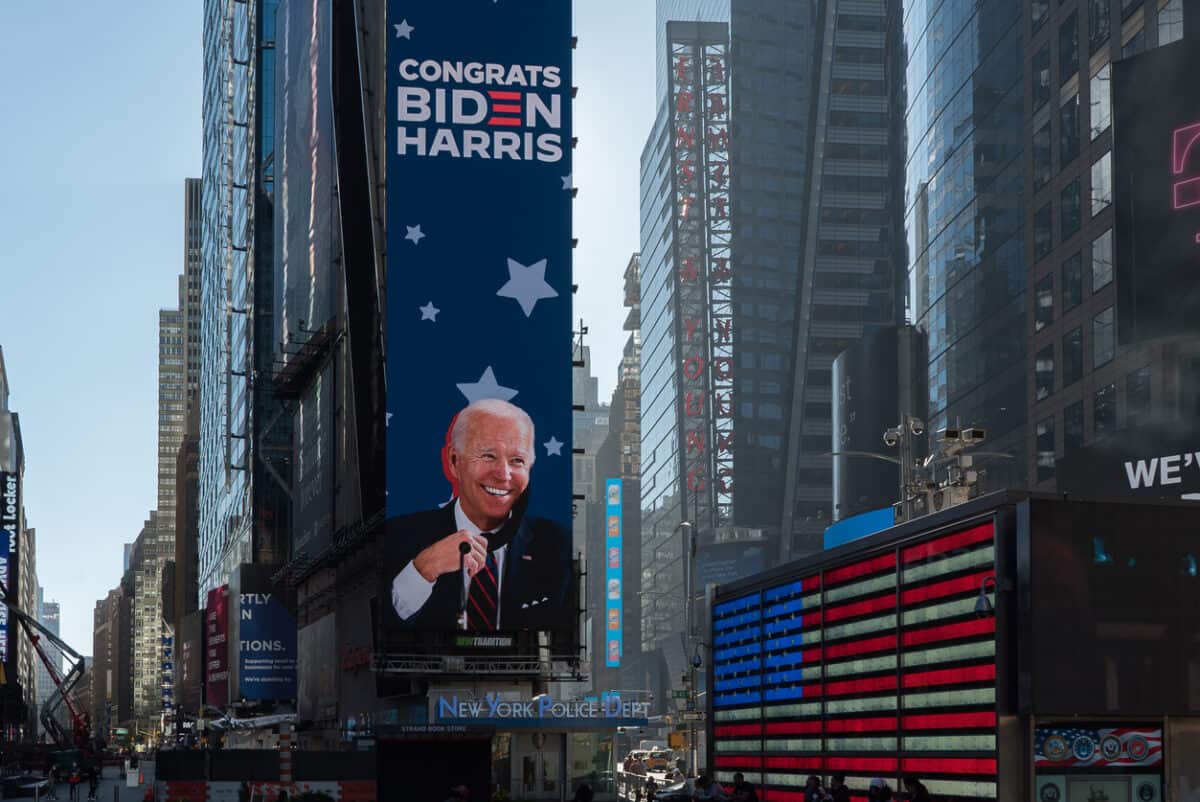
Biden reverses Trump’s position on workplace safety

It is fair to say that the term of office for President Trump was not supportive of occupational health and safety (OHS). Former President Trump did not seem to see the need for OHS regulations and his attitude to the COVID-19 pandemic meant that it would never be considered as an occupational disease. Reports over the last week in the United States media, and the issuing of an Executive Order, indicate that new President Biden values workplace health and safety.

The New York Times (paywalled) is reporting that

“President Biden directed the Occupational Safety and Health Administration [OSHA] on Thursday to release new guidance to employers on protecting workers from Covid-19.
In one of 10 executive orders that he signed Thursday, the president asked the agency to step up enforcement of existing rules to help stop the spread of the coronavirus in the workplace and to explore issuing a new rule requiring employers to take additional precautions.”
Subscribe to SafetyAtWorkBlog to continue reading.
Subscribe Help
Already a member? Log in here

Wilde about Industrial Manslaughter

Many people are sick of the issue of Industrial Manslaughter because it has seemed to dominate the discussion of occupational health and safety (OHS) and taken the focus away from harm prevention reforms on silica, mental health and others. However, Industrial Manslaughter (IM) continues to be raised in Australian Parliaments. In December, Shadow Minister for the National Disability Insurance Scheme & Government Services, Bill Shorten, reminded us of some of the arguments in favour of Industrial Manslaughter laws and penalties.

Subscribe to SafetyAtWorkBlog to continue reading.
Subscribe Help
Already a member? Log in here

Lindstrom, Common Sense and OHS

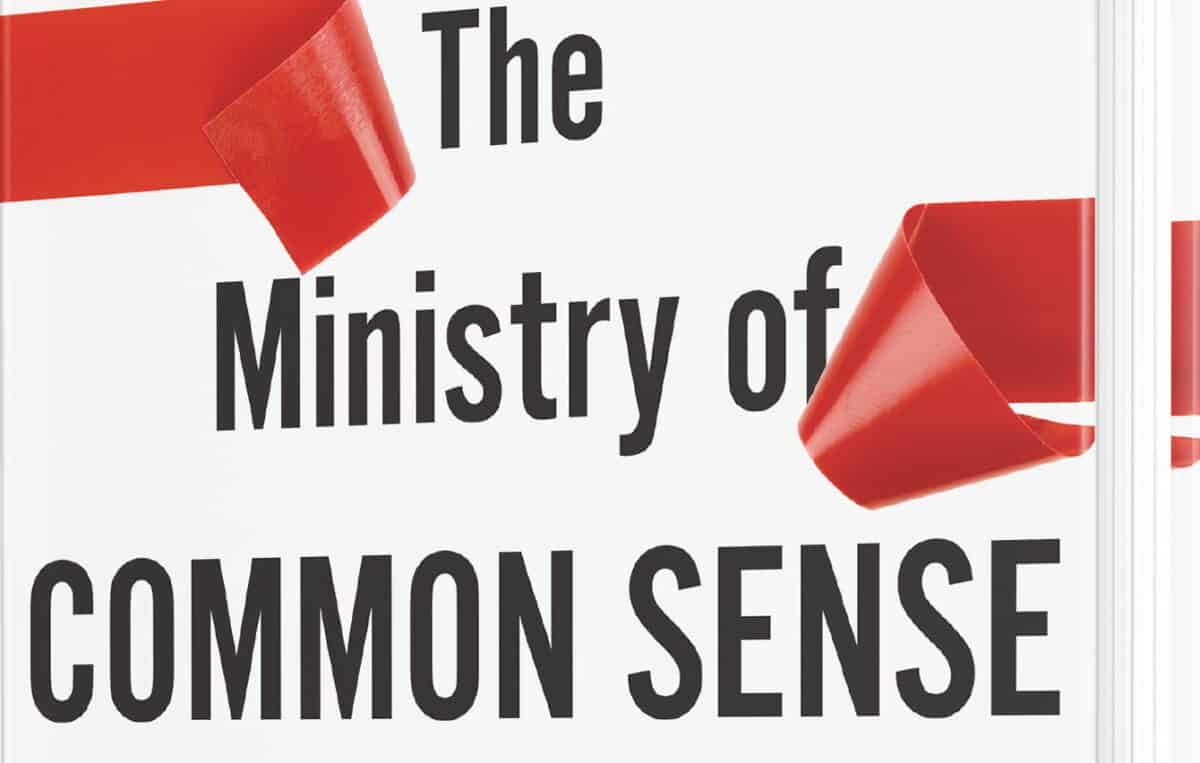
I found Martin Lindstrom’s latest book, The Ministry of Common Sense, very funny, then anger replaced funny and I had to put down the book and come back to it later. The book is excellent but all the examples of corporate nonsense that Lindstrom provides can be overwhelming. It also contains dozens of examples that are very close to my own experience and, in many cases, nonsense that I have created or supported when advising clients about occupational health and safety (OHS). SafetyAtWorkBlog asked Lindstrom about how Common Sense fits with OHS.

Subscribe to SafetyAtWorkBlog to continue reading.
Subscribe Help
Already a member? Log in here

You cannot have a future of work without a past

It seems like every other day there is an article online or in the press about the “future of work”. One I noted this morning is a two-minute video posted by Human Tech. The odd thing is that the future the speaker, Blake McGowan, discusses is very familiar, but is more about the past and the present than the future and it is very difficult to progress if you don’t acknowledge the history.

Subscribe to SafetyAtWorkBlog to continue reading.
Subscribe Help
Already a member? Log in here

Interesting? Yeah. Useful? Nah.

The last six months have seen a spate of marketing surveys about the impact of COVID19 on workplaces as well as the secondary consequences, such as mental health. On 18 January 2021, The Australian Financial Review (AFR) published an article based on one of these types of surveys conducted by the “work management platform Asana” which claimed:

“Almost three-quarters of Australians suffered burnout last year and the average office worker’s overtime nearly doubled from 236 hours in 2019 to 436 hours, a global study of more than 13,000 office workers reveals.”

This is inaccurate.

Subscribe to SafetyAtWorkBlog to continue reading.
Subscribe Help
Already a member? Log in here

Culture, greed and safety heckles

More business “gems” from the Australian Financial Review (AFR).

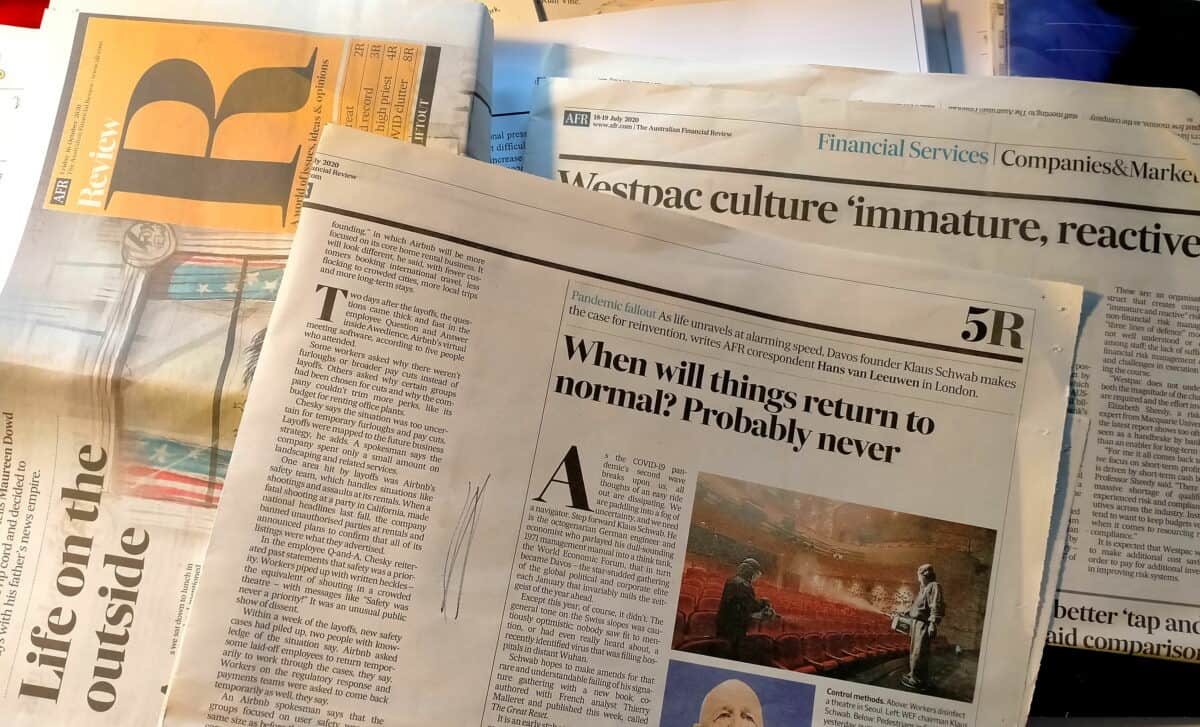
The potential for corporate change from Australia’s Royal Commission into Misconduct in the Banking, Superannuation and Financial Services Industry is fading fast. Back in July 2020, the Australian Financial Review (AFR) reported on an investigation by the Australian Prudential Regulation Authority (APRA) that found, according to the AFR’s headline, that Westpac bank’s culture was immature and reactive.

Safety culture, or an organisational culture that integrates safety, has been a running theme in Australian occupational health and safety (OHS) circles for several decades now but it has rarely gained traction. Partly this is due to the distraction presented by corporate wellbeing programs which address symptoms of ill-health and un-safety and provide a comfortable excuse for company executives who can then claim some action even if the results are dubious.

Subscribe to SafetyAtWorkBlog to continue reading.
Subscribe Help
Already a member? Log in here

Mandatory COVID19 vaccinations? Yep.

Each Monday in January 2021, workers are returning to workplaces, worksites, and offices, often with regret that the Christmas/New Year break was not long enough. This year their return is complicated by concerns about COVID19.

The major talking point, at least in Australia, is “can an employer force a worker to be vaccinated as a condition of returning to work?” and the answer seems to be “Yes”.

Subscribe to SafetyAtWorkBlog to continue reading.
Subscribe Help
Already a member? Log in here