Reopening challenges are more like manageable inconveniences

Many Australian workplaces will be reopening in the next few weeks.  Their productivity capacity will change, their workplaces, will change and their approach to, and understanding of, occupational health and safety (OHS) will need to change.  But there are signs that some business owners and employers are embracing risk and safety in this new operating climate but there are others who are either denying the changes needed, are struggling to think creatively, are ill-informed or are stupid.  Most of these realities were on display in a single edition of the Australian Financial Review (AFR) on May 8, 2020 (paywalled) – the primary source for this article.

The timing of the newspaper edition is important as it was published on the morning before the Prime Minister, Scott Morrison, and Chief Medical Officer, Brendan Murphy, revealed the decisions of the National Cabinet. A further blog article will be produced on those decisions shortly.

Lifts and Whinging

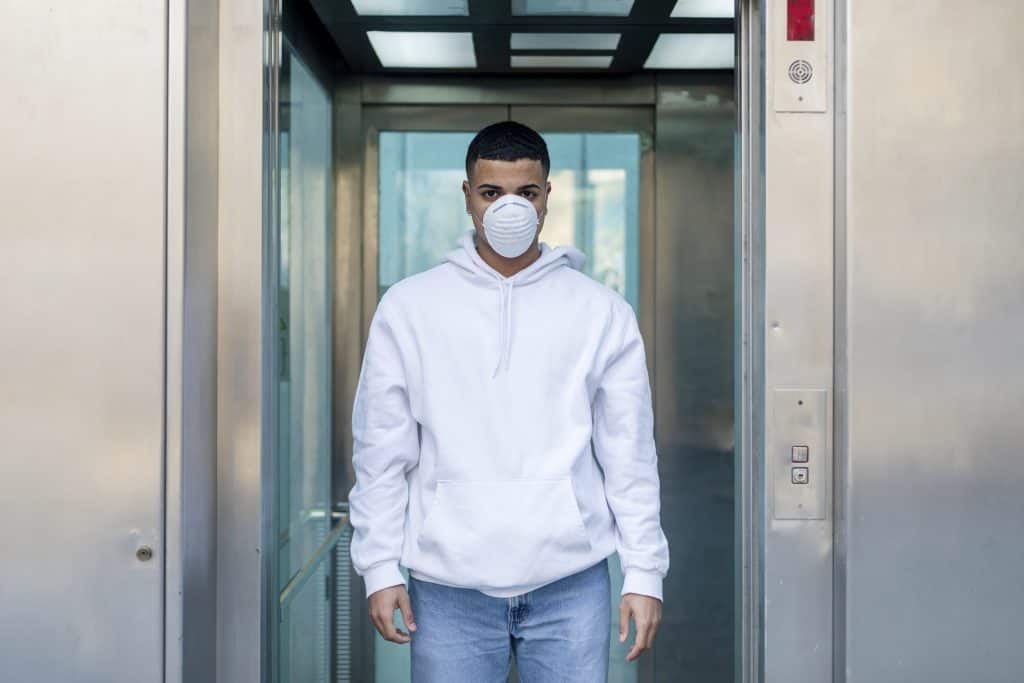
The AFR front page carried a short story called “Elevated risks in office lifts” that shows the deficiencies of several thought processes mentioned above.
Subscribe to SafetyAtWorkBlog to continue reading.
Subscribe Help
Already a member? Log in here

Dave Clarke

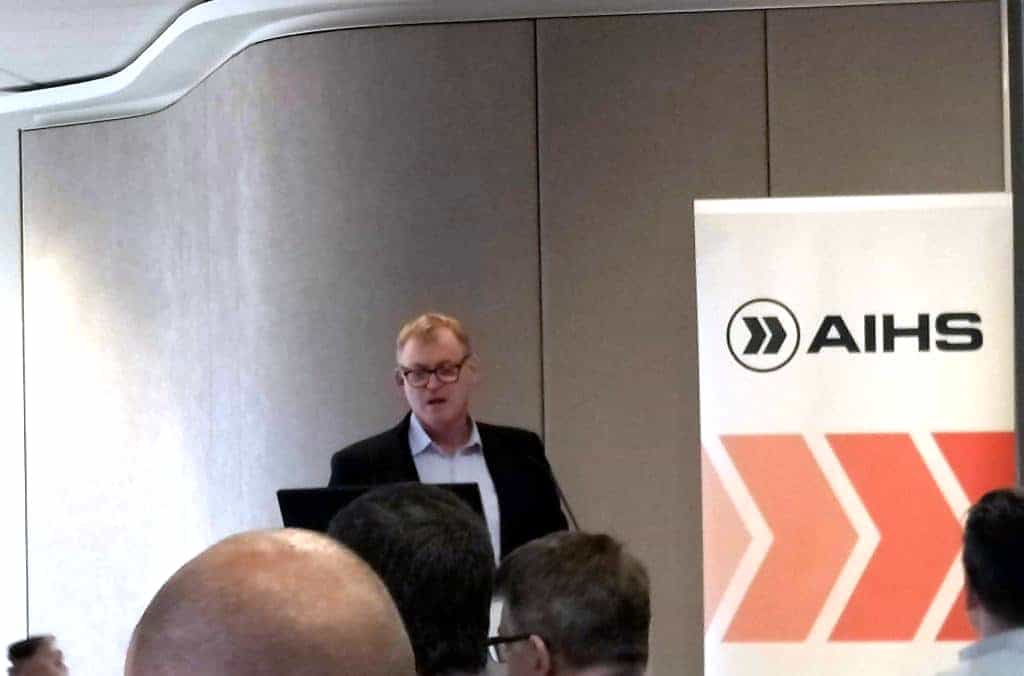
One indication that the Australian Institute of Health and Safety (AIHS) is a different beast to the Safety Institute of Australia is the willingness for its CEO, David Clarke, to speak honestly about occupational health and safety (OHS) issues. In early February 2020, Clarke spoke at a breakfast seminar about Australian Standards, “the false promise of harmonisation”, engagement and leadership.

Subscribe to SafetyAtWorkBlog to continue reading.
Subscribe Help
Already a member? Log in here

OHS, organisational culture, sex abuse and the Catholic Church

The discussion of “organisational culture” has tried to remain apolitical or amoral, but it always relies of case studies to illustrate the academic and ephemeral. Largely these studies involve major disasters, but few people work in heavy industry, chemical plants, or offshore oil rigs. Better examples could be sought by looking at other industries, such as the Catholic Church. (I really hope someone is examining this relationship in a PhD)

Subscribe to SafetyAtWorkBlog to continue reading.
Subscribe Help
Already a member? Log in here

Trying to make the horse drink

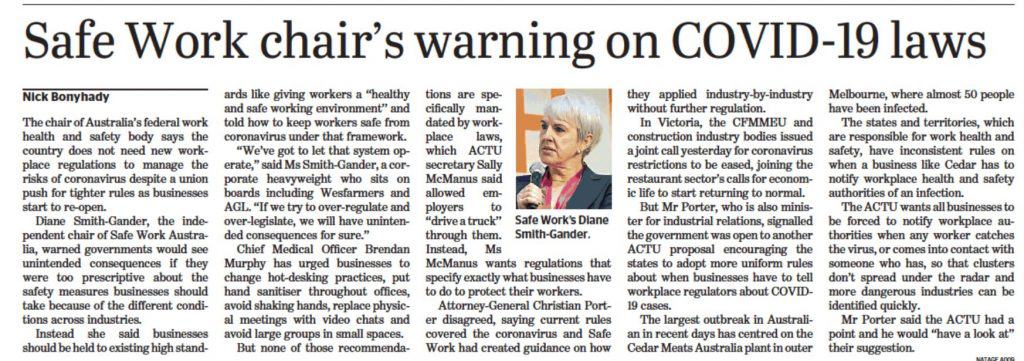
The discussions about occupational health and safety (OHS) and its relevance to COVID19 has finally touched the mainstream media with an article in The Age newspaper on May 7, 2020. The article is largely a reiteration of statements made by the Australian Council of Trade Unions (ACTU) and the Minister for Industrial Relations over the last few days but it is the first time that Safe Work Australia (SWA) has joined in.

The Chair of Safe Work Australia, Diane Smith-Gander has stated that additional regulations may have unintended consequences. She is quoted saying:

“We’ve got to let that system operate,… If we try to over-regulate and over-legislate, we will have unintended consequences for sure.”

Subscribe to SafetyAtWorkBlog to continue reading.
Subscribe Help
Already a member? Log in here

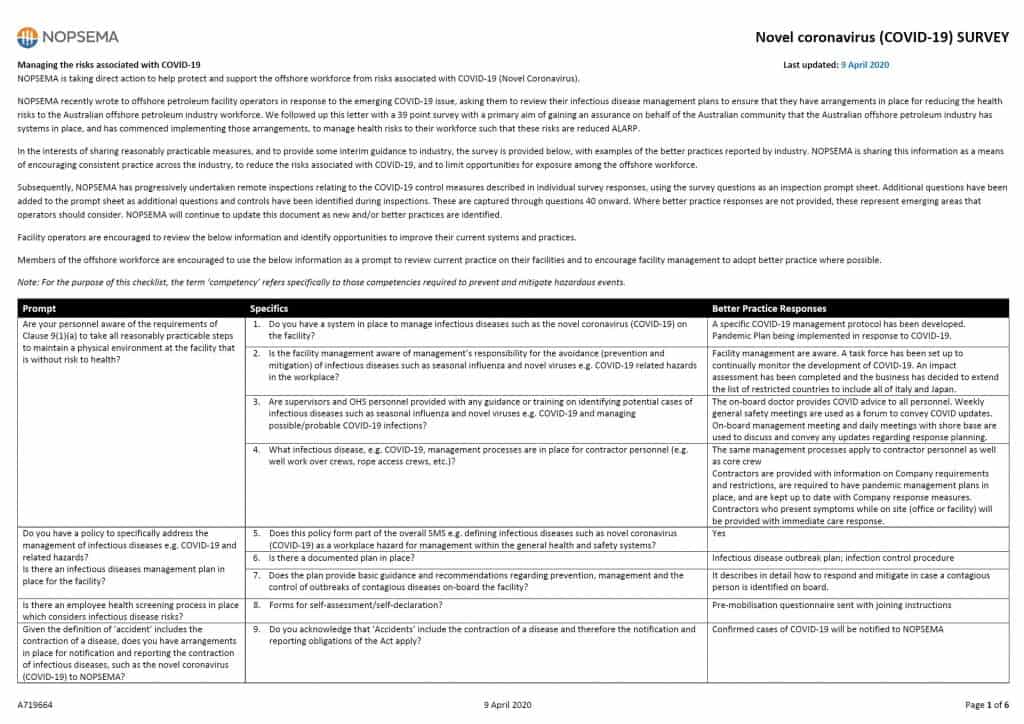
COVID19 checklist used by NOPSEMA

It has been assumed that Australian businesses that have continued to operate during the COVID19 pandemic have been maintaining their occupational health and safety (OHS) audits and assessment; and that the safety regulators have been inspecting workplaces. On May 6 2020, the National Offshore Petroleum Safety and Environmental Management Authority (NOPSEMA) released the findings of

“…a series of remote COVID-19 specific inspections, confirming operators of offshore facilities are equipped with adequate arrangements for protecting workers from infectious diseases such as COVID-19.”

The findings are interesting but perhaps of more interest is the questions that were asked and how the answers were verified.

Subscribe to SafetyAtWorkBlog to continue reading.
Subscribe Help
Already a member? Log in here

Political update on OHS and COVID19

Although most of the Australian media has focussed primarily on the economic statements of the Prime Minister and Treasurer on May 5 2020, there are several statements related to occupational health and safety (OHS) and COVID19 made today that are of note in developing an OHS voice for the future.

The Secretary of the Australian Council of Trade Unions (ACTU) Sally McManus spoke on breakfast TV saying:

“First of all that workplace laws were never invented for a pandemic so we’ve got to update them so that we can make sure there’s social distancing everywhere.”

Subscribe to SafetyAtWorkBlog to continue reading.
Subscribe Help
Already a member? Log in here

OHS and Anne Wyatt

Dr Anne Wyatt is an established occupational health and safety (OHS) professional with a particular interest in workplace psychological hazards. Some time ago she wrote Preventing Workplace Bullying with Dr Carlo Caponecchia.

Anne is the latest person to humanise OHS by providing an insight into her personal and professional thoughts to SafetyAtWorkBlog.

How did you get into Health & Safety?

It all happened very suddenly – in a matter of hours. In 1979 I was working as a nurse in an Intensive Care Unit (ICU). Tragically, one day we had a lovely young man die a horrible death as a result of a preventable workplace accident. I was very angry that we had seen yet another death from a workplace accident and I vented my feelings to a nearby anaesthetist. He looked me in the eye and told me that I did not belong in ICU, that he considered my real passion lay in prevention. He was right.

Continue reading “OHS and Anne Wyatt”