
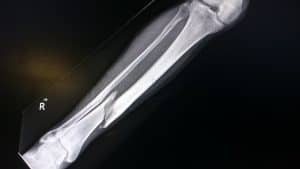
 On November 9 2017, the Australian Institute of Health and Welfare (AIHW) released statistical data on work-related injury. This data included statistics from workers compensation but also statistics about hospitalised injuries that were identified as work-related but funded by sources other than workers’ compensation. The report also provides a different perspective on mental health.
The evidence on occupational lung diseases remains inadequate
 Workplace injury statistics are always less than reality as they are based on the number of workers’ compensation claims lodged with occupational health and safety (OHS) regulators or insurance agents. The nature of occupational illnesses is that there may be many years before their presence is physically identified making them more contestable by insurers and less likely to appear in compensation data. The frustration with this lack of data was voiced on November 13 2017 in an article in the Medical Journal of Australia (not publicly available).
A summary of the research article includes this alarming statistic:
“Occupational exposures are an important determinant of respiratory health. International estimates note that about 15% of adult-onset asthma, 15% of chronic obstructive pulmonary disease and 10–30% of lung cancer may be attributable to hazardous occupational exposures.”
Workplace flexibility in the future
 On 1 June 2015 Australia’s Radio National broadcast a discussion about the
What do Weinstein, Spacey and others have to do with OHS?
“Then I went, ‘Oh hang on, I’ve normalised so much of this as part of my industry…. This last three months has really made us all take a long hard look at what we have even let ourselves think is acceptable.” – Sacha Horler

Such a statement is familiar to those working in the field of occupational health and safety (OHS). This normalisation, or habituation, has underpinned much of the discussion of what builds a safety culture – “the way things are done round here”. As a result of revelations and accusations pertaining to Gary Glitter, Rolf Harris, Jimmy Saville, Robert Hughes, Harvey Weinstein, and Kevin Spacey, the entertainment industry around the world has been forced to assess the fundamental ethics on which sections of its industry are based. Continue reading “What do Weinstein, Spacey and others have to do with OHS?”
Improve the profession by improving the professionals
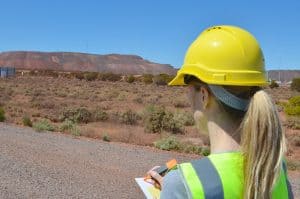 The occupational safety profession (OHS) in Australia is often described as being populated by older white males, as being dull and ill-informed. This perception has generated offshoots such as Women in Safety and Health, and Young Safety Professionals (YSP) with similar actions occurring in many other professions. It is easier than ever to develop professional groups that better address one’s needs but this can miss out on opportunities to change those older white males who are prepared to listen and learn.
These subgroups can often be more innovative than the larger profession events, partly because they are smaller, but also because their audience has different expectations and capacities. Recently
The Safety Anarchist
 Professor Sidney Dekker has a new book out called “The Safety Anarchist –
Relying on human expertise and innovation, reducing bureaucracy and compliance“. Last month Sidney spoke exclusively with SafetyAtWorkBlog about the issues of governance, risk assessment, the safety profession, bureaucracy, centralisation and the cost of compliance. The full conversation is available at the Safety At Work Talks podcasts and below.
Latest safety culture report on construction has lessons for all
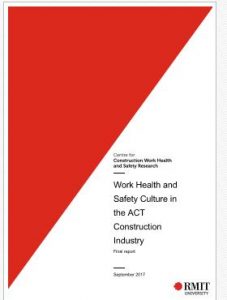 In 2012, the Australian Capital Territory (ACT) government undertook a review of safety in its construction industry and produced a report called “Getting Home Safely“. In early 2017, the Government contracted RMIT University to review the construction sector’s work health and safety culture in the aftermath of the 2012 report and government actions since them. The September 2017 report was only recently made public.
The RMIT University report includes a very good and super-current discussion about safety culture and safety climate but its findings are of limited help in improving OHS performance in the construction sector.