
Trade Union Royal Commission affects OHS credibility

Whether one believes that the Royal Commission into Trade Union Governance and Corruption is a political witch-hunt or a genuine attempt to clean up a corrupt industry sector, the Royal Commission seems to have revealed an abuse and exploitation of occupational health and safety (OHS) – an exploitation that has received next to no attention. The release of the Commission’s interim report allows for a quick analysis of this situation.

Former Prime Minister Julia Gillard was a particular target of the Commission in relation to a “slush fund” established by her then-boyfriend, Bruce Wilson, commonly referred to as the “AWU affair“.  The “slush fund”, known as the Australian Workers Union Workplace Reform Association, was developed, according to Gillard

“… to support the re-election of union officials who would campaign for workplace reforms including better occupational health and safety.” (Interim Report, Vol 1, page 99)
Subscribe to SafetyAtWorkBlog to continue reading.
Subscribe Help
Already a member? Log in here

New book on pipeline safety has OHS lessons for all

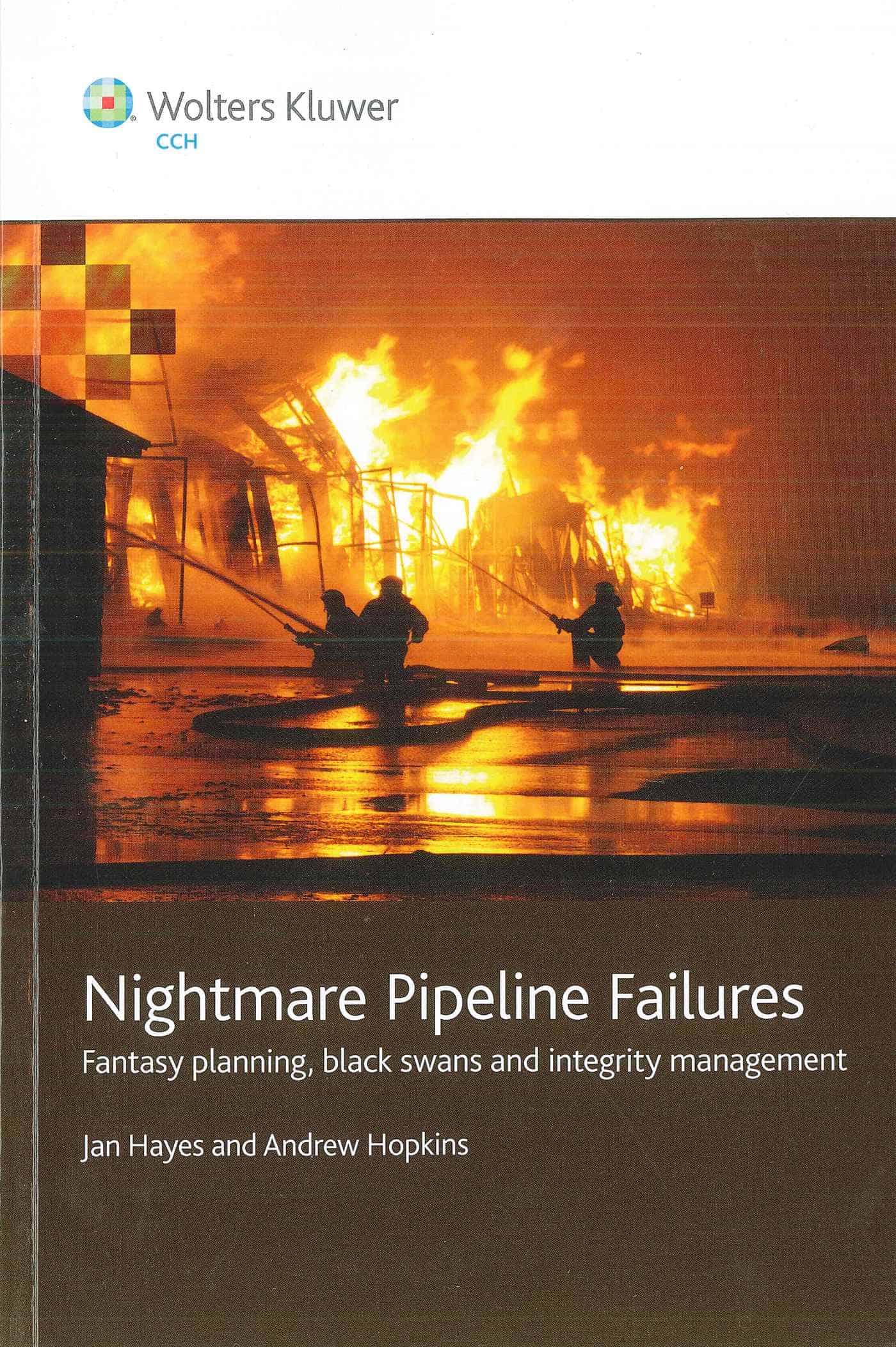
Hopkins Hayes Book CoverAny new book by Andrew Hopkins is a cause for excitement.  The latest book co-written with Associate Professor Jan Hayes* focusses, primarily, on two pipeline disasters in the United States but has sufficient information and thoughts for those OHS professionals outside this sector and jurisdiction.

Nightmare Pipeline Failures: Fantasy planning, black swans and integrity management” is a typically slim volume written in Plain English that benefits from the broad knowledge of its authors.  Readers of Hopkins’ early books will get all of the cross-references.  In some ways, this book can be seen as almost a case-study of Hopkins’ work on mindfulness and high-reliability organisation, as the themes of management perspectives, activity and decision-making occur repeatedly in this book. Continue reading “New book on pipeline safety has OHS lessons for all”

Queensland’s workers’ compensation performance is “double plus good”

The Queensland Premier, Campbell Newman, called a “snap” election for the end of January 2015. On 11 January 2015, Newman tweeted:

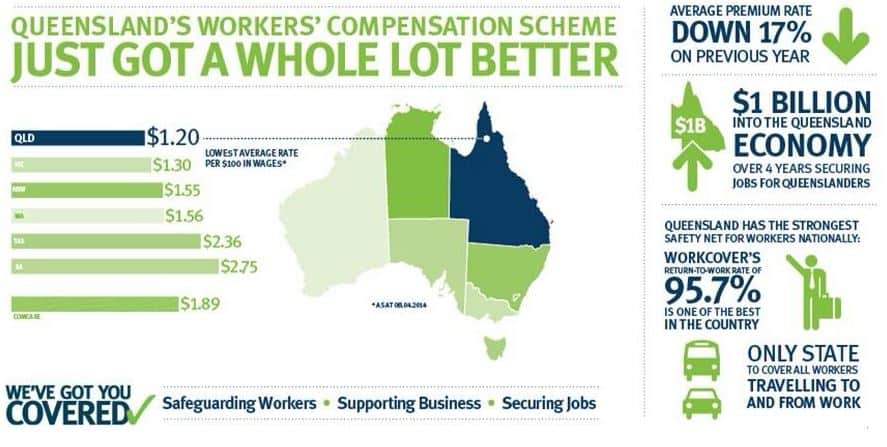
“Queenslanders injured at work are covered by Australia’s strongest workers’ compensation scheme.”

This is a further example of political newspeak as what does a “strong” workers’ compensation scheme look like? Newman’s tweet included an image that provides some clarity to his claim.

LNP WC Twitter graphic Continue reading “Queensland’s workers’ compensation performance is “double plus good””

FOI request for cost of introducing WHS laws fails again

Last year SafetyAtWorkBlog reported its failure at gaining the release of the Victorian Government’s full cost analysis of the introduction of the national Work Health and Safety laws.  In November 2014 the Victorian Government changed from conservative Liberal to traditionally more worker-friendly Labor Party.  So I submitted another request, with the same result, the report…

Subscribe to SafetyAtWorkBlog to continue reading.
Subscribe Help
Already a member? Log in here

Political statements on OHS need to be tested

Today Australia’s Employment Minister, Senator Eric Abetz, released a statement concerning a change to the renewal of Comcare licences in the spirit of reducing business red tape but there are two mentions of workplace safety that are curious.

In the statement entitled “Comcare self-insurance licence change“, Senator Abetz has welcomed:

“…a reform that will see businesses save more than $1 million a year which can be reinvested in Work Health and Safety and jobs.”

and states

“This reform will reduce the regulatory burden, remove the cost of licence extensions in years two and four, and push back the costs of audit until year eight as well as ensure safer workplaces.”

The argument on reducing OHS red tape is that the cost savings can be reinvested into occupational health and safety measures but there seems to be no independent evidence to support this belief.

Subscribe to SafetyAtWorkBlog to continue reading.
Subscribe Help
Already a member? Log in here

Media tips for Australian OHS professionals

The occupational health and safety (OHS) profession in Australia has suffered from the lack of a public voice.  This is partly due to ineffective and disorganised professional associations but more it is due to fear – fear of embarrassment, fear of ridicule, fear of failure….  This is peculiar because a fundamental element of OHS is communication.  Below is some information from an Australian journalism textbook that may help reduce some of that fear.

Code of Ethics

The Media Entertainment and Arts Alliance (ie. the journalists’ “union” in Australia) publishes a Code of Ethics. (Similar organisations round the world have equivalent documents and obligations)  This is vital information for any journalist but also important for those who want to engage with the media, perhaps through interviews.  For instance, on the use of sources, the Code says

“Aim to attribute information to its source.  Where a source seeks anonymity, do not agree without first considering the source’s motives and any alternative attributable source.  Where confidences are accepted,  respect them in all circumstances.”

Continue reading “Media tips for Australian OHS professionals”
