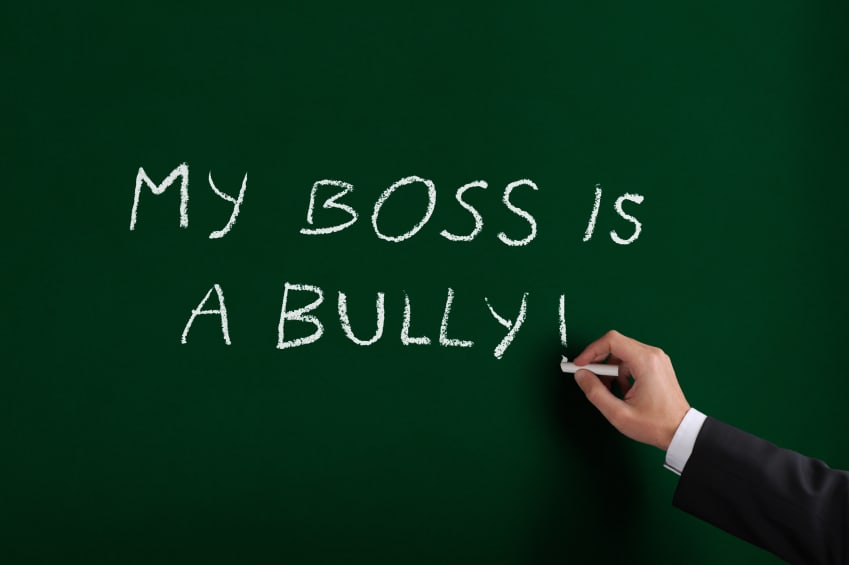
New workplace bullying laws generate heated debate

Today Australia hosts a No2Bullying conference.  It is a timely conference as the debate on Australia’s changes to the Fair Work Act in relation to workplace bullying heats up.

Lawyer Josh Bornstein is particularly critical of the politicisation of the amendments and believes this increases the instability or remedies available to victims of workplace bullying by increasing pressure on under-resourced OHS regulators.

The amendments are unlikely to reduce the incidence of workplace bullying in Australia as they address post-incident circumstances.

As the new legislation is being passed through Parliament, the industrial relations, political and legal context will dominate the media, Continue reading “New workplace bullying laws generate heated debate”

Prevention of harm is lost in the debate over workplace bullying

This week in Australia the conservative Liberal Party released its much-anticipated industrial relations policy.  Most commentary is that the policy is thin but in terms of occupational health and safety, the Liberal Party is supportive of the changes made concerning workplace bullying.  Sadly, the commentary is often lazy.

VWA+0518+28x5+Bullying+A3+PosterMedia Misunderstanding

One example of a careless  headline is in the Herald Sun newspaper for 11 May 2013, “$20 million Budget boost to stop workplace bullying“.  The Australian Government’s changes to the Fair Work Act do not prevent bullying, it only provides further options for remedy.  OHS is principally about preventing harm and the Fair Work Act changes do not help in this aim. Continue reading “Prevention of harm is lost in the debate over workplace bullying”

National Workers Memorial opens

Yesterday Australia opened its National Workers Memorial in Canberra.  The Workplace Relations Minister  Bill Shorten, spoke at the ceremony with, largely, an edited and reduced version of the speech he presented in Brisbane earlier last week.  The Canberra speech dropped  all the ANZAC Day references and spoke about the importance of remembering.

“By erecting this monument, we tie the lives and memories and families of thousands of Australians to this place.  We stand here in this place as a mark of respect from a civilised community as an expression of failure and regret.  That’s what all memorials are, and this one is no different.  This is a symbol of the mourning for those lost too early from our tribe Australia.” Continue reading “National Workers Memorial opens”

OHS would benefit from a historical perspective on workplace bullying

Every year, around this time, the mainstream media reports on the findings of employee surveys of the Victorian public service. Each year the statistics on workplace bullying are featured.  (The Age newspaper reported on the latest survey on 31 March 2013.)  But the approach to an understanding of workplace bullying has changed over the last fifteen years or so.  A brief look at the March 2001 Issues Paper on workplace bullying, released by the Victorian Workcover Authority (VWA), is useful to illustrate the degree of  change but also the origin of some of the contemporary hazard control themes.

Cover of Bullying Issues PaperThe VWA Issues Paper was always intended to lead to a formal Code of Practice but due to belligerence from various industry bodies, no code eventuated and Victoria had to make do with a guidance note.  This effectively banished workplace bullying to a nice-to-manage rather than an essential element of modern management.  Significantly, Safe Work Australia intends to release a model Code of Practice on workplace bullying shortly. Perhaps the employer associations’ attitudes have mellowed.  Perhaps it is the decline of trade union influence since 2001.

The Issues Paper roughly defines workplace bullying as:

“…aggressive behaviour that intimidates, humiliates and/or undermines a person or group.” Continue reading “OHS would benefit from a historical perspective on workplace bullying”

An OHS look at the Australian Labor Party’s National Platform

Cover of National Platform 2011 ALPThe leadership squabbles in the Australian Labor Party (ALP) have diminished  for the moment, and the next Federal election is set for September 2013.  Most everyone is tipping the ALP to lose the election.  The verb “lose” is specifically chosen, for the opposition Liberal/National coalition will probably win “by default”.  Whatever the electoral outcomes, the major political parties in Australia have current positions and policies on workplace safety.  Six months out from an election, it may be worth looking at those policies, as they currently stand. The first is that of the ALP.

The ALP has an extensive National Platform that was presented at its National Conference in 2012.  Below are some of the statements from that document as they pertain to occupational health and safety (OHS).  Some commentary is offered on these statements.

“The Labor Government places the highest priority on worker safety, particularly miner worker safety.” (page 42) Continue reading “An OHS look at the Australian Labor Party’s National Platform”

Latest review into workers compensation provides OHS clues

Cover of src_act_review_reportThe Australian Government has released its report into a review of its national workers’ compensation scheme, Comcare, and the Safety, Rehabilitation and Compensation (SRC) Act.  Some of the media (and politicians), as it often does, has focused on the seemingly absurd compensation claims.  Few cases have gained the same degree of national and international attention as the sex case for instance, and although most workers’ compensation reports focus on post-incident treatments, there is a glimmer of  hope on occupational health and safety (OHS) in this latest review.

The report, the latest undertaken by Peter Hanks QC, states that one of the guiding principles of the SRC Act should be an acknowledgement that

“The benefit and premium structure should promote incident prevention and reduce risk of loss.” (page 25)

This would be a wonderful benchmark to apply but is likely to be overshadowed by the compensation and rehabilitation issues of the review, unless OHS professionals and practitioners continue to remind regulators that prevention is better than cure.

Peter Hanks admits in a 2012 video interview on his review that injury prevention is not part of the terms of reference but there are elements of his report that require serious consideration by OHS professionals in consultation with their Human Resources (HR) colleagues. Continue reading “Latest review into workers compensation provides OHS clues”

Australian Government shifts workplace bullying into the industrial relations system

Politicians are sufficiently media-savvy to release policies and information to gain the maximum exposure in the media cycle.  For some reason, Australia’s Workplace Relations Minister, Bill Shorten, missed the opportunity to have his changes on workplace bullying in the newspapers for 12 February 2013.  The news cycle is also being dominated by the resignation of Pope Benedict.  However Shorten’s response to the Parliamentary Inquiry into Workplace Bullying deserves detailed analysis.

??????????????????????????????????Shorten is bringing the investigation of workplace bullying cases under the Fair Work Commission.  There are likely to be complex consequences of this decision, a decision that is clearly the Minister’s as the Parliamentary Inquiry made no clear recommendation on the location of the “new national service”.

“The Committee did not receive evidence on where such a service [“a single, national service to provide advice to employers and workers alike on how to prevent, and respond to workplace bullying” 5.51, page 136] should be located.  It might be best situated within an existing government agency or department such as Safe Work Australia, the Fair Work Ombudsman or the Department of Education, Employment and Workplace Relations.  It may also be considered appropriate for the service to be an independent body that is funded by the Commonwealth. Consequently, the Committee does not have a clear recommendation as to where the new national service may sit.” (Section 5.58, page 138)

Clearly Shorten’s announcement could easily have been “Minister rejects independent body on workplace bullying”.  The Minister should be asked about his reasons for not establishing an independent body into this important issue. Continue reading “Australian Government shifts workplace bullying into the industrial relations system”

Concatenate Web Development
© Designed and developed by Concatenate Aust Pty Ltd