
Whitlam’s dismissal diverted workers compensation reform

In October 2014, one of Australia’s Prime Ministers, Gough Whitlam, died at the age of 98.  Whitlam introduced major social reforms, many which still exist today (just).  One reform he valued but was not able to achieve was a national accident compensation scheme. It is worth noting when reading of the current economic and moral arguments over workplace responsibility and over-regulation that Whitlam’s national accident compensation scheme included workers compensation.

In 1974, during Whitlam’s time as the Prime Minister of Australia, the New Zealand government established a no-fault accident compensation scheme following the 1967 Royal Commission of Inquiry into Compensation for Personal Injury in New Zealand chaired by Owen Woodhouse.  Woodhouse was invited to assess the likelihood of a similar scheme being introduced in Australia.  He completed his inquiry (not available online) for such a scheme and legislation was drafted. The bill was in the Australian Parliament when the Whitlam government was dismissed by Governor-General John Kerr.  As a result of the political machinations of the Liberal Party of Australia, Australia missed the opportunity to have a national accident compensation scheme. Continue reading “Whitlam’s dismissal diverted workers compensation reform”
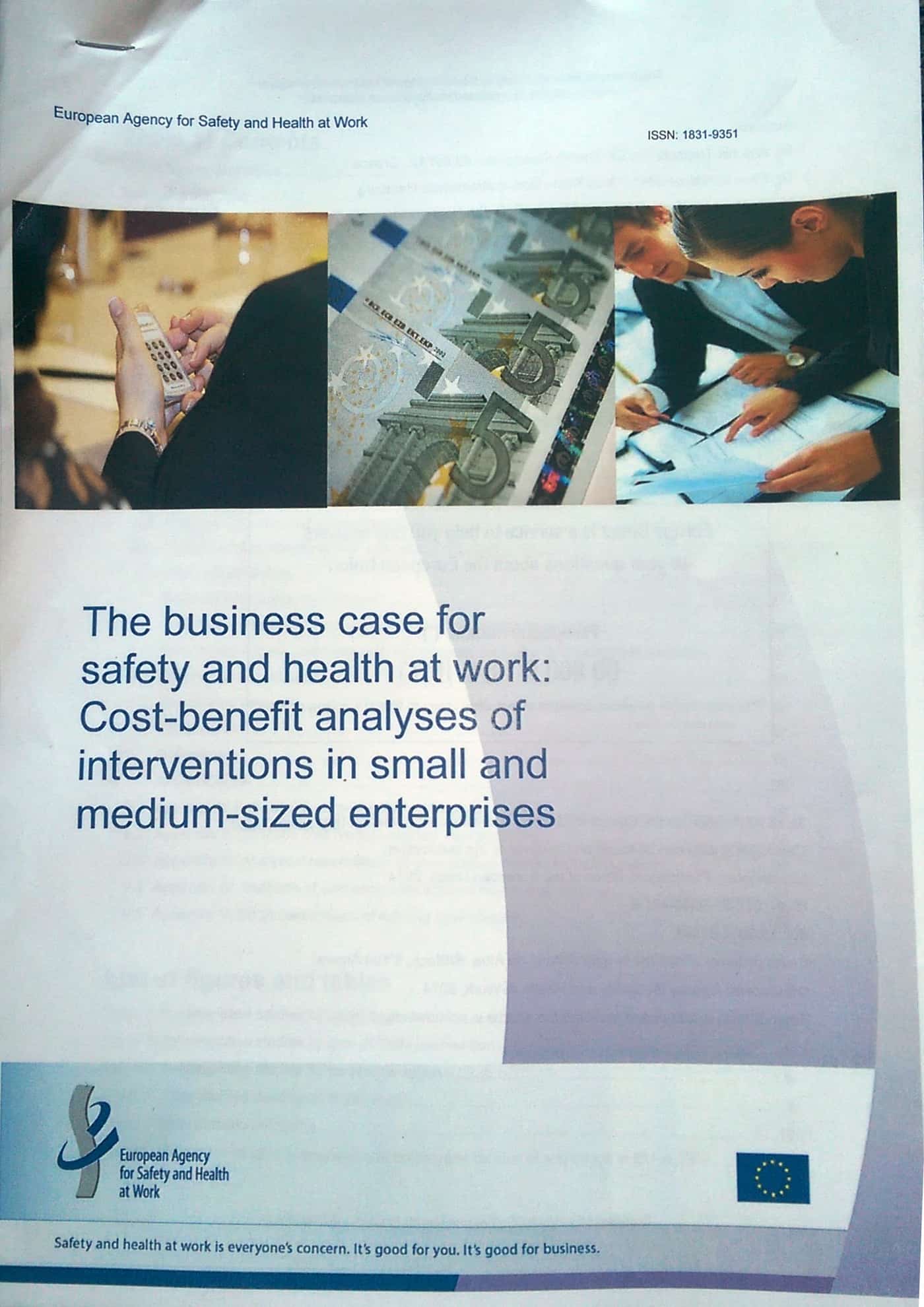
EU-OSHA releases a business case for safety and health at work

cover of The business case for safety and health at work-2One of the most ignored, but important, elements of occupational health and safety (OHS) management is the business case.  Work on this issue is being completed in Australia by Safe Work Australia but the European Agency for Safety and Health at Work (EU-OSHA) has beaten it to the punch by releasing “The business case for safety and health at work: Cost-benefit analyses of interventions in small and medium-sized enterprises“.  This document includes new case studies that provide detailed analysis of cost and return on investment from interventions as varied as a vacuum lifter for pavers to warm-up exercises and task assessments of domestic builders by qualified physiotherapists.

The report found that:

  • “Wide-ranging interventions appear to be more profitable than interventions targeting a particular
    issue related to the sector of the enterprise.
  • Interventions that mainly concern training and organisational change appear to be more profitable than interventions based on technical changes (such as introducing new equipment).
  • Interventions that include direct worker (participatory) involvement appear to be more profitable, regardless of whether or not increased productivity benefits are taken into account in the
    economic evaluation.
  • In most cases, the enterprises managed to estimate benefits related to increased productivity. It
    should be emphasised that increased productivity does not always come as a result of improved
    safety and health, but it is taken into account in the context of a business case.” (page 10)
Subscribe to SafetyAtWorkBlog to continue reading.
Subscribe Help
Already a member? Log in here

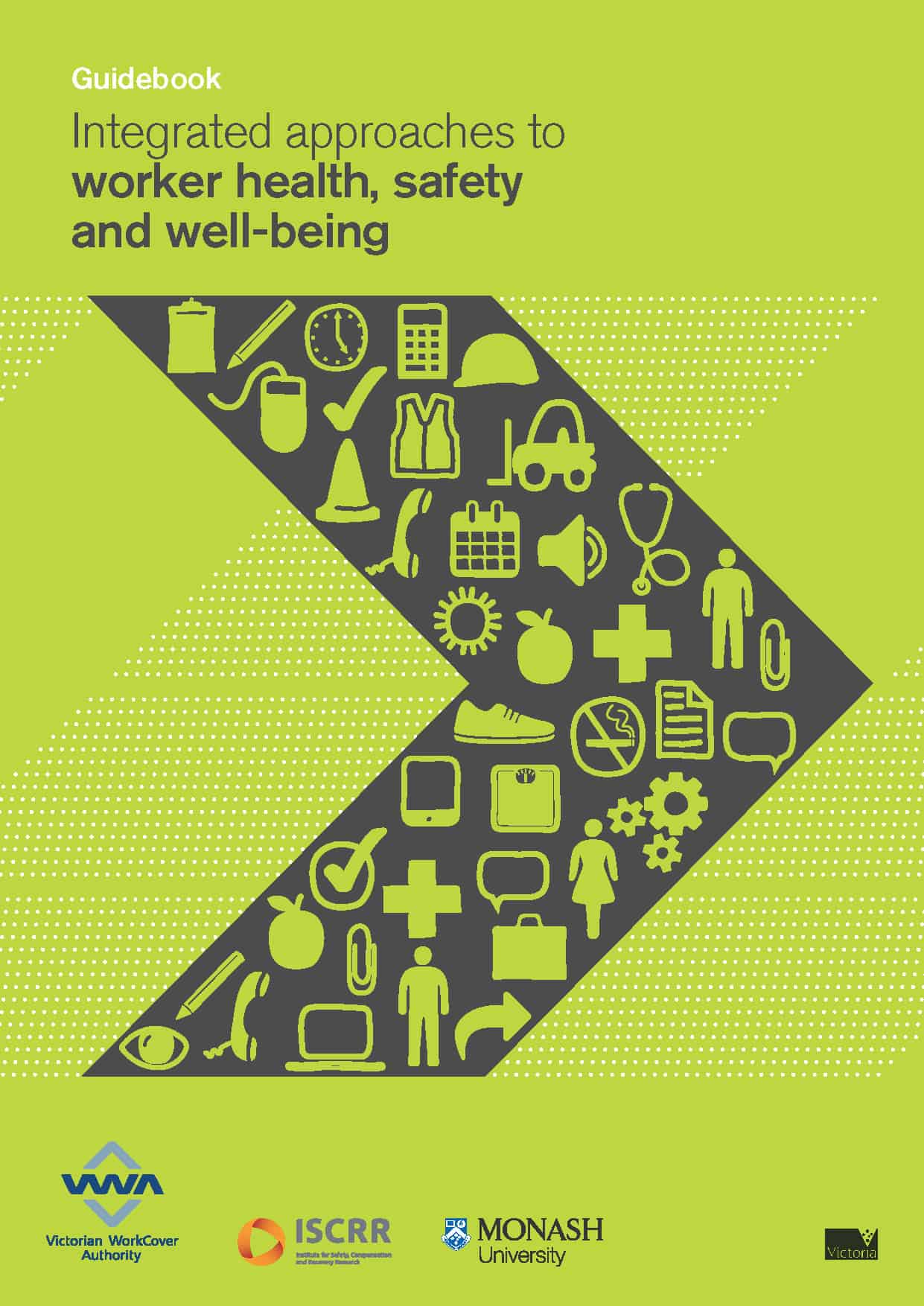
Integrated approach to OHS and wellbeing to be promoted in Australia

Cover from VWA_INTEGRATED APPROACH GUIDELINES_D3-2Later this month, the Victorian WorkCover Authority (VWA) will be releasing a document entitled “Integrated approaches to worker health, safety and well-being” (pictured right, but not yet available online).  It is intended to generate discussion on how to improve workplace safety performance by breaking down the walls of various disciplines, production processes, consultative silos and institutional or organisational biases.  This document builds on the overseas experience of the National Institute of Occupational Safety and Health (NIOSH – Total Worker Health program), the World Health Organisation (WHO – Healthy Workplace Framework) and others to provide an Australian context.

Those who are experienced in risk management principles may see little new in this approach and the publication’s success is likely to depend on how VWA explains the initiative and how its stakeholders, Victorian businesses of all sizes, accept the concept and believe it can work in their own workplaces.

Integration

The release of a publication advocating Integration implies that an unintegrated approach to safety management has been an impediment to change. This may be a surprise to risk managers and those who have been consulting broadly on OHS in their workplaces and those companies who have integrated systems managers with responsibility for Quality, OHS and Environment.

Subscribe to SafetyAtWorkBlog to continue reading.
Subscribe Help
Already a member? Log in here

What is workplace “mental wellbeing”?

The 2014 Annual Report of the Victorian WorkCover Authority (VWA) states a new initiative on workplace mental health:

“…a new direction for the VWA’s WorkHealth program has led to the Victorian Mental Wellbeing Collaboration. The VWA has invested in a tripartite collaboration with peak health promotion agencies VicHealth and SuperFriend to develop a range of evidence based tools and resources that will be tested and refined through industry leaders and made broadly available to Victorian workplaces.” (page 25, links added)

Two significant points in this statement are the development of a range of “evidence-based tools and resources” and the pledge to consult.  However what is meant by a tripartite consultation in this context is unclear as traditionally OHS consultation has included employer associations, trade unions and government regulators.  If health promotion agencies are included in this latest “tripartite collaboration”.  Will the employer groups or trade unions be dropped?  Consultation on any new OHS/wellbeing initiative should not be constrained in a tripartite combination.

One of the traps in this initiative is the potential confusion by terminologies.  “Mental health” is a well-understood term that is readily applied to the workplace by organisations such as the Western Australian Mental Health Commission who quotes the World Health Organisation

“…. good mental health is not simply the absence of a mental disorder. It is a state of wellbeing whereby an individual can realise their own potential, manage everyday stresses, work productively and contribute to their community.” (page 6)

Subscribe to SafetyAtWorkBlog to continue reading.
Subscribe Help
Already a member? Log in here

Technical and practical advice on applying the maturity matrix

Pages from d001323Corporate maturity, especially in the area of workplace health and safety, is an increasingly important consideration in determining the preparedness of an organisation to change and embrace OHS as a crucial element of its business operations.  There are several advocates of determining corporate maturity usually based around Hudson’s five levels of maturity, the most recent seems to be the Australian Constructors’ Association (ACA) in conjunction with RMIT University (see parts 8-7 of the document pictured below), but these tools are often aimed at the upper levels of an organisation.

Recently the Center for Construction Research and Training (CPWR) produced a series of handouts that apply a variation of the maturity matrix to separate components of safety culture.

These levels include:

  • Uninformed
  • Reactive
  • Compliant
  • Proactive
  • Exemplary.

Continue reading “Technical and practical advice on applying the maturity matrix”

A Declaration of lip service on OHS

Next month Australia hosts the G20 but there is always a lot of activity leading to this meeting and labour relations is part of that preparation.  In September 2014 the G20 conducted its Labour and Employment Ministerial meeting at which a Declaration was released that includes some occupational health and safety (OHS) information.  The Declaration is full of “weasel words” and “soft verbs” but it is worth noting so that the actions of governments on OHS in the future can be referenced, even though tangible results will be few.

On promoting safer workplaces, the Declaration states:

“Improving workplace safety and health is an urgent priority that protects workers and contributes to increased productivity and growth. We agree to take further steps to reduce the substantial human and economic costs associated with unsafe workplaces and work-related illnesses. We endorse the attached G20 Statement on Safer and Healthier Workplaces (Annex C), and we commit, as appropriate, to implement its recommendations in collaboration with governments, international organisations and social partners.”

If we were to deconstruct this statement, accepting that the paragraph is extracted from the labour relations context, the Australian Government, and other parties, does not accept that OHS is an “urgent priority”, only that improving it is.  Any government can prove that it is “improving” OHS even when controls are removed due to red tape reduction or by the ideological strategy of increasing employer control through increased flexibility.

Subscribe to SafetyAtWorkBlog to continue reading.
Subscribe Help
Already a member? Log in here

Book review: Business, Environment, and Society – Themes and Cases

Book coverAustralia’s Royal Commission into the Home Insulation Program (HIP) spent a great deal of time looking at the design of what started as an environmental initiative delivered in one way to an economic stimulus package delivered another way.  The HIP, and the people working with it, struggled to accommodate these changes.  A new book from Baywood Publishing in the United States, coincidentally, looks at the growth in ‘green jobs” and, among many issues, discusses how such jobs can affect worker health.

In “Business, Environment, and Society – Themes and Cases” Vesela R Veleva writes

“Green jobs, however, are not necessarily safe jobs, and, any of the current green technologies pose significant health and safety risks to workers.  A life-cycle approach and greater emphasis on worker health and safety is necessary when promoting future policies and practices. (Page 7)

The advantage of looking at the HIP inquiries as green jobs is that it provides a broader, even global, context to the scheme. Veleva writes:

“While there is no universally accepted definition of a green job, several organisations have proposed working definitions.  The United Nations Environmental Program defines a green job as “work in agriculture, manufacturing, research and development, administrative and service activities that contribute substantially to preserving and restoring environmental quality”…. The US Bureau of Labor Statistics defines green jobs as jobs involved in producing green products and services and increasing the use of clean energy, energy efficiency and mitigating negative impacts on the environment…” (page 9)

Continue reading “Book review: Business, Environment, and Society – Themes and Cases”

Concatenate Web Development
© Designed and developed by Concatenate Aust Pty Ltd