
Harsco’s safety award rescinded due to anomalies in injury claims data

The awarding of safety awards by government OHS authorities in Australia have needed reviewing for some time.  There remains inconsistencies on the openness of the judging processes and differences in award categories. In 2009, John Holland’s award nomination was withdrawn and now, according to the a video report on TV program Today Tonight in Adelaide, another safety award has been withdrawn.

According to the Today Tonight (click on SafeWork story on the left of the screen or in archives) South Australian manufacturing company Harsco has had its award withdrawn because the company fudged its safety performance figures.  The media release issued on 21 January 2011 by SafeWorkSA, the regulator managing the state-based awards, says:

“After careful consideration, the Panel has decided to rescind the award presented to Harsco Metals in the category of Private Sector Employer of the Year on the basis of anomalies in the interpretation and presentation of injury claims data made in the award entry.”

SafeworkSA is at pains to stress the ongoing integrity of the awards process but this action, emphasised by the attention given to the issue by Today Tonight, is a serious blow. Continue reading “Harsco’s safety award rescinded due to anomalies in injury claims data”

Safety rationalisation doesn’t end with an improving economy!

Guest contributor, Gerard May, writes

The economic circumstances an organisation finds itself in can greatly affect their approach to workplace health and safety.  Tough economic times are still ahead for some industries and organisations, while others who rationalised for survival through the global financial crisis will begin to prosper.  This article will delve into what may be happening to Occupational Health and Safety (OH&S) in organisations heading into both tough and improving economic times.  The economy will play a role.

Rationalisation in the manufacturing industry appears likely as the Australian Industry Group’s Performance of Manufacturing Index showed nine out of the 12 sub-sectors in the industry went backwards in December 2010[1].  Pricewaterhousecooper‘s (PwC) Australian-based global head of industrial manufacturing, Graeme Billings, recently stated,

“In the face of…declines in activity and the continuing slump in new orders, it is imperative that businesses continue to search for efficiencies, improvements and innovative approaches to their markets, products and business models[2].”

OH&S will surely be in the sights of rationalisation in the sector.

Continue reading “Safety rationalisation doesn’t end with an improving economy!”

Insurance company “fire-bomber” dies in custody

Almost 12 months ago, Paul Wayne Clarke “loaded a shopping trolley with jerry cans of fuel and set it alight inside a Darwin insurance office, injuring 15 people”.  Clarke died on 21 January 2011 after a failed suicide attempt whilst in custody.

On February 2010 media report provided a few details of Clarke’s circumstances:

“The bomber reportedly goes by the name “Bird” and is a former security guard who worked at a Darwin pub until being injured on the job in October 2007.

He allegedly blamed the insurer for loss of earnings that forced him to leave his three-bedroom home in Humpty Doo and move into a shipping container.”

The incident was enormously traumatic for the 15 staff and customers of the Territory Insurance Office (TIO) who were injured by the incident.

The Coroner will be investigating Clarke’s death but the motivation for Clarke’s initial actions against TIO will remain a mystery.  Continue reading “Insurance company “fire-bomber” dies in custody”

WorkSafe prosecutes Dept of Corrective Services and G4S

In June 2010 WorkSafe WA began investigating the 2008 death from heat stroke of 46-year-old aboriginal elder Mr Ward.  According to one media report :

“A broken air conditioner forced Mr Ward to endure temperatures above 50 degrees during the non-stop, four-hour journey to face a drink-driving charge in court.”

The same article noted that in June 2010 the Director of Public Prosecutions Joe McGrath announced that no charges would be laid against two security guards over the 46-year-old’s death.

On 19 January 2011, WorkSafe announced that it

“… will prosecute the State of Western Australia (Department of Corrective Services), government contractor G4S Custodial Services Pty Ltd (formerly GSL Custodial Services Pty Ltd) and the two drivers involved in the death of Mr Ward in January 2008.”

WorkSafe notes in its media release that

“A Coronial Inquest was completed in May 2009, with the State Coroner Alastair Hope concluding that all four parties [listed in the above quote] contributed to the death.” Continue reading “WorkSafe prosecutes Dept of Corrective Services and G4S”

Dust suppression innovation research

Many areas of Australia are flooded, sodden or just very wet in the middle of this Southern Hemisphere Summer.  Many workplaces had been expecting to be wetting down worksites and roadways to suppress the dust.  Instead the water carts are garaged due to mud.  But the environmental and occupational hazard of dust remains a hazard.

On 13 January 2010, it was announced that the Australian Coal Association Research Program will provide almost a quarter of a million dollars over two years to research the suppression of dust by synthetic means.  This is a good initiative and one that could benefit many mining and non-mining workplaces but the issue of dust suppression with material other than water has raised environmental and health issues in the past.

Some background to the research report mentioned by Dr Nikki Williams of the NSW Minerals Council in her media release is available from this link to the NSW Department of Environment, Climate Change and Water (DECCW).   Continue reading “Dust suppression innovation research”

NZ Farmers rep enters quad bike safety debate

An opinion piece was published in the New Zealand Herald on 12 January 2011 concerning quad bikes.  There are several points raised by Donald Aubrey, vice-president of Federated Farmers and chairman of the Agricultural Health and Safety Council that can be disputed.

“In the hands of the untrained or the over-confident they can be deadly. And quad bike safety is far from being a problem exclusive to the agricultural sector.”

From the outset Aubrey’s position is clear, the problem with quad bike safet is not design-related, it is lack of training and over-confidence.  Training for quad bike riding has existed for many years and injuries continue to occur.  At what point should more effective controls be introduced? Continue reading “NZ Farmers rep enters quad bike safety debate”

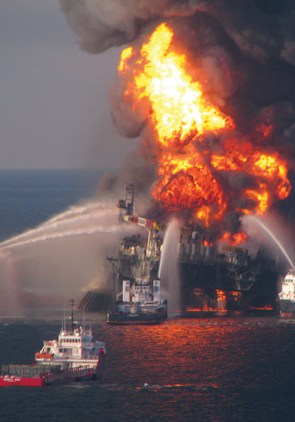
Is capitalism anti-safety? Systemic failures in oil industry

The Wall Street Journal and other media around the world have reported on systemic failures of the global oil industry and government regulators identified by the National Commission on the BP Deepwater Horizon Oil Spill and Offshore Drilling.  These articles are based on the release of a single chapter, Chapter 4, of the final report due for release on 11 January 2011.

A media release from the Commission includes the following findings from Chapter 4

“The well blew out because a number of separate risk factors, oversights, and outright mistakes combined to overwhelm the safeguards meant to prevent just such an event from happening.  But most of the mistakes and oversights at Macondo can be traced back to a single overarching failure—a failure of management.  Better management by BP, Halliburton, and Transocean would almost certainly have prevented the blowout by improving the ability of individuals involved to identify the risks they faced, and to properly evaluate, communicate, and address them.”

“. . .the Macondo blowout was the product of several individual missteps and oversights by BP, Halliburton, and Transocean, which government regulators lacked the authority, the necessary resources, and the technical expertise to prevent.”

“The blowout was not the product of a series of aberrational decisions made by rogue industry or government officials that could not have been anticipated or expected to occur again. Rather, the root causes are systemic and, absent significant reform in both industry practices and government policies, might well recur.”

“What we. . .know is considerable and significant:

  1. each of the mistakes made on the rig and onshore by industry and government increased the risk of a well blowout;
  2. the cumulative risk that resulted from these decisions and actions was both unreasonably large and avoidable; and
  3. the risk of a catastrophic blowout was ultimately realized on April 20 and several of the mistakes were contributing causes of the blowout.”
The significance of these quotes is that the Commission is critical of an industry and not just a single company.   Continue reading “Is capitalism anti-safety? Systemic failures in oil industry”
Concatenate Web Development
© Designed and developed by Concatenate Aust Pty Ltd